Cursor AI vs. Base44 vs. Lovable: I built apps with all three. Here’s my honest review.



If you have spent any time on “Crypto Twitter” or “Tech LinkedIn” lately, you have seen the hype. Everyone claims they built the next Facebook in 20 minutes using a new AI tool. But as someone who actually builds software for a living, I know that “demo ware” is very different from “production software.”
I’ve spent the last few months stress-testing the big three names in the “vibe coding” space: Cursor AI, Base44, and Lovable.
My conclusion? These aren’t just three different tools; they represent three different philosophies. Choosing the wrong one doesn’t just waste your money—it locks you into a workflow that might kill your project.
Here’s my breakdown of which tool belongs in your stack, based on real hours logged in the editor.
Key takeaways (TL;DR)
- For the control freak: Cursor AI is the only choice if you want to own your code and learn how to engineer. It’s a power tool, not a toy.
- For the “idea guy”: Lovable is the fastest way to get a visual idea onto a live URL. It wins on aesthetics but struggles with deep logic.
- For the operator: Base44 is the “adult in the room.” It uses Gemini 3’s massive context window to handle complex business rules without hallucinating.
- The hidden risk: Fixing a broken app in Cursor requires coding knowledge. In Lovable and Base44, you are at the mercy of the platform’s AI.
My experience with the ‘philosophy gap’
To understand which tool you need, you have to understand how they think. When I switch between these apps, I feel like I’m changing careers.
- Cursor treats me like a pilot. It assumes I know where I’m going and gives me a jet engine.
- Lovable treats me like a visionary. It assumes I care about the “look and feel” and handles the messy details for me.
- Base44 treats me like a manager. It assumes I care about data integrity, permissions, and business logic.
Cursor AI: The developer’s exoskeleton
Cursor isn’t really “no-code.” It is “pro-code” on steroids. It is a fork of VS Code, which is the editor I’ve used for years. When I open Cursor, I’m not hiding the code; I’m drowning in it, but I have a genius sitting next to me helping me swim.
Why I use it
I use Cursor when I need to build something custom that requires third-party libraries or specific architecture.
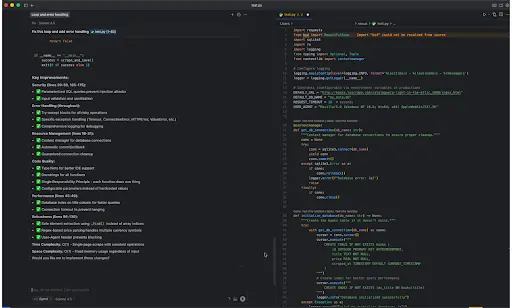
My experience: I recently needed to build a Python script that scraped data and piped it into a specific database. Lovable couldn’t handle the backend complexity. I opened Cursor, highlighted my broken code, and hit Command+K. I typed, “Fix this loop and add error handling.” It didn’t just fix it; it explained why it was broken. However, warning: If you don’t know what a “terminal” is, Cursor will scare you. You still need to be able to deploy the app yourself.
Lovable: The ‘magic wand’ for founders
Lovable lives up to its name. The first time I used it, I actually laughed out loud because it felt like magic. It handles the frontend, backend, and deployment in one breath.
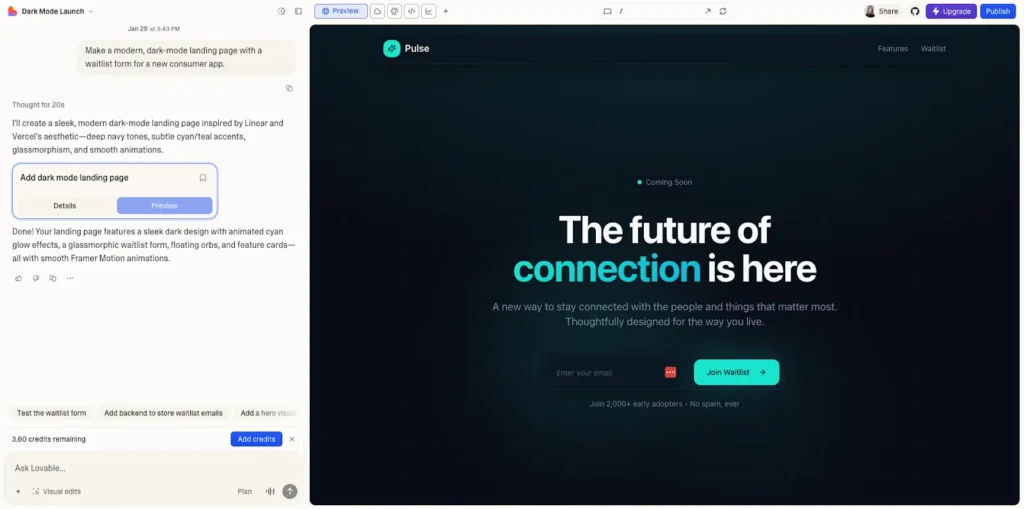
What this shows: This is the visual generation interface where you chat with the bot to change UI elements.
My experience: I had a client who needed a waitlist page for a new consumer app, and they needed it yesterday. I didn’t touch a line of code. I told Lovable, “Make a modern, dark-mode landing page with a waitlist form.” In about 15 minutes, I had a live URL. The best part? The “iterative vibe.” I clicked on a button that looked boring and typed, “Make this pop more.” Lovable understood the design intent and added a glow effect.
The catch: It’s a walled garden. If you want to build complex logic (like “if user is X and has spent Y, do Z”), Lovable starts to struggle. It creates beautiful interfaces, but sometimes the brain behind them is a bit shallow.
Base44: The business logic engine
If Lovable is a sports car, Base44 is a tank. It’s not trying to look sexy; it’s trying to be secure. Base44 is built for internal tools, admin panels, and operations engines.
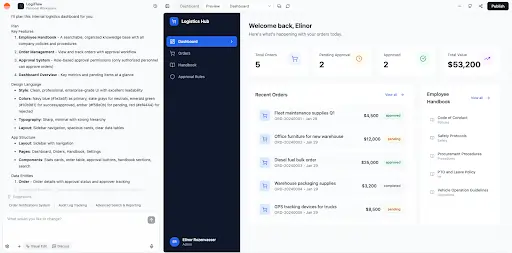
What this shows: The Base44 builder interface focusing on data tables and logic flows.
My experience: I was building an internal dashboard for a logistics company. They had a massive employee handbook and strict rules about who could approve orders. This is where Base44’s integration with Gemini 3 became a game changer. Because Gemini has a massive context window, I was able to feed it the entire operational PDF. Base44 “remembered” the whole business context. When I asked it to build the approval flow, it didn’t hallucinate. It followed the strict logic perfectly. In other tools, I often find the AI “forgets” rules I gave it 10 minutes ago. Base44 holds onto that context like a steel trap.
The ‘oh sh*t’ factor: Technical debt
Here is the part most reviews leave out: What happens when things break? In my experience, every software project eventually turns into a mess. You need to pick what kind of mess you want to manage.
The ‘spaghetti’ debt (Cursor)
In Cursor, because you’re writing real code, you can end up generating “spaghetti code”—a tangled mess that works but is impossible to read.
- My reality: I once let Cursor generate 500 lines of code without reading it. Two weeks later, I had to change a feature, and I had no idea how the app worked. I had to spend days refactoring. You own the code, which means you own the bugs.
The ‘black box’ debt (Lovable & Base44)
In these platforms, the code is hidden. The debt comes when you build conflicting logic.
- My reality: You might tell the AI “Users can delete posts” on Tuesday, and “Users cannot delete posts” on Friday. If the AI writes conflicting rules, debugging it can be frustrating because you can’t just “go into the code” and fix it. You have to “talk” the AI into fixing it.

The ownership reality
This is the piece of advice I give to every founder I consult with: Who owns the keys?
- Base44 & Lovable: These are platforms. You pay a subscription to keep the lights on. If you stop paying, your app goes dark. You are paying for the convenience of not having a DevOps team.
- Cursor: This is an editor. You own the text files. You host them on your own AWS or Vercel account. If Cursor goes bankrupt tomorrow, you still have your app.
Final verdict: What should you pick?
After building real projects on all three, here is my decision matrix:
- Choose Cursor if: You’re ready to learn to code, you need 100% ownership of your IP, and you are building a complex SaaS product with specific technical needs.
- Choose Lovable if: You’re building a consumer-facing app (B2C) and “vibes” are your most important feature. If you need to show an investor a working prototype by tomorrow morning, this is your tool.
- Choose Base44 if: You’re building the “boring” (read: super important) stuff that runs a business—admin panels, CRMs, or inventory managers. If data security and strict logic are more important than flashy animations, the Gemini 3 integration here makes it the safest bet.
Related Articles





What real users want to know (my honest answers)
Q: Can I switch from Lovable to Cursor later?
A: Technically, yes, some tools allow export. But in my experience? No. The code generated by low-code platforms is often messy and hard for a human to read. Pick your lane early. If you start in Lovable, plan to stay there until you’re ready to rebuild from scratch.
Q: Will AI code replace real developers?
A: Not yet. It replaces the drudgery. I’ve found that using Cursor makes me a “10x engineer,” but it doesn’t replace the need for an architect. You still need to tell the AI what to build and how to structure the data.
Q: Why does Base44 use Gemini 3 instead of GPT?
A: It comes down to “context window.” Gemini 3 can process a massive amount of information at once. For business logic, this is critical because the AI needs to understand your entire database schema and permission structure simultaneously to avoid making security errors.