

SEO for AI Search: How to Get Your Business Cited by ChatGPT and Gemini



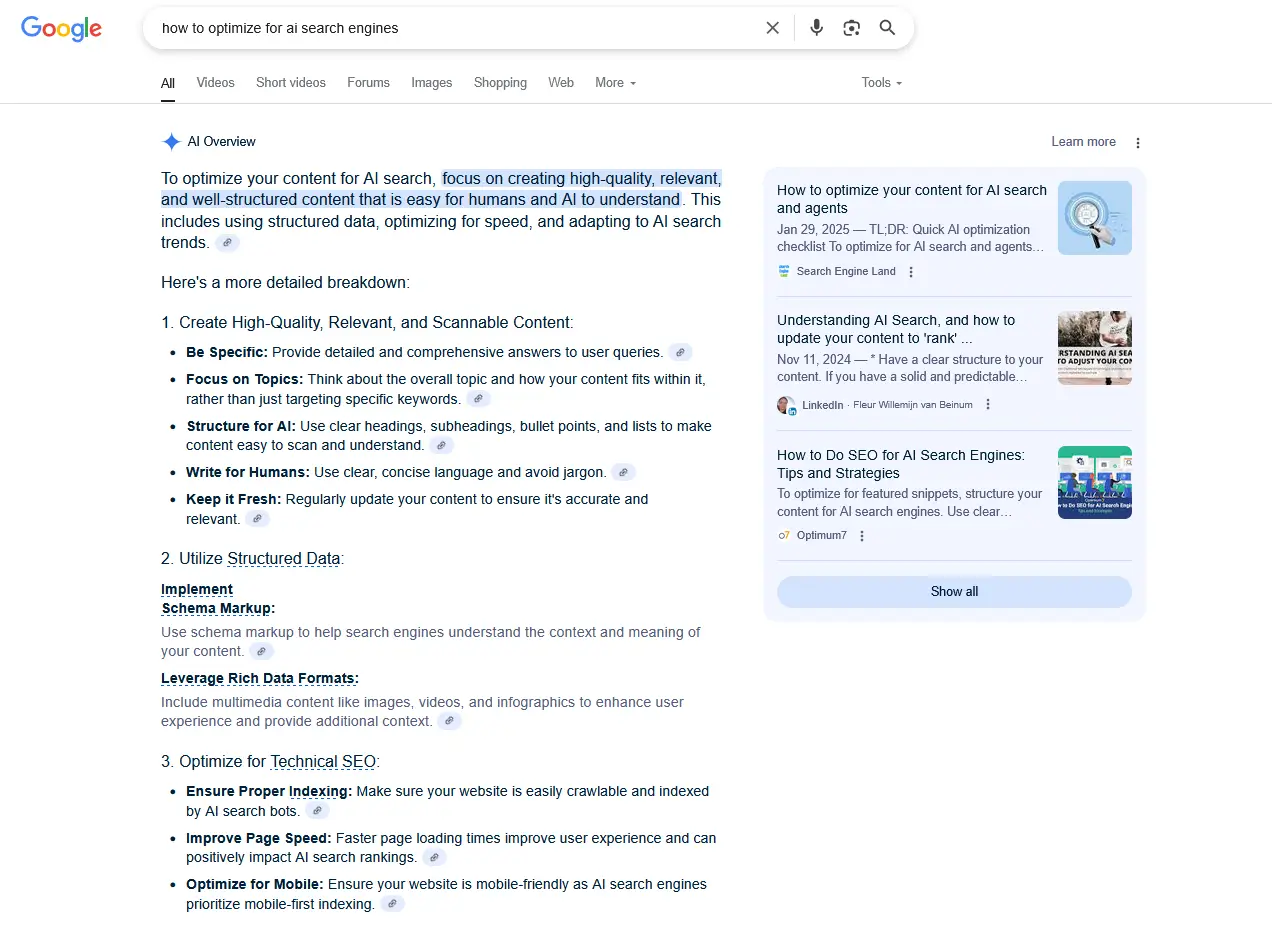
Search engines are no longer just libraries of links; they have become answer engines that synthesize information in real-time. To optimize for SEO for AI search, businesses must pivot from keyword density to answer-first content that utilizes structured data (Schema), provides unique original data, and lowers the “cost of retrieval” for AI models like Gemini and ChatGPT. This fundamental shift from ranking for clicks to ranking for citations is the only way for brands to remain visible in a zero-click world.
In this guide, you will learn the exact tactical steps to transform your website into an authoritative knowledge source that AI search engines trust and recommend.
In this guide, we will move past the fluff and focus on the technical and content realities you need to face right now.
Key Takeaways
- Direct Answers First: AI Overviews prioritize content that answers the primary user intent within the first 50 words of a page.
- Information Gain is Currency: To be cited, you must provide unique data, personal experience, or contrarian insights that AI hasn’t already scraped from your competitors.
- Schema is Mandatory: Structured data like FAQPage and Organization schema acts as a “map” for LLMs to verify facts without guessing.
- Lower the Cost of Retrieval: AI models are computationally expensive; they prefer scannable tables, lists, and clear headings over dense walls of text.
- High-Intent Traffic Shift: While total clicks may decrease due to zero-click answers, the visitors who do click through from AI citations have 4.4 times higher conversion value.
Why Is the Shift to Answer Engine Optimization (AEO) Important?
The traditional search model is undergoing a massive disruption. By 2026, it is projected that traditional search engine traffic will drop by 25% as users move toward AI assistants for immediate answers. This transition has birthed Zero-Click Search, where a user’s question is fully answered by the AI on the search results page, eliminating the need to visit your website.
For a small business, “not being mentioned” by an AI now means “not being considered” by a prospect. SEO is evolving into Search Anywhere Optimization, where your goal is to be the “trusted answer” inside ChatGPT, Gemini, Perplexity, and voice assistants. If your content is the source cited by the AI, you earn a virtual “concierge” recommendation that builds instant trust with the user.
Related Articles



How to Optimize Content for AI Citations Step-by-Step
Before we fix your website, we need to understand the machine we are feeding.
AI Search (including Google’s AI Overviews, ChatGPT Search, and Perplexity) works differently from the search engines we have known for 20 years. Traditional search matches keywords to pages. AI search reads the internet, understands the context, and generates a new, conversational answer.
This has birthed two new acronyms you need to know:
- AEO (Answer Engine Optimization): Optimizing content to provide immediate, short-form answers for features like Featured Snippets or voice search.
- GEO (Generative Engine Optimization): A broader strategy ensuring your content is deep and authoritative enough to be synthesized into long-form AI responses.
1. Adopt the “Answer-First” Formatting Rule
AI models like ChatGPT and Google Gemini scan the top of your page for a “liftable” summary. You should provide a standalone answer of 40-60 words within the first two paragraphs of your article.
Action: Use a question-based H2 (e.g., “What are the benefits of [Service]?”) followed immediately by a clear, factual answer. Avoid introductory “fluff” like “In today’s fast-paced world…”.
2. Implement “Information Gain” Through Unique Data
Aggregating existing information is no longer enough because AI models have already read the top results. To be cited, you must provide something the AI hasn’t seen elsewhere.
Action: Publish original surveys, internal metrics, or “this is how we did it” case studies.
Example: Instead of “CRM improves sales,” write “Our study of 200 SMBs found that automated follow-ups increased lead conversion by 27% in 2025”.
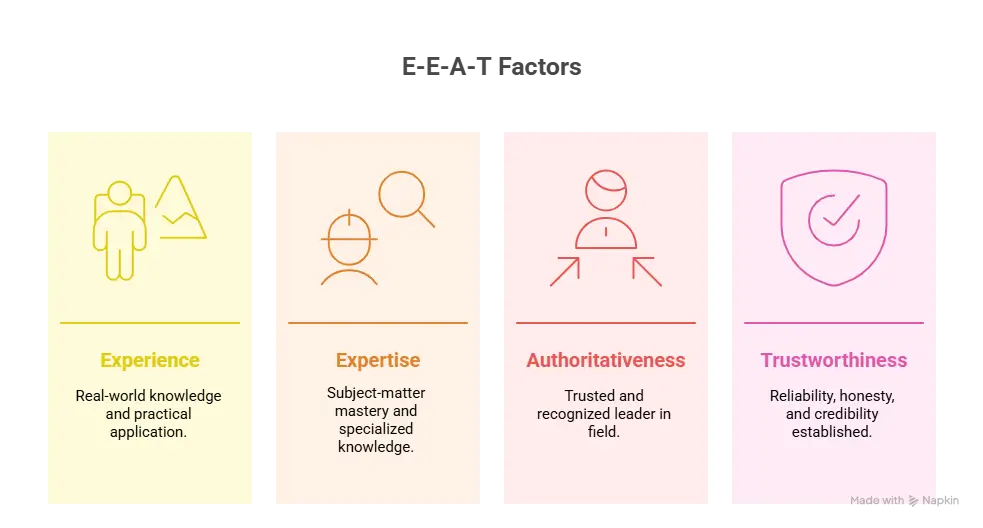
3. Build Authority Using E-E-A-T Principles
AI systems are designed to avoid hallucinations and misinformation, so they prioritize sources with verified expertise.
Action: Add detailed author bios with credentials, links to professional social profiles (LinkedIn), and “Last Updated” timestamps to signal that the information is current.
4. Technical Optimization for Robot Parsing
If an AI bot (like GPTBot) finds your site difficult to crawl or your data hard to verify, it will skip you for a “cleaner” source.
Action: Ensure your robots.txt file explicitly allows AI crawlers.
Speed: Aim for a Time to First Byte (TTFB) under 200ms, as speed directly impacts an AI’s ability to fetch your content for real-time answers.
Visual Evidence: Traditional SEO vs. AI SEO
To make this practical, let’s look at how your tactics need to shift.
| Component | Traditional SEO | New AI SEO (AEO/GEO) |
| Primary Goal | Rank #1 and get the click. | Be cited as the source of the answer. |
| Content Style | Long-form, “ultimate guides,” storytelling. | Direct, answer-first, concise, data-heavy. |
| Structure | H1, H2, H3 (formatting for reading). | H1, Schema, Tables, Lists (formatting for parsing). |
| Keywords | Specific search volume matches. | Semantic topics and natural language questions. |
| Success Metric | Traffic Volume. | Brand Mentions & High-Intent Clicks. |
Why AI search is mandatory for every small business
The transition from “Classic SEO” to AEO (Answer Engine Optimization) is the most significant change since the birth of the smartphone. Recent data from 2025 and 2026 shows that 68% of small businesses are now using AI regularly, and users are following suit. AI-driven searches are projected to reduce traditional search volume by 25% by the end of 2026.
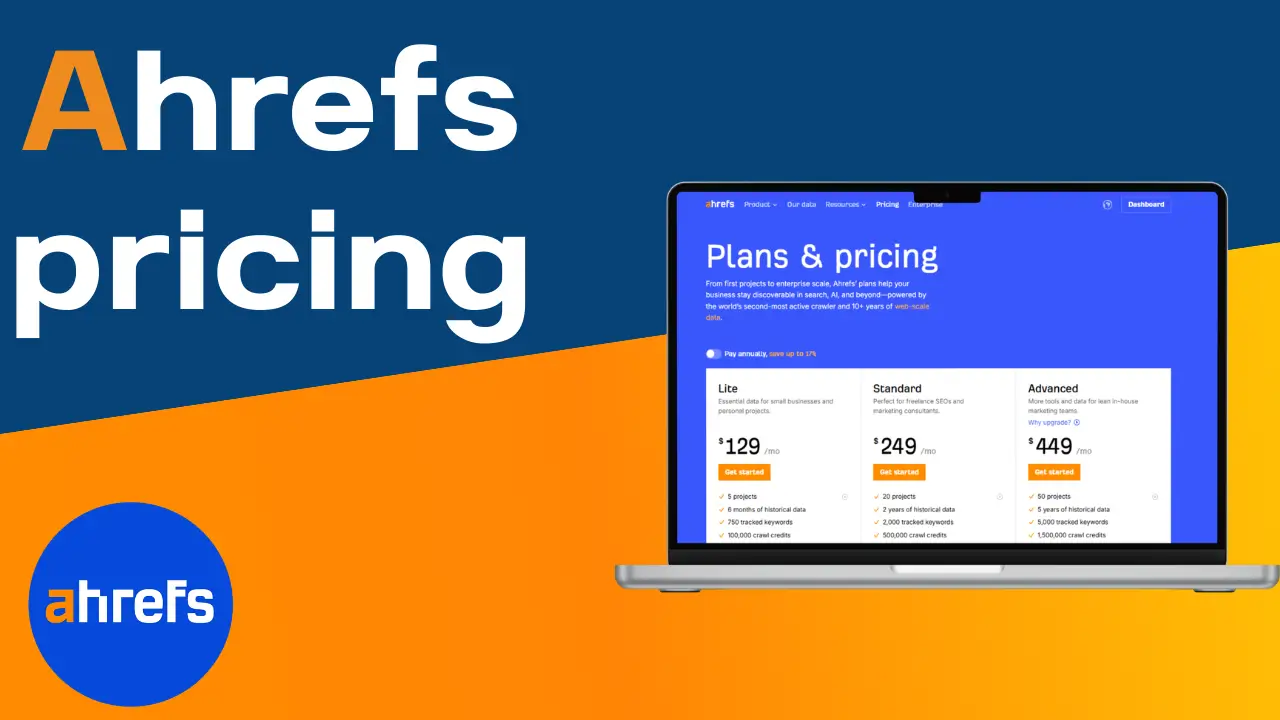
However, there is a silver lining. While you may see fewer total visitors, the quality of those visitors is unprecedented. Ahrefs recently discovered that while AI search might only account for 0.5% of total traffic for some brands, it is responsible for over 12% of their actual sign-ups. This means an AI citation is worth far more than a thousand generic clicks. For a micro-business, this is a positive evolution: you can stop chasing “vanity metrics” and start chasing actual customers.
The micro-business advantage: Why you win over corporate giants
You have a secret weapon that huge corporate sites cannot replicate: Authenticity. Large “content farm” websites are currently struggling. They have millions of pages of generic, SEO-optimized text that LLMs have already memorized. Because those sites are slow to change and rely on “templates,” they lack the real-life experience that Gemini and ChatGPT are now hunting for.
As a micro-business owner, you live in the field. You know your customers by name. You have seen the specific, weird problems that occur in your industry. When you write about how you solved a unique challenge for a client, you are providing “Information Gain.” AI models recognize this as a “unique node” of information. While the giant competitor is busy trying to update 50,000 pages of fluff, you can update your 10 most important pages with real-life situations and original data. This makes you more “citable” because you are providing the “perspective” that AI engines crave.
Where to start and what matters most
Level 1: Technical Foundations (The “Ticket to Play”)
Not every SEO task is created equal. To manage your efforts as a small business, you need to focus on the actions that carry the most weight. Here is your roadmap, ranked by impact.
Priority: Critical | Weight: 35% Before an AI can cite you, it must be able to “parse” you. Traditional sites rely on bots to “read” text. AI engines use RAG (Retrieval-Augmented Generation) to “extract” facts. If your site code is messy, the “cost of retrieval” is too high, and the AI will ignore you.
- Action 1: Implement FAQ and Organization Schema: Use JSON-LD code to tell the bot exactly who you are and what questions you answer. This is the single most important technical task.
- Action 2: Clean HTML and Speed: AI crawlers (like GPTBot) prefer clean, fast-loading sites. If you are still using a slow, bloated builder, consider switching to the Best Website Builders that prioritize clean code.
Level 2: Content Authenticity (The “Citation Magnet”)
Priority: High | Weight: 40% This is where you beat the giants. The AI needs to see that you aren’t just a “me-too” website.
- Action 3: The First 100 Words Rule: Every page must have a 50-word “Direct Answer” at the top. This is designed for the “AI Overview” or the “Featured Snippet.”
- Action 4: Add Unique “Field Data”: Include statistics from your own business. For example, “In 2025, 40% of our consulting clients asked about AI integration before anything else.” That specific stat is unique to you and highly citable.
- Action 5: Use Real Names and Author Bios: Link your author bio to your LinkedIn profile. AI models use this to verify E-E-A-T (Experience, Expertise, Authoritativeness, Trustworthiness).
Level 3: Off-Page Trust (The “Validation Layer”)
Priority: Medium | Weight: 25% AI doesn’t just look at your site; it looks at what the rest of the internet says about you.
- Action 6: Manage Your Brand Entities: Ensure your business name, address, and phone number (NAP) are identical across Google Business Profile, Yelp, and LinkedIn.
- Action 7: Get Cited in “Best of” Lists: AI models love listicles. If you are a service provider, getting mentioned in a list of Best CRM Software or similar industry roundups gives you a massive authority boost in the eyes of an LLM.
The AEO impact and weight table
To help you decide what to do this week, use this table to see where your effort produces the most “AI visibility.”
| Action | Difficulty | Impact Weight | Why It Works |
| Direct Answer Intro | 15 mins | 30% – High | Immediate visibility in Google AI Overviews. |
| FAQ Schema Markup | 30 mins | 20% – High | Tells the AI exactly which questions you answer. |
| Adding Unique Business Stats | 1 hour | 25% – High | Provides the “Information Gain” needed for a citation. |
| Updating Author Bio/LinkedIn | 20 mins | 15% – Med | Proves the content is human-expert led (E-E-A-T). |
| Community Mentions (Reddit/Quora) | 2 hours | 10% – Med | Validates your brand as a “socially trusted” entity. |
How to manage your efforts as a micro-business
If you are a solo founder or have a tiny team, do not try to do everything at once. Start with your top 5 pages (your “money pages”).
- Week 1: Audit the intros. Rewrite them to be direct and bold the most important answer.
- Week 2: Add a simple table or list to those 5 pages. AI models love structured data because it is easy to “digest.”
- Week 3: Add one personal story or a specific business statistic to each page. Use the phrase, “In my experience helping customers with [Problem], I have found that…”
- Week 4: Check your Schema. Use a free tool to see if your FAQ and Organization markups are working.
If you need a way to track these tasks, using the Best Project Management Software can help you stay organized as you pivot your strategy.
Adapting Your Mindset: The Reality of Traffic Loss
We need to have an honest conversation about traffic.
As these tools improve, your “top of funnel” traffic (people asking simple questions like “what is SEO”) will likely drop. Users will get that answer directly on the search result page or inside ChatGPT. They won’t click your website.
This is okay.
The users who do click are the ones who need more than a summary. They need deep expertise, a specific tool, or a service. Your traffic volume may go down, but the intent of that traffic goes up.
The Importance of Testing
As an SEO specialist, I can tell you that we are currently in a volatile period. What works for Google Gemini today might change next week.
You must adopt a mindset of A/B testing.
- Test a page with a FAQ schema vs. one without.
- Test a “short answer” intro vs. a story intro.
- Measure the impact on impressions and clicks.
We are moving back in time in a way—focusing on short, helpful answers like we did years ago, but now backed by sophisticated data validation.
Conclusion
The move from “Classic SEO” to GEO and AEO is actually a return to what the internet was supposed to be: a place for helpful, authentic information. The “game” of tricking search engines with keywords is ending, and the era of being truly useful is beginning.
For you, the micro-business owner, this is a positive development. You don’t need a million-dollar budget to win. You just need to be more helpful, more direct, and more authentic than the big companies. By providing the “Information Gain” that only someone “on the ground” can offer, you ensure that when someone asks an AI for help, your business is the one it recommends.
The Next Step: Choose your most popular blog post today. Rewrite the first paragraph to answer the main question in exactly 45 words. Bold that answer. You have just taken your first step toward dominating AI search.
FAQ
Q: Is traditional SEO dead because of ChatGPT and Gemini?
A: No. Traditional SEO is the “foundation” that AI engines use to find your site. Think of it this way: SEO gets you into the library, but AEO (Answer Engine Optimization) ensures the AI actually picks up your book and quotes it.
Q: How much does it cost to optimize for AI search?
A: For most small businesses, it costs nothing but time. You don’t need expensive tools; you need to focus on clear writing, unique data, and structured headers. The biggest “cost” is the shift in mindset from writing for keywords to writing for answers.
Q: Why does AI traffic convert better than Google traffic?
A: Because the AI has already done the “heavy lifting” for the user. If an AI says, “Based on your needs, [Your Business] is the best choice because of X and Y,” the user arrives at your site already trusting you. They aren’t “browsing”; they are “buying.”
Q: What is “Information Gain” and why should I care?
A: Information Gain is the measure of how much new information a page provides compared to what the AI already knows. If you just rewrite a Wikipedia article, your Information Gain is zero. If you share a real-life solution from your business, your Information Gain is high, making you a priority for citations.
Q: Do I need to be a coder to add Schema?
A: Not at all. Most modern website platforms have plugins or simple forms where you can paste your information, and they generate the code for you. If you are choosing a new platform, look for one in our list of Best Website Builders that includes built-in SEO and Schema tools.
Q: Will AI search eventually kill all my website traffic?
A: It will likely reduce traffic for simple questions like “What is X?”. However, it will increase the quality of traffic for “How do I solve Y?”. Users who click through from an AI answer have already been convinced of your expertise, making them much more likely to convert.
Q: Do I need to pay for special tools to rank on ChatGPT?
A: No. Optimization for AI search is about structure and substance. Focus on adding JSON-LD schema (which is free) and writing better, more direct content. The AI bots crawl the web for free; you just need to make your site “inviting” for them.
Q: How does a micro-business compete with a site that has millions of backlinks?
A: By providing “Information Gain.” AI models stop citing the “giant” site if it only provides generic info. If you provide a unique case study or a specific data point from your own business, the AI will cite you as the “original source” for that specific insight.
Q: Is it okay to use AI to write my AEO content?
A: You can use AI as a draft tool, but you must add the “Human Layer.” If your content sounds exactly like every other AI-generated article, the models will see no reason to cite you. Your “Information Gain” comes from the facts and experiences that only you know.
Q: Does content length matter for AI citations?
A: Dense information is better than long information. AI models prefer “High Information Density”, Instead of a 3,000-word article with 10% useful info, aim for a 1,500-word article where every paragraph provides a new fact, a table, or a unique insight.
Q: How often should I update my content for Gemini and Perplexity?
A: AI models favor “freshness.” Aim to refresh your core pages every 90 days. You don’t need a full rewrite; just update a few statistics, add a new customer testimonial, and update the “Last Modified” date in your schema.


