Do you need to know Python to vibe code an app with AI?


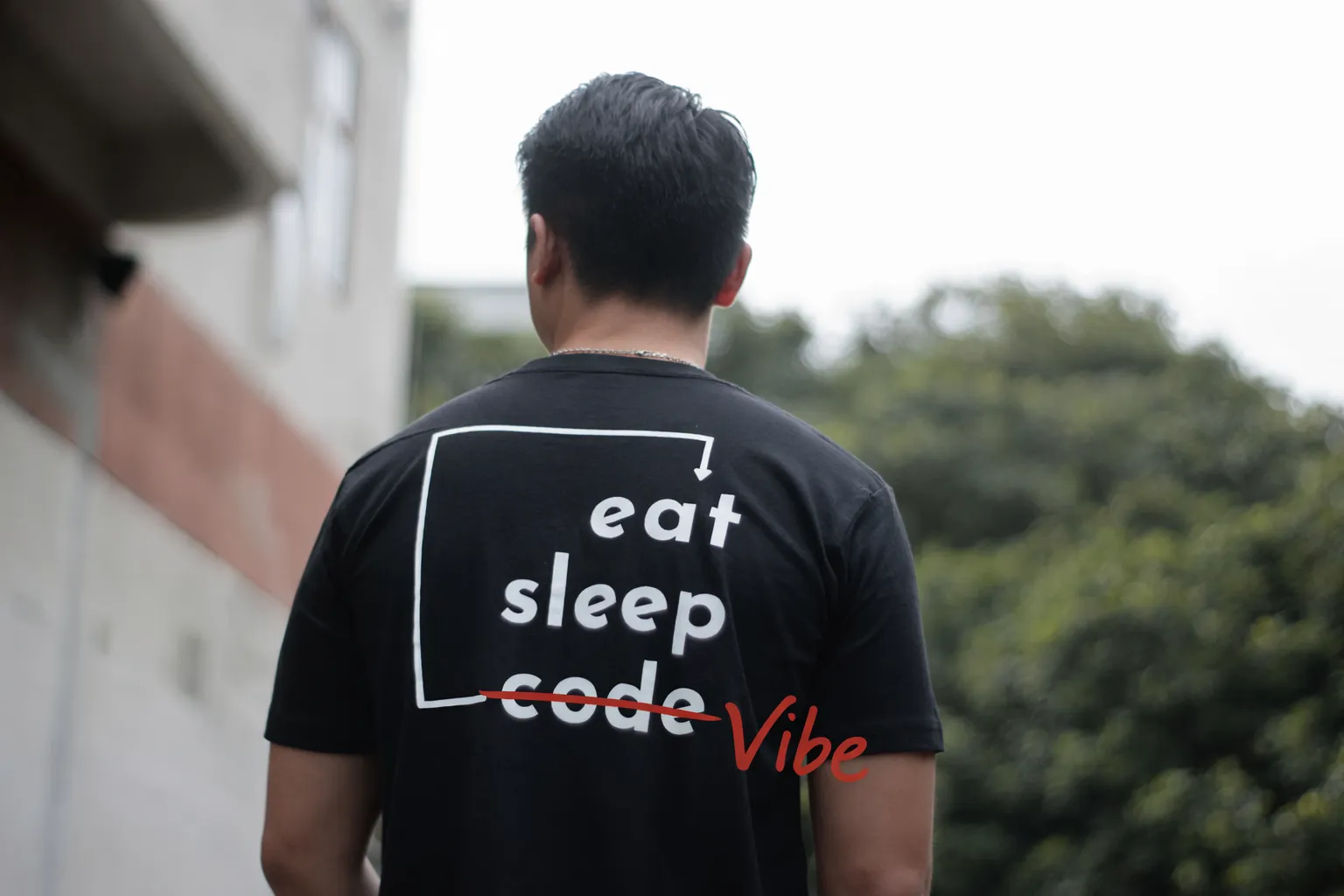
We are moving from an era of “coding” to an era of “vibing.” In today’s fast-paced technological world, do you really need Python to make your own app?
The short answer is: No, you definitely do not need Python skills to create an app with AI today. Most modern AI app builders are designed for vibe coding, where your ability to describe what you want in plain English is more important than your ability to write code. While having Python knowledge can give you a superpower for fine-tuning complex backend logic or debugging specific errors, it is no longer a requirement for getting a fully functional web app off the ground.
The dream of building a custom app has traditionally been guarded by a high, expensive wall made of semicolons, brackets, and years of computer science degrees. But the landscape of software development is shifting beneath our feet, moving away from rigid syntax and toward pure intent.
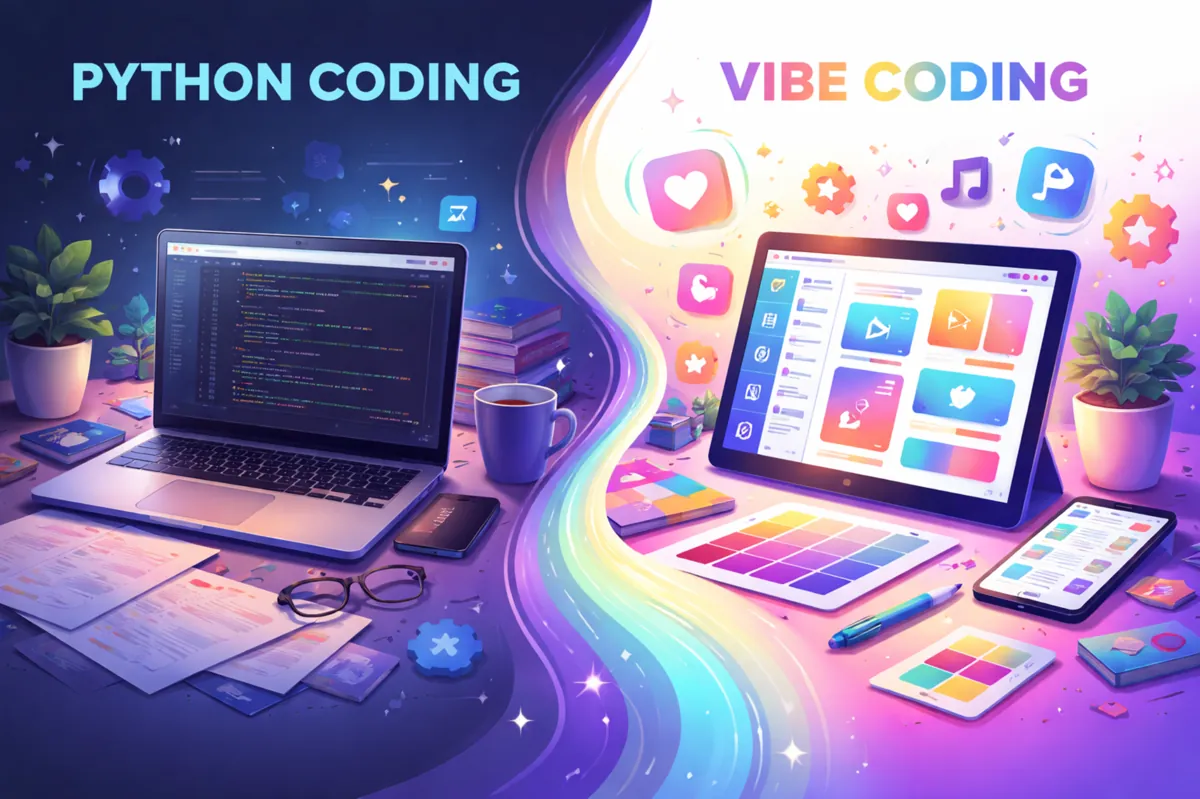
You don’t need to write code to build software anymore
If you’ve spent any time in the “business tech” corners of the internet lately, you’ve probably heard the term vibe coding. It sounds like something a teenager would say while staring at a neon-lit keyboard, but in the world of B2B software, it’s actually the most significant shift we’ve seen in a decade.
For years, the “syntax barrier” was the Great Wall of small business innovation. You had a brilliant idea for a custom inventory tracker or a niche client portal, but you didn’t know Python. So, you had two choices: spend $50,000 on a dev agency that doesn’t understand your business, or spend six months learning how to write code that actually runs. Most owners chose a third option: they just didn’t build it. They stayed stuck in “manual mode,” wasting hours on tasks that software should have solved years ago.
Today, that barrier is gone. We’ve entered the era of the “vibe coder.” Tools act as your lead engineer; you provide the “vibe”—the intent, the design, and the workflow—and the AI handles the heavy lifting of the code. It is less like being a bricklayer and more like being an architect. You don’t need to know how to mix the mortar; you just need to know where the windows should go and why the foundation needs to be reinforced.

Knowing Python is helpful, but it’s no longer required
I’m not going to tell you that learning Python is a waste of time. If you already have those skills, you’re essentially a film director who actually knows how to operate the camera and edit the footage. You have a level of granular control that a pure “vibes” user won’t have yet.
Specifically, Python skills help you in three key areas:
- More accurate prompts: You’ll know the difference between a “relational database” and a “simple list.” You’ll understand what an “API endpoint” is and why a “webhook” matters. This allows you to give the AI much clearer instructions, which usually means you get a working app in three prompts instead of twenty.
- Fine-tuning the final 10%: AI is incredible at getting you 90% of the way there. That last 10%—the weird custom integration with a legacy system or a very specific way you want a report to calculate—can sometimes be tricky for an AI to grasp purely through “vibes.” If you know a little Python, you can hop into the code editor, tweak a few lines, and fix it yourself in thirty seconds.
- Fixing errors faster: Even the smartest AI can “hallucinate” or hit a logic snag. A person who understands Python can look at the error log and realize, “Oh, it’s just a timeout issue,” rather than panicking that the whole app is broken.
So, while Python isn’t the gatekeeper anymore, it is a very effective accelerant.
How AI builders use Python behind the scenes
You might wonder if these builders are even using Python under the hood. The answer is almost always yes, but it’s hidden behind the curtain. Think of it like a modern electric car. You don’t see the thousands of lines of code managing the battery temperature, but they are there, working silently so you can just press the pedal and go.
Many AI app builders use Python for the backend logic—the part of the app that handles data, math, and server-side magic. For example, a builder might generate a React or Next.js frontend (the part you see and click on) while using Python (specifically frameworks like Flask or FastAPI) to manage the “brains” of the operation.
The beauty of 2026 is that you don’t have to see a single line of that Python to make it work. The AI acts as the translator. It takes your human request—“I want a button that sends an invoice to my client and logs it in my tax folder”—and it translates that into the necessary Python logic to make it happen.

Focus on prompt engineering over learning Python
If your goal is to launch a small business tool, a custom CRM for your team, or a niche marketplace, your time is probably better spent mastering Prompt Engineering than learning Python from scratch.
Learning to talk to an AI is the new literacy. It requires clarity of thought, a deep understanding of your business processes, and the ability to break a large goal into small, logical steps. These are business skills, not coding skills.
AI builders are becoming “serious infrastructure,” moving beyond simple prototypes to enterprise-grade tools with granular security and monetization options. The distinction between “real software” written by engineers and “no-code software” built by visual developers is evaporating.
The best AI app builders for vibe coding
If you’re looking to jump in, you need to look for platforms that have graduated from the old-school “drag and drop” style to a more conversational, intelligent approach. In the past, “no-code” was like playing with digital Legos. You had a fixed set of blocks, and if you wanted to do something the blocks weren’t designed for, you were out of luck.
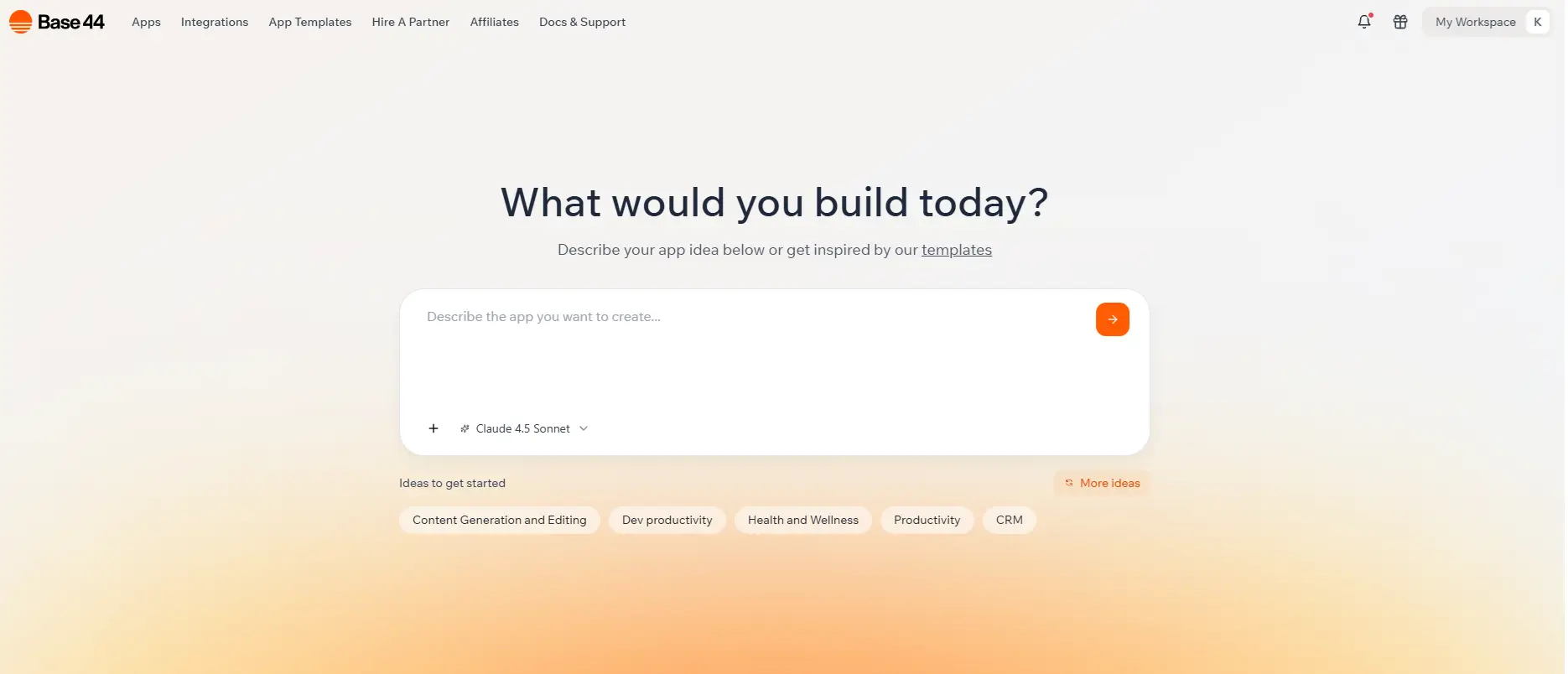
Base44 has recently positioned itself as a frontrunner in this “vibe coding” space. They’ve moved past the Lego feel by integrating heavy-hitting models like Gemini 3, which allows the platform to understand complex business logic through conversation rather than just visual blocks. It’s a sophisticated solution for vibe coding because it allows you to describe a problem and watch the architecture build itself.
What really sets Base44 apart for a business owner is its “autonomous error recovery.” If the AI writes a piece of code that doesn’t work, it doesn’t just stop and wait for you to fix it. It analyzes the error, realizes its mistake, and tries again. Base44 has introduced “Connectors” that link your app to things like Salesforce or Slack without you ever needing to look at an API key. It’s built for the entrepreneur who wants to move at the speed of thought, turning “vibe” into “value” in a matter of minutes.
In the same neighborhood, you’ll find Lovable, another strong competitor. This tool has a reputation for making the app-building process feel intuitive and, well, lovable. While it is technically a rival to the more enterprise-leaning setups, its presence in the market proves one thing: the era of the “non-technical founder” is officially here. Both platforms represent a shift toward software that listens to you, rather than forcing you to learn its language.
Why building your own tools saves your business money
At the end of the day, vibe coding isn’t just about cool tech—it’s about the bottom line. One of the biggest drains on a small business budget is paying for five different “pro” subscriptions because no single tool does exactly what you need. You pay for a CRM that’s 40% “fluff” you don’t use, a project management tool that’s too complex, and a billing system that doesn’t talk to either of them.
When you remove the Python requirement, you change the math of your business. You stop being a renter of software and start being an owner.
- The old way: Pay $200/month for a clunky CRM that your team hates using because it’s too generic.
- The new way: Use a vibe-coding platform to build a lean, mean internal tool that does exactly what your team needs, and nothing more. Base44 offers a starter plan at just $16/month.
We’re seeing a shift where SMB owners aren’t just consumers of software anymore; they are creators. They are building “Micro-SaaS” tools—small, highly specific applications that solve one problem perfectly. With platforms like Base44 now offering marketplaces to sell these templates, your internal solution could actually become a new revenue stream. Imagine building a custom workflow for your plumbing business and then selling that same template to 500 other plumbers. That’s not just a tool; that’s an asset.
Related articles


The bottom line
- If you are a non-coder: Don’t be intimidated. Focus on clarity. Describe your app’s “vibe” in detail. Use a platform like Base44 for its speed, its logic-heavy Gemini 3 integration, and its ability to turn your ideas into functional business infrastructure.
- If you are a hobbyist coder: Don’t feel like your skills are being replaced. Use your Python knowledge to “pressure-test” the AI’s output and handle complex integrations that require a human touch.
At the end of the day, AI isn’t replacing the creator—it’s the scaffolding crew. It sets up the structure so you can focus on the strategy, the customer experience, and the growth of your business. You don’t need to speak Python; you just need to know where you want your business to go. The future belongs to those who can articulate their vision, regardless of whether they can write a script.