How To Do SEO On Your Own: How to Build a Semantic Content Network That Dominates Search


You are likely here because you are frustrated. You have a product or service that you know is better than your competitors, but when you search for it on Google, they are at the top, and you are on page 5. You might have received quotes from agencies asking for $3,000 a month with vague promises of “growth.”
This guide is your alternative.
We are going to shift your mindset. SEO is not a marketing trick. It is not magic dust you sprinkle on a website. SEO is Product Development. When you build a website that answers user questions better, faster, and more clearly than anyone else, you are building a superior product. Google is simply the distribution channel for that product.
This is a comprehensive, expert-level guide on how to optimize your site entirely on your own. We will cover the technical foundation, the new world of Semantic Search (Entities), and how to future-proof your business for the age of AI.
Key Takeaways
Before we dive into the deep end, here is the executive summary of what you are about to master:
- SEO is not magic: It is a logical process of helping search engines understand your business clearly through code, structure, and content.
- You can do this alone: You can execute a professional SEO strategy using entirely free tools; expensive agencies are not required for the initial growth phase.
- Entities > Keywords: The most important concept in 2025 is Entities—the topics, features, use cases, and concepts related to your business—rather than just “keywords.”
- Topical Authority Wins: A business that builds a structured set of pages around all important entities gains “Topical Authority” and ranks faster than one that just writes random blog posts.
- Actionable Systems: You will learn exactly what to do, where to click, what tools to use, and how to build your first SEO system step-by-step.
- The “Why” Matters: You will understand why SEO fails, why rankings drop, and how to optimize for both Google and AI search engines (LLMs).
- Semantic Networks: A strong semantic network helps you rank faster, improves resilience during algorithm updates, and makes your content more understandable to AI.
- Complete Coverage: Search performance improves when your site covers a complete set of related entities, not when you chase individual volume metrics.
What Is Search Engine Optimization (SEO)?
In simple terms, SEO (Search Engine Optimization) is the process of improving a site’s visibility. It helps your content rank higher in organic (non-paid) search results, attracting more qualified visitors.
Search engines like Google index tens of billions of pages using web crawlers (bots). These crawlers “read” your site to understand what you do. Your SEO strategy is the translator that speaks to these bots. It differentiates your website from competitors by proving relevance and authority.
The Trust Factor:
You might also consider SEO to be the trustworthiness score of your website. A reputable website satisfies the technical requirements of search engines (speed, security, structure) and addresses the concerns of the audience (content). As your website’s credibility increases, Google ranks it higher, resulting in high-quality traffic.
Why SEO is Important
SEO is crucial for all businesses looking to succeed in today’s digital world. Why? Because it levels the playing field, putting you in front of customers exactly when they are actively searching for what you offer.
Here is why SEO is a game-changer, backed by factual data:
-
Visibility equals customers: The first page of Google captures 71% of organic search traffic, while the second page drops to a mere 6%. If you are not on Page 1, you are invisible. (Source: Backlinko)
-
Higher ranking, higher trust: 75% of users never scroll past the first page of search results. They trust Google’s curation; if Google trusts you, they trust you. (Source: HubSpot)
-
Credibility boost: 90% of searchers haven’t decided about a brand before starting their search. A strong online presence shapes their perception of your business before they even click. (Source: bluetonemedia)
-
Direct impact on sales: Organic search leads to 51% of all website traffic, making it the most common way people discover new products and services. (Source: BrightEdge)
Investing in SEO isn’t just about rankings; it’s about connecting with potential customers when they’re seeking solutions. This translates to more leads, increased sales, and business growth.
Best SEO Tools for DIYers
For SEO activities, starting with the right set of tools is crucial for analyzing your website’s performance. You do not need $500/month enterprise software yet. Here is your essential stack:
| Tool | Function | Why You Need It |
| Google Analytics 4 | Traffic Analysis | Essential for tracking website traffic and understanding user behavior. It tells you what users do after they arrive. |
| Google Search Console | Health & Indexing | Allows you to monitor your site’s presence in Google. It shows you crawl errors, keyword rankings, and indexing status. |
| Bing Webmaster Tools | Health (Bing) | Similar to GSC but for Bing. Often overlooked, but Bing powers Yahoo and Alexa voice search. |
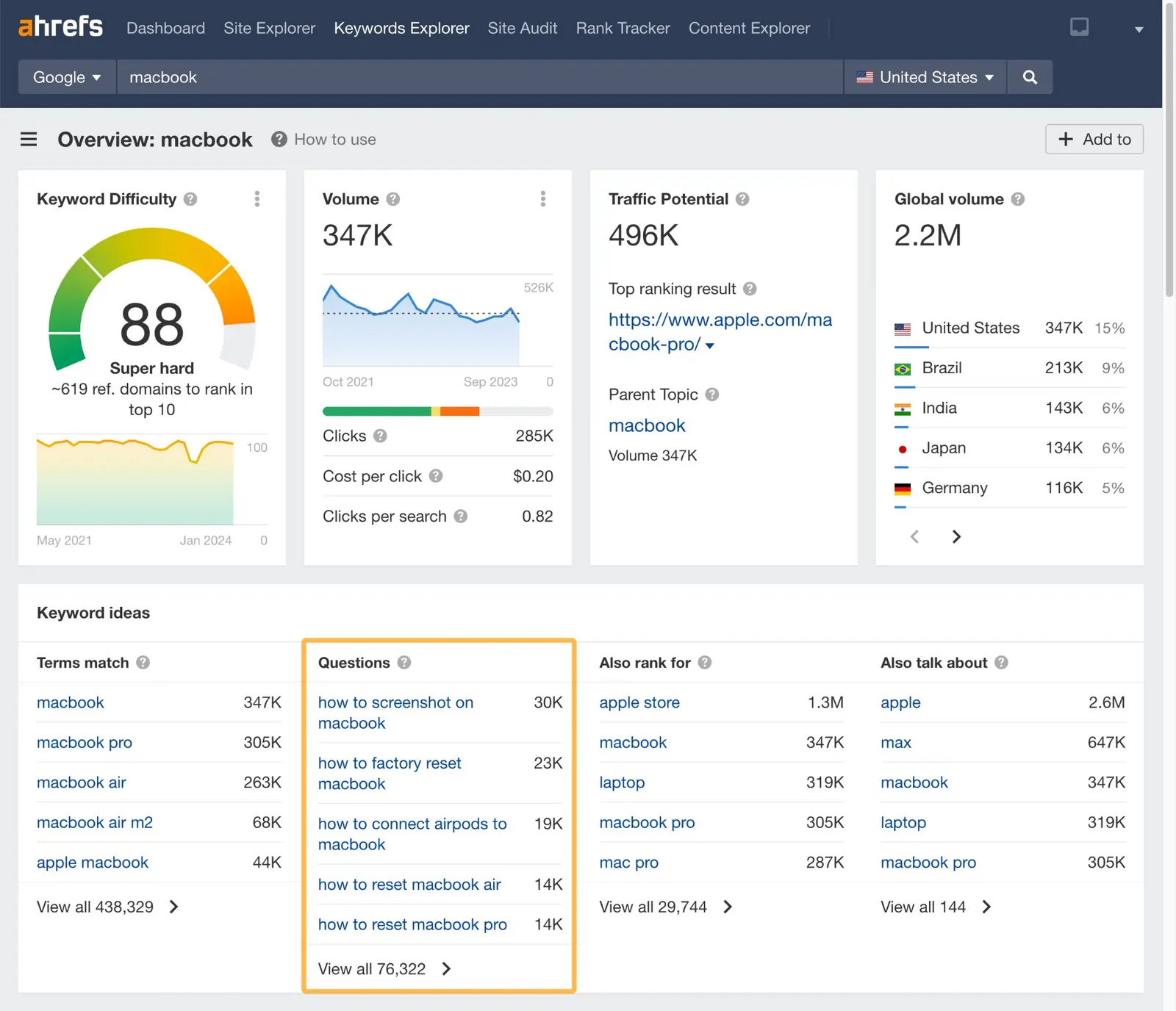
| Ahrefs / Semrush | Competitor Analysis | Comprehensive platforms for keyword research and backlink tracking. (They have free/trial versions). |
| Yoast SEO | WP Plugin | If you use WordPress, this helps optimize content, generate sitemaps, and manage meta tags easily. |
| Screaming Frog | Technical Audit | A desktop tool that crawls your website to find broken links (404s), missing tags, and technical errors. |
| Google Business Profile | Local SEO | Essential for local businesses. It manages your Maps listing, reviews, and operating hours. |
| Ubersuggest | Keyword Ideas | A beginner-friendly tool for keyword suggestions and basic site audits. |
For a deeper dive into comparing these tools, read our guide on Semrush vs. Ahrefs.
How To Do SEO Yourself: The Strategy
Doing SEO on your own is rewarding. It forces you to understand your customers deeply. Successful DIY SEO rests on three pillars: Technical, On-Page, and Off-Page.
-
Technical SEO: Ensuring your website is fully accessible and understandable to search engines. If the foundation is broken, nothing else matters.
-
On-Page SEO: Incorporating internal links, optimizing content, and structuring data so machines can read it.
-
Off-Page SEO: Enhancing authority via third-party websites (backlinks and mentions).
Below is your 8-Part Master Guide to executing this strategy.
Part 1: The Mindset Shift (Old SEO vs. New SEO)
Before we touch a single tool, you must understand how the battlefield has changed.
The Death of “Keywords”
In 2015, you could write “Best Pizza in Chicago” 50 times on a page and rank. Today, that is spam. Google (and LLMs like ChatGPT) now use Semantic Search. They don’t just match words; they understand concepts and intent.
| Feature | Old SEO (The Grocery List) | New SEO (The Library) |
| Focus | Specific Keywords (“buy shoes”) | Entities (“footwear,” “running,” “marathon,” “support”) |
| Structure | Single Pages | Topic Clusters (Hub & Spoke) |
| Goal | Trick the Robot | Serve the User (E-E-A-T) |
| Metric | Rankings | Traffic & Conversions |
Big corporations move slowly. They have strict compliance departments. As a small business (SMB), you are a speedboat. You can write deeper, more authentic content based on real customer interactions—something a corporate marketing team simply cannot fake.
Why You Can Win
Big corporations move slowly. They have compliance departments and brand guidelines that stifle creativity. As a small business (SMB), you are a speedboat. You can write deeper, more authentic content based on real customer interactions—something a corporate marketing team simply cannot fake.
Part 2: The Toolkit (The Zero-Budget Stack)
You do not need expensive software to start. You need accurate data.
1. Google Search Console (GSC) — The “Must-Have”
If you take only one thing from this guide: Set up GSC immediately.
GSC is the only tool where Google talks directly to you. It is your website’s “Check Engine” light.
-
What it does: Tells you if Google can find your site, what keywords you rank for, and if your site is broken on mobile.
-
Cost: Free.
2. Google Analytics 4 (GA4)
-
What it does: Tells you what users do after they land on your site. (Do they buy? Do they leave instantly?)
-
Cost: Free.
3. Site Structure & CMS
If you are building from scratch, choose a platform that handles the heavy lifting for you.
-
For Service Businesses: Modern builders like Wix or Squarespace now have excellent built-in technical SEO. They handle sitemaps and mobile responsiveness automatically.
-
For E-Commerce: Shopify is the industry standard because it structures product data in a way Google loves.
4. Project Management
SEO is a workflow, not a task. You need a place to store your ideas.
-
Tool: Use a tool like monday.com to create a “Content Calendar.” Columns should include: Topic, Target Entity, Status (Drafting/Published), and Date Last Updated.
Top SEO Tools For Beginners


 Find content ideas & link opportunities
Audit & optimize your website SEO
Find content ideas & link opportunities
Audit & optimize your website SEO  Advanced customization & data extraction
Unlimited audits, one fixed price
Advanced customization & data extraction
Unlimited audits, one fixed price  Scalable tool for SMBs, webshops, or blogs
AI-optimize SEO titles & meta descriptions
Scalable tool for SMBs, webshops, or blogs
AI-optimize SEO titles & meta descriptions Part 3: Technical SEO (The Foundation)
Imagine building a house. Technical SEO is the concrete slab. If the slab is cracked, it doesn’t matter how beautiful the furniture (content) is; the house will collapse.
1. Mobile-First Indexing & Responsive Websites
The Stat: In 2025, approximately 60% of all web traffic is mobile.
Because of this, Google uses “Mobile-First Indexing.” This means Google only looks at your mobile site to determine your ranking.
What is a Responsive Website?
A responsive site automatically adjusts its layout, images, and text size based on the device (Desktop, Tablet, or Mobile). You do not have a separate “mobile site.”
-
Action Check: Open your site on your phone.
-
Can you tap the buttons with your thumb without zooming?
-
Is the font size at least 16px?
-
Does the menu work?
-
If no: You need to switch themes or update your CSS immediately.
-
2. Site Speed (Core Web Vitals)
Users wait an average of 3 seconds before closing a tab. Speed is a ranking factor.
-
The Culprit: Usually giant, uncompressed images.
-
The Fix: Use a free tool like TinyPNG to compress every image before you upload it.
-
The Host: If your site is slow, your hosting might be the issue. Cheap hosting puts you on a crowded server. Upgrading to a reputable provider like Bluehost ensures consistent uptime and speed.
3. SSL Security
Does your URL start with https:// or http://?
Google penalizes sites without the “S” (Secure). It shows a “Not Secure” warning to users, which kills trust immediately. Ensure your SSL certificate is active.
4. Robots.txt and XML Sitemaps
-
Robots.txt: A text file that tells search engines where they cannot go (e.g., your admin pages).
-
XML Sitemap: A roadmap of all your pages. You must submit this to Google Search Console to help them find your content faster.
Part 4: Semantic Keyword Research (The Strategy)
Stop looking for “keywords.” Start looking for problems.
The “Topic Cluster” Model
We are going to build a Semantic Content Network. This signals to Google that you are an authority on a broad topic.
The Example: Let’s say you sell “Project Management Software.”
1. The Pillar Page (The Hub)
This is a massive, 3,000-word guide.
-
Title: “The Ultimate Guide to Project Management for Small Business.”
-
Content: Covers everything briefly: Methodologies, Tools, Hiring, Software.
-
Goal: To rank for broad terms like “Project management guide.”
2. The Cluster Pages (The Spokes)
These are 10-20 shorter articles that link back to the Pillar. They answer specific questions.
-
Article A: “Agile vs. Waterfall: Which is right for agencies?”
-
Article B: “How to manage remote teams in 2025.”
-
Article C: “Best free tools for task tracking.”
How to Find These Topics:
-
Brainstorm Entities: What concepts are related to your business? (e.g., Kanban, Deadlines, Gantt Charts, Collaboration).
-
Use Tools: Tools like Semrush or Ahrefs are powerful for seeing exactly what your competitors are ranking for. You can “steal” their topic list and write better versions.
-
Google Autocomplete: Type your main keyword into Google but don’t press enter. Look at the predictions. These are real searches.
Part 5: On-Page Optimization (The Execution)
You have your topic. Now you need to write the page so a machine can understand it. This requires mastering Meta Tags.
1. Title Tags
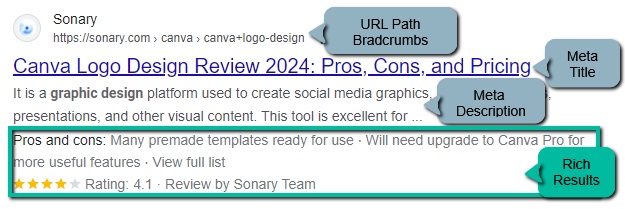
The Title Tag is the blue clickable link that appears in search results. It is one of the strongest ranking signals.
-
Best Practice: Put your main keyword at the beginning. Keep it under 60 characters.
-
Bad: “Home – MyBusiness”
-
Optimized: “Project Management Software: 5 Tools to Organize Your Team”
2. Meta Descriptions
The Meta Description is the short paragraph under the title. It does not directly affect ranking, but it affects clicks (CTR).
-
Best Practice: Write it like an ad. Pitch the value.
-
Optimized: “Stop missing deadlines. Compare the top 5 project management tools for small businesses. Free trials, pricing, and features analyzed.”
3. Canonical Tags
A Canonical Tag tells Google which version of a page is the “master” copy.
-
Why it matters: If you have
site.com/blue-shirtandsite.com/shirts/blue, Google sees duplicate content. The canonical tag prevents you from competing with yourself.
4. Robots Meta Tags
These tags tell crawlers what to do with a specific page.
-
Index/NoIndex: Tells Google whether to show the page in search results. (Use
noindexfor Thank You pages or internal admin pages). -
Follow/NoFollow: Tells Google whether to trust the links on the page.
5. Semantic Headers (H1, H2, H3)
Do not use vague headers.
-
H1: You get one per page. It is your headline.
-
H2/H3: Use specific entities.
-
Bad H2: “Tips”
-
Good H2: “How to Implement Agile Methodologies”
-
6. Internal Linking (The Glue)
This is critical. Every time you mention a concept you have written about elsewhere, link to it.
-
Action: In your “Project Management” guide, when you mention “tracking tasks,” link to your “Best Task Tracking Tools” article.
-
External Links: Link to authoritative non-competitors. For example, if you mention CRM integration, link to a trusted review of HubSpot CRM. This shows Google you cite your sources.
7. Image Optimization (Alt Text)
Google is blind. You must describe images using Alt Text.
-
Alt Text: “Screenshot of a Gantt chart showing project timelines and dependencies.”
Part 6: Content Strategy for LLMs (Future-Proofing)
AI engines (like ChatGPT and Gemini) and Google’s AI Overviews prioritize Information Density. They want facts, not fluff.
The “Inverted Pyramid” Writing Style
Journalists use this. You should too.
-
The Answer: State the most important information first.
-
The Details: Explain the context.
-
The Background: Add the fluff last.
Example for “How to unclog a drain”:
-
Start: “To unclog a drain, pour 1 cup of baking soda followed by 1 cup of vinegar. Cover the drain and wait 15 minutes.” (Direct Answer).
-
Then: Explain why the chemical reaction works.
Use Structured Data
Humans and robots prefer clear content structures, such as tables and lists.
Whenever you are comparing products or data, use a Table.
-
Example: If comparing email tools, create a table showing “Price,” “Free Trial,” and “Best For.” (You can reference comparisons like Mailchimp vs. ActiveCampaign for inspiration on how to structure this).
Part 7: Off-Page SEO (Authority)
This is the hardest part. You need the internet to vote for you.
Backlinks = Votes
A backlink is when another website links to yours.
-
High Authority Vote: A link from the New York Times. (Huge value).
-
Low Authority Vote: A link from a random blog created yesterday. (Low value).
How to Earn Links (DIY Strategy)
-
Local Citations: If you are a local business, ensure you are listed on Google Business Profile, Yelp, Bing, and local Chamber of Commerce sites. The Name, Address, and Phone (NAP) must be identical.
-
Partnerships: Ask your suppliers or vendors to link to you as an “Authorized Retailer.”
-
Digital PR: Write something newsworthy. Conduct a survey of your customers and publish the stats. Local news loves data.
Part 8: Monitoring and Maintenance
SEO is a garden. You have to water it.
The Monthly Routine
-
Check GSC: Are there any new “Crawl Errors”? Did your impressions go up or down?
-
Update Content: Google loves “freshness.” Go back to your old articles and update the year (e.g., change “Best tips for 2024” to “2025”). Add a new paragraph.
-
Check Rankings: You can use tools like RankRanger to track your specific keyword positions day-by-day.
Suggested Article Image Concepts
1. The “Iceberg” Metaphor
-
Visual: An iceberg floating in the ocean.
-
Above Water (Visible): Label “Your Website” and “Content.”
-
Below Water (Massive/Invisible): Label “Technical SEO,” “Schema Markup,” “Site Structure,” “Backlinks,” “User Intent.”
-
Caption: “90% of SEO happens below the surface.”
2. The Content Spiderweb
-
Visual: A central glowing node labeled “Pillar Page.”
-
Connections: Several smaller nodes surrounding it labeled “Cluster Articles,” all connected by bright lines representing “Internal Links.”
-
Why: Visually explains the Semantic Network concept.
Glossary of Essential SEO Terms
-
Anchor Text: The clickable words in a hyperlink.
-
Canonical Tag: A tag that tells Google, “This is the original version of this page,” preventing duplicate content issues.
-
Crawl Budget: The number of pages Googlebot is willing to visit on your site.
-
Domain Authority (DA): A metric (from Moz) that predicts how likely a website is to rank. It is not a Google metric, but it is a useful benchmark.
-
Index: Google’s database. If your page isn’t “indexed,” it doesn’t exist in search.
-
Long-Tail Keyword: Specific, 3+ word phrases with lower search volume but higher conversion intent (e.g., “red nike running shoes men size 10”).
-
Meta Robots Tag: Code that tells crawlers to
noindex(hide) ornofollow(don’t trust) a page. -
Schema Markup: Code you add to help search engines understand specific data (reviews, recipes, events).
-
SERP: Search Engine Results Page.
FAQ
1. Can I do SEO on my own without hiring an agency?
The Expert Answer: Yes. In fact, for a local SMB, you should do it yourself initially. Agencies often charge $2k–$5k/month. Until you are making $50k/month, that math doesn’t work. By doing it yourself, you build “Founder-Led Content”—authentic stories and expertise that an agency writer can never fake. Google’s 2025 algorithms (E-E-A-T) prioritize this authentic, first-hand experience over generic agency content.
2. Why is my organic traffic dropping in 2025?
The Expert Answer: It is likely due to AI Overviews (AIO). Google now answers simple questions (e.g., “how to unclog a drain”) directly on the results page using AI, meaning users don’t click your link.
-
The Fix: Stop writing simple “definition” content. Pivot to “Complex Problem Solving.” AI can define a “drain snake,” but it cannot explain “how to snake a vintage pipe without cracking it based on 20 years of experience.” Write about the nuance, not just the facts.
3. Is SEO hard to learn for beginners?
The Expert Answer: The concepts are easy; the patience is hard. You can learn the basics (Keywords, Titles, Links) in 2 weeks. The difficulty is that SEO has a “lag time.” You might do the perfect work today and see zero results for 90 days. Most beginners quit on day 60, right before the breakthrough.
4. How do I rank in Google’s AI Overviews?
The Expert Answer: Structure your content for machines. AI models “read” by scanning for structure.
-
Use Direct Answers: Start your paragraphs with the answer immediately.
-
Use Data Tables: AI loves structured data (e.g., a Price vs. Feature table).
-
Cite Sources: Link to authoritative data. AI trusts content that references other trusted entities.
5. How often should I blog for SEO?
The Expert Answer: Stop “blogging.” Start “Building a Library.” Frequency (e.g., “1 post a week”) is a vanity metric. Publishing 4 low-quality posts a month will actually hurt you (called “Index Bloat”).
-
New Rule: Publish 1 high-quality, deep-dive “Hub” piece per month that is better than anything your competitors have. Update it quarterly.
6. Does AI content (ChatGPT) rank on Google?
The Expert Answer: Yes, but with a massive asterisk. Google does not penalize AI content; it penalizes unhelpful content. If you just copy-paste from ChatGPT, you are adding zero value to the internet, and you will eventually be de-indexed.
-
The Strategy: Use AI to create the outline and structure. Then, manually write the content using your personal experience, case studies, and brand voice (Information Gain).
7. What is the most important ranking factor in 2025?
The Expert Answer: Topical Authority. Google doesn’t care if you have the best “keyword” on the page. It cares if your entire site proves you are an expert. If you are a plumber, do you have pages on every type of pipe, leak, and tool? A site with 50 connected pages on plumbing will crush a site with just one “Plumbing Services” page, even if the smaller site has better backlinks.
8. My pages are competing against each other. How do I fix ‘Keyword Cannibalization’?
The Expert Answer: Consolidate, don’t delete. Cannibalization happens when you have two weak pages about “Plumbing Tips” instead of one strong one. Google doesn’t know which one to rank, so it ranks neither.
-
The Fix: Identify the weaker page (lower traffic/links). Take its unique content and merge it into the stronger page. Then, set up a 301 Redirect from the old URL to the new one. Now you have one “Super Node” instead of two confused pages.
9. Is ‘Zero Search Volume’ content worth writing?”
The Expert Answer: Yes, it is often your highest converter. Keyword tools are often wrong about low-volume queries. A keyword like “Enterprise CRM integration for dental clinics” might show “0 searches/month,” but the one person searching for it has a wallet in their hand.
-
The Strategy: Ignore the volume metrics. If a real customer asked you this question in a meeting, write the article. These “Zero Volume” keywords act as precise connectors in your Semantic Network.
10. “Does social media activity actually help my SEO?”
The Expert Answer: Indirectly, yes. Directly, no. A link from Facebook or LinkedIn is “NoFollow” (it doesn’t pass authority juice). However, social media drives Traffic and Brand Search.
-
The Connection: If your viral TikTok causes 500 people to search for your brand name on Google, Google sees a spike in “Brand Authority” signals, which does boost your ranking. Use social to feed the search engine.
11. How do I optimize for Voice Search (Siri/Alexa)?
The Expert Answer: Write conversational H2s. Voice assistants read the “Featured Snippet” (the box at the top of Google).
-
The Tactic: Change your sub-header from “Price Factors” to “How much does a new roof cost in 2025?” Then, immediately answer it in the first sentence: “The average cost of a new roof is between $5,000 and $10,000.” This “Question + Direct Answer” format is exactly what voice bots look for.
12. “Should I delete old blog posts that get no traffic?”
The Expert Answer: Prune the garden. Having 500 low-quality pages (“Zombie Pages”) dilutes your site’s overall authority score.
-
The Action: Audit your posts.
-
Keep & Update: If the topic is still relevant, rewrite it to be a “Cluster Page.”
-
Delete & Redirect: If it’s outdated news (e.g., “Office Christmas Party 2018”), delete it and redirect the URL to your Home or Blog page.
-
13. What is the difference between ‘Local SEO’ and ‘Regular SEO’?
The Expert Answer: The Map Pack vs. The Blue Links. Regular SEO ranks your website. Local SEO ranks your Google Business Profile (GBP).
-
The Shift: For Local SEO, your “Entity” is your physical location. You must prove to Google that you are physically where you say you are. This requires consistent NAP (Name, Address, Phone) across the web, geotagged photos, and local reviews.
14. How do I get backlinks if I have no budget for PR?
The Expert Answer: The “Unlinked Mention” method. Set up a Google Alert for your brand name.
-
The Tactic: When a local blogger or news site mentions “Joe’s Coffee” but doesn’t link to you, email them: “Thanks for the shoutout! Would you mind making that text a clickable link so readers can find our menu?” This has a high success rate because they already like you enough to talk about you.
15. How does ‘Page Experience’ affect my ranking?
The Expert Answer: It is the “Tie-Breaker.” If you and a competitor have equal content quality and equal backlinks, the faster site wins.
-
The Check: Look at Core Web Vitals in GSC. If your “Cumulative Layout Shift” (CLS) is poor, it means your page jumps around while loading (usually due to ads or un-sized images). This frustrates users, and Google will demote you for it.
16. Should I focus on ‘Long-Tail’ or ‘Short-Tail’ keywords first?
The Expert Answer: Always Long-Tail (The Spokes). You will not rank for “Shoes” (Short-Tail) against Nike. You can rank for “Best running shoes for flat feet in [City]” (Long-Tail).
-
The Network Effect: You capture the small, easy wins (Spokes) first. As you accumulate traffic from 50 long-tail keywords, your total site authority rises, eventually allowing you to rank for the competitive Short-Tail terms later.
17. How often should I audit my technical SEO?
The Expert Answer: Quarterly (Every 3 Months). Websites rot. Plugins break, links die, and images get too big.
-
The Tool: Use the free version of Screaming Frog SEO Spider. It crawls your site like Google does. Look for “404 Errors” (Broken Links) and “Missing H1s.” Fixing these is the easiest “quick win” in SEO.