New AI Features for Explosive Growth for Small Businesses
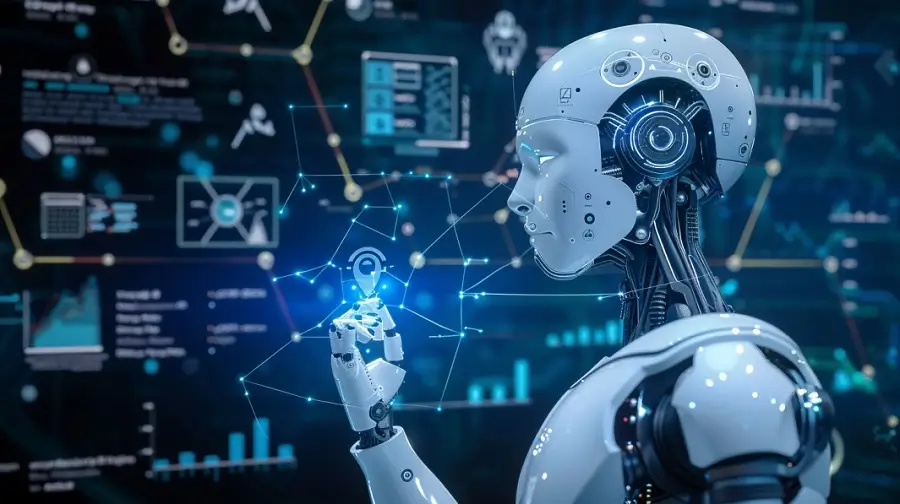


The world of artificial intelligence (AI) is evolving rapidly, presenting small businesses with transformative tools to streamline operations, improve customer engagement, and fuel growth. As AI becomes more accessible, small businesses are in a unique position to leverage these technologies to compete with larger enterprises. This article explores the latest AI innovations tailored to small business needs and how they can drive explosive growth.
The Late 2025 AI Updates
- Google Gemini 3 & “Vibe Coding”: The barrier to software development has collapsed. Users can now build functional apps using natural language and multimodal inputs (sketches/video), effectively democratization engineering.
- OpenAI “Operator” & GPT-5.1: The model line has split. GPT-5.1 Instant handles fast, low-latency tasks, while GPT-5.1 Thinking engages in deep reasoning to reduce hallucinations. The Operator agent now acts as a “digital employee,” navigating browsers autonomously.
- Anthropic Claude 3.5 “Computer Use”: Claude can now “see” and control desktop interfaces, allowing it to automate legacy software that lacks APIs (e.g., old ERPs or accounting tools).
- Microsoft Copilot Wave 2: AI is now an invisible layer in Office 365. “Copilot Pages” introduces multiplayer collaboration where humans and AI co-edit documents in real-time.
- Midjourney v7: Achieves true photorealism and “Brand Consistency” modes, allowing SMBs to generate marketing assets that strictly adhere to visual identity guidelines.
2025: The Year of the Agent
A chronological snapshot of the pivotal updates that defined the year.
Q2 2025 (The Creative Leap)
- Midjourney v7 (June): Moved beyond static images to offer “Draft Mode” for rapid iteration and “Personalization” engines that learn a brand’s specific aesthetic, solving the consistency issue for marketing teams.
Q3 2025 (The Integration Wave)
- Microsoft Copilot Wave 2 (July/August): Shifted focus from chatbots to “Copilot Pages,” enabling multiplayer AI collaboration. Introduced Copilot Agents in Teams, allowing businesses to automate workflows (like CRM updates) without leaving the chat interface.
- Anthropic Claude 3.5 Updates (October): Unveiled “Computer Use” (Beta), allowing the AI to control a mouse and keyboard to navigate legacy desktop software.
Q4 2025 (The Reasoning Revolution)
- Google Gemini 3 (November): Introduced “Deep Think” capabilities for enhanced reasoning and “Vibe Coding” in AI Studio, allowing non-technical founders to build apps using multimodal inputs (video/audio).
- OpenAI GPT-5.1 & Operator (November): Bifurcated the model line into “Instant” (fast, low-cost) and “Thinking” (deep reasoning). Launched “Operator,” a browser-based agent capable of autonomous procurement and research.
Key Terminology for the 2026 SMB
Implementing these “NLP Keywords” will help your content rank for the emerging search intent of late 2025.
- Vibe Coding: The process of building software by describing the desired “vibe” and intent to an AI, rather than writing code.
- Agentic Workflows: A system where AI agents autonomously plan and execute multi-step tasks (e.g., “Research vendors > Compare prices > Email top 3”).
- Computer-Using Agents (CUA): AI models capable of viewing a screen and interacting with GUIs (buttons, menus) like a human.
- Deep Reasoning Models: AI architectures (like o1 or Gemini Deep Think) that “pause” to verify logic before generating an answer, critical for financial/legal tasks.
- Multiplayer AI: Collaborative environments where humans and AI agents edit the same persistent documents simultaneously (e.g., Copilot Pages).
Related Articles:

The AI Revolution: A Glimpse into the Latest Innovations
Google Gemini 3: The Engine of “Vibe Coding”
The Revolution: The democratization of software engineering is no longer a buzzword; it is a technical reality. Gemini 3 has effectively lowered the barrier to entry for app development to zero.
The “Vibe Coding” Paradigm Shift
“Vibe Coding” is not just a feature; it is a new abstraction layer for computer science. In the past, you needed to understand syntax (Python, JS). Now, you only need to understand Product Intent.
- The “Vibe” as Code: Gemini 3 doesn’t just “write code”; it understands aesthetic and functional directives. You can input a “vibe profile”—specifying a “neon-cyberpunk aesthetic with snappy, instant-feedback buttons”—and the model translates these abstract adjectives into precise CSS variables and React components.
- Tech Stack Agnostic: Unlike previous models that struggled with dependencies, Gemini 3 automates the “boring” parts of the stack. It autonomously handles the scaffolding (e.g., setting up Vite, Tailwind CSS, and TypeScript) so the user sees a working app in seconds, not hours.
The “Deep Think” Workflow
Gemini 3’s Deep Think mode (similar to OpenAI’s o1) allows the model to verify its own logic before writing a single line of code.
- Self-Correction Loop: If the model generates a “Snake” game but the snake moves too fast, it doesn’t just guess a fix. It “plays” the logic internally, realizes the refresh rate is too high, and corrects the
requestAnimationFrameloop before presenting the code to you. - Benchmarks: This capability has pushed Gemini 3 to the top of the WebDev Arena, achieving an Elo score of 1487—effectively surpassing the coding capability of junior human developers for standalone tasks.
Why This Matters for SMBs
-
The “Throwaway App” Economy: Small businesses can now build “disposable” software for single-use problems. Need a specific calculator for a one-time client project? Vibe code it in 5 minutes, use it, and discard it. The cost of development is now negligible.
OpenAI’s GPT-5.1 & “Operator”: The Agentic Counter-Strike
The Revolution: OpenAI has moved beyond “Chat” to “Action.” The release of GPT-5.1 bifurcates AI into two distinct species: a fast talker and a deep thinker, while “Operator” acts as the hands.
The Great Bifurcation: Instant vs. Thinking
- GPT-5.1 Instant (The Fast Talker): This model is engineered for human-like latency. It doesn’t just output text; it is tuned for “warmth” and “brand adherence.” For customer support, it creates an experience indistinguishable from a helpful human agent, with zero wait time.
- GPT-5.1 Thinking (The Deep Thinker): This utilizes Adaptive Compute. When you ask, “Analyze this 50-page contract for liability risks,” the model pauses. During this silence, it is running thousands of internal simulations—checking clauses against legal databases, verifying logic, and spotting contradictions. It treats a prompt as a project, not a question.
“Operator”: The Browser-Native Employee
-
Computer-Using Agent (CUA): “Operator” is not a chatbot; it is a headless browser pilot. It sees the web exactly as you do—pixels, buttons, and forms.
- The “Blue Collar” AI: It is designed for the “drudgery” of the web.
- Procurement: “Find the cheapest price for 500 units of this specific SKU across these 5 vendor sites and add it to the cart.”
- Vetting: “Go to the LinkedIn profiles of these 50 applicants, check if they have ‘Python’ certification, and put the qualified ones in a spreadsheet.”
- Impact: This destroys the “admin bottleneck.” A single human manager can now direct a fleet of Operators to perform 100 hours of web-research work in 10 minutes.
Anthropic Claude 3.5: Master of Desktop Automation
The Revolution: While OpenAI conquers the browser, Anthropic conquers the desktop. This is the bridge between the AI future and the “Legacy Software” past.
“Computer Use”: The Universal Adapter
Most SMBs run on old software—legacy ERPs, desktop accounting tools, or proprietary inventory systems that have no API. Previously, AI couldn’t touch them.
- Pixel-Based Control: Claude 3.5 Sonnet analyzes rapid-fire screenshots of your screen. It counts pixels to know exactly where the “Submit” button is, even on a Windows 95-style interface.
- The “Dockerized” Employee: Developers are running Claude inside safe, sandboxed environments (Docker containers). You can give Claude a virtual desktop, log it into your old accounting software, and say, “Transfer these 500 invoice PDFs into the system.” It will click, type, and navigate menus just like a temp worker, but 24/7.
The Economics of Haiku
- Claude 3.5 Haiku: This model is the unsung hero of 2025. It offers the intelligence of 2024’s flagship models at a fraction of the cost.
- High-Volume Processing: You can feed it 50,000 customer reviews or 10 years of legal archives for a few dollars. It makes “Big Data” analytics accessible to a “Small Data” budget.
Microsoft Copilot Wave 2: The Flow of Work
The Revolution: Microsoft has stopped trying to make you “chat” with AI and started making AI a “multiplayer” teammate. The era of the lonely prompt is over.
Copilot Pages: The Multiplayer Canvas
- Beyond the Chat Window: Traditionally, AI chat is ephemeral—you close the window, and it’s gone. Copilot Pages is a persistent, shared document.
- Human-AI Collaboration: Imagine a Google Doc where the AI is a live participant. You, your CFO, and Copilot are all on the same page. You type a strategy; Copilot instantly pulls a graph from Excel to support it; your CFO tweaks the numbers; Copilot rewrites the summary to match. It is fluid, real-time collaboration.
Copilot Agents: The Silent Workforce
- “Work IQ”: These agents live inside Microsoft Teams and Outlook. They don’t wait for prompts; they react to triggers.
- Example: A “Sales Agent” monitors your inbox. When a lead emails, the Agent automatically looks them up on LinkedIn, checks your CRM for past interactions, and drafts a personalized reply for you to approve. It turns Outlook from a mailbox into a command center.
Midjourney v7: Visual Mastery & Consistency
The Revolution: Midjourney v7 solves the single biggest problem businesses had with AI art: Brand Consistency.
Personalization & Style Codes
- The “Randomness” Killer: In v6, getting the same style twice was hard. In v7, businesses build Personalization Profiles. You feed the model your brand guidelines (colors, lighting, mood).
- Style Codes (
--p): You get a unique code (e.g.,--p xy9z). Any employee using this code will generate images that match your exact brand aesthetic. This turns Midjourney from an “art generator” into a “corporate design engine.”
Draft Mode
-
Speed as a Feature: v7’s Draft Mode runs 10x faster than standard generation. Creative teams can sit in a meeting and generate 50 different ad concepts in real-time on a projector, iterate on the best ones, and finalize the campaign before the meeting ends.
Notion 3.0: The “Agents” Update
The Revolution: Notion stopped being a wiki and started being an operating system.
- What changed: Released in September 2025, Notion 3.0 introduced “Custom Agents.” Previously, Notion AI could only summarize text on a page. Now, an agent can perform actions across your database.
- The “Project Manager” Agent: You can task a Notion Agent to: “Scan the ‘Engineering Tasks’ database every morning at 9 AM. If any task is tagged ‘Blocked’ for more than 48 hours, Slack the assignee and add a ‘Needs Attention’ flag.”
- Why it matters for SMBs: It effectively automates middle-management. You don’t need a human chaser; the software chases itself.
Runway Gen-3 Alpha (Late 2025 Updates)
The Revolution: Video generation moved from “cool clips” to “production-ready B-roll.”
- “Director Mode”: The November update introduced granular camera control. You don’t just prompt “drone shot”; you define the exact camera path (pan left 30 degrees, tilt down 15 degrees, zoom 2x).
- Consistency: The new “Asset Lock” feature allows a business to upload a product image (e.g., a specific sneaker) and generate 50 different videos where the sneaker looks identical in every shot, solving the “morphing logo” problem of 2024.
ElevenLabs “EIF” (Emotional Intelligence Framework)
The Revolution: AI voice is no longer monotonous; it understands subtext.
- The “Subtext” Engine: In the 2025 update, ElevenLabs introduced the Emotional Intelligence Framework. If the script says, “I’m fine,” but the context implies sadness, the AI voice will crack slightly or drop in pitch to convey the hidden meaning.
- Real-Time Translation: The new “Universal 2.0” model allows for live voice translation that preserves the original speaker’s accent and emotional tone, enabling SMBs to hold Zoom calls with international suppliers without a human translator.
Official Announcement
| Platform | Update / Release | Announcement Date | Source URL |
| Gemini 3 & Vibe Coding | Nov 18, 2025 | https://blog.google/products/gemini/gemini-3/ | |
| OpenAI | Operator Agent | Jan 23 / July 17, 2025 | https://openai.com/index/introducing-operator/ |
| Anthropic | Claude 3.5 “Computer Use” | Oct 22, 2024* | https://www.anthropic.com/news/developing-computer-use |
| Anthropic | Claude Sonnet 4.5 | Sep 29, 2025 | https://www.anthropic.com/news/claude-sonnet-4-5 |
| Microsoft | Copilot Wave 2 | Oct 16, 2025 | https://techcommunity.microsoft.com/blog/microsoftmechanicsblog/microsoft-365-copilot-wave-2-spring-updates/4414785 |
| Midjourney | Midjourney v7 (Stable) | Apr 4, 2025 | https://www.midjourney.com/updates |
| Notion | Notion 3.0: Agents | Sep 18, 2025 | https://www.notion.com/releases |
| Canva | Magic Studio ’25 | July 16, 2025 | https://www.canva.com/magic/ |
Get Your Business Ready for AI
The emergence of these powerful AI features presents a golden opportunity for small businesses to optimize their operations, streamline workflows, and boost their bottom line. AI is no longer a luxury reserved for large corporations. It’s a game-changer that levels the playing field and empowers small businesses to achieve unprecedented growth.