Ahrefs vs SEMrush: Which Tool Wins for SEO Accuracy, Value & Growth?


Choosing between the “Big Two” of SEO – Ahrefs and SEMrush – often feels like a high-stakes decision for small business owners. You know you need data to rank, but with subscription costs rising, you don’t want to pay for features you’ll never touch.
The core difference is philosophical: Ahrefs is built as an SEO-first tool with a surgical focus on backlinks and technical integrity, while SEMrush is a broad-spectrum digital marketing command center that includes PPC, social media, and content tools. In this guide, I’ll use my decade of SEO experience to break down which platform will actually move the needle for your business in 2026.
Key points
- Ahrefs is best for technical SEOs and those focused on aggressive link-building strategies.
- SEMrush is stronger in multi-channel marketing, providing deeper insights into PPC and local SEO.
- The main difference in pricing is that SEMrush includes more “marketing” features in its base tiers, while Ahrefs charges based on a “credits” system for data consumption.
- The key feature that separates them is the backlink index; Ahrefs is widely considered the gold standard for link accuracy.
- The ideal audience for Ahrefs is the solo SEO or technical specialist who values a clean, fast UI.
- The ideal audience for SEMrush is the marketing manager or agency owner who needs one tool to handle SEO, content, and reporting.
Market position & ideal use cases
Ahrefs began as a backlink analysis tool and has evolved into a powerhouse for organic search. Their brand philosophy centers on “simplicity and depth.” They don’t try to be a social media scheduler; they try to be the most accurate map of the internet’s link graph. It’s ideal for freelancers and businesses where organic traffic is the primary growth lever.
SEMrush positions itself as an “all-in-one” marketing suite. They want to be the only tab you have open. Beyond SEO, they offer tools for market research, paid advertising, and even social media management. This makes them the go-to for growing agencies or SMBs that need to manage a 360-degree digital presence without buying five different subscriptions.


Pro
Pros
- Comprehensive Toolset
- Detailed Competitive Analysis
- User-Friendly Interface
Cons
- Comparatively Expensive
- Limited Website Crawling

Starter
Pros
- Excellent backlink and off-page SEO tracking
- Reliable domain rating metric
- Comprehensive SEO reports
Cons
- Starter and Lite plans have strict limits
- Looker Studio integration is only available in Advanced+ plans
Platform & ecosystem
Both Ahrefs and SEMrush are cloud-based SaaS platforms, meaning no heavy software installations are required.
Ahrefs is praised for its streamlined User Interface (UI). It’s fast, modern, and rarely feels cluttered. SEMrush, by contrast, can be overwhelming for a new user because it houses over 55+ tools within a single sidebar. However, SEMrush offers a more robust mobile app for tracking rankings on the go, whereas Ahrefs remains primarily desktop-focused.
Core features & capabilities
| Feature | Ahrefs | SEMrush |
| Keyword Research | Strong data on “clicks” and parent topics. | Massive database with “Search Intent” labels. |
| Backlink Analysis | Industry-leading crawler speed and live link data. | Massive index, but includes more “historical” (dead) links. |
| Site Audit | Exceptional for technical JS and crawl depth. | User-friendly “Health Score” with prioritized fixes. |
| On-Page SEO | Basic content gap analysis. | Writing Assistant with real-time SEO & readability scores. |
The Accuracy Showdown: Which Tool Can You Actually Trust?
When the numbers don’t match, which one is right? The truth is, they use different methodologies. Ahrefs relies heavily on “clickstream data” (real user behavior recorded via browser extensions), which makes their “Click-Through Rate” (CTR) estimates and “Clicks per Search” highly reliable.
SEMrush uses a blend of clickstream data and proprietary machine-learning models to estimate volume. According to multiple 2025/2026 industry studies, SEMrush often has a slight edge in US-based search volume accuracy, while Ahrefs remains the winner for discovering new backlinks within hours of them going live.
| Data Type | Data Type | Why? |
| Search Volume (US) | SEMrush | More diverse ML models and larger data sample. |
| Backlink Discovery | Ahrefs | Faster crawler (AhrefsBot) refresh rate. |
| Traffic Estimates | SEMrush | Better at modeling “Share of Voice” across devices. |
| Keyword Difficulty | Ahrefs | Based purely on the number of referring domains needed. |
➔ Backlink Accuracy
Ahrefs is the clear winner here. Their crawler is fast, their index is deep, and new links show up quickly. I’ve seen Ahrefs catch links SEMrush misses for days. The contextual details also help me evaluate link quality without guessing. Ahrefs offers a powerful backlink checker and backlink analysis tool, making it easy to analyze your backlink profile, identify broken links, and find new link-building opportunities. Additionally, Ahrefs provides detailed insights into referring domains, helping you assess the quality and diversity of websites linking to your site.
➔ Keyword & Traffic Estimates
SEMrush aligns better with real-world impressions and click data, especially for U.S.-focused campaigns. Their branded vs. non-branded split, device-level views, and intent breakdowns give me a clearer picture when building projections. SEMrush also provides detailed PPC data, offering insights into paid search metrics like CPC and cost-per-click for those interested in analyzing paid search opportunities alongside organic traffic.
 Research database with 24B+ keywords
Competitor data: Keywords, backlinks & ads
Research database with 24B+ keywords
Competitor data: Keywords, backlinks & ads My Recommendation:
- For link accuracy and outreach: Ahrefs
- For volume estimates and traffic modeling: SEMrush
1. Keyword Research (From My Experience)
This is usually where I start any campaign. Whether it’s a small site or an enterprise-level project, keyword research is the foundation. Over the years, I’ve tested both tools for everything from high-volume commercial keywords to long-tail content plays. Here’s how they stack up.
Why It Matters: Strong SEO starts with understanding how people search. A good keyword tool helps you find opportunities, plan clusters, and prioritize content. Both Ahrefs and SEMrush help you evaluate the difficulty of ranking for a particular keyword, making it easier to target the right terms.
Ahrefs
- Quick and focused keyword explorer, including the Ahrefs Keyword Explorer
- Access to a massive Ahrefs keyword database for generating keyword ideas
- Great for parent topics and click-through potential
- Accurate KD (keyword difficulty) and return rate
SEMrush
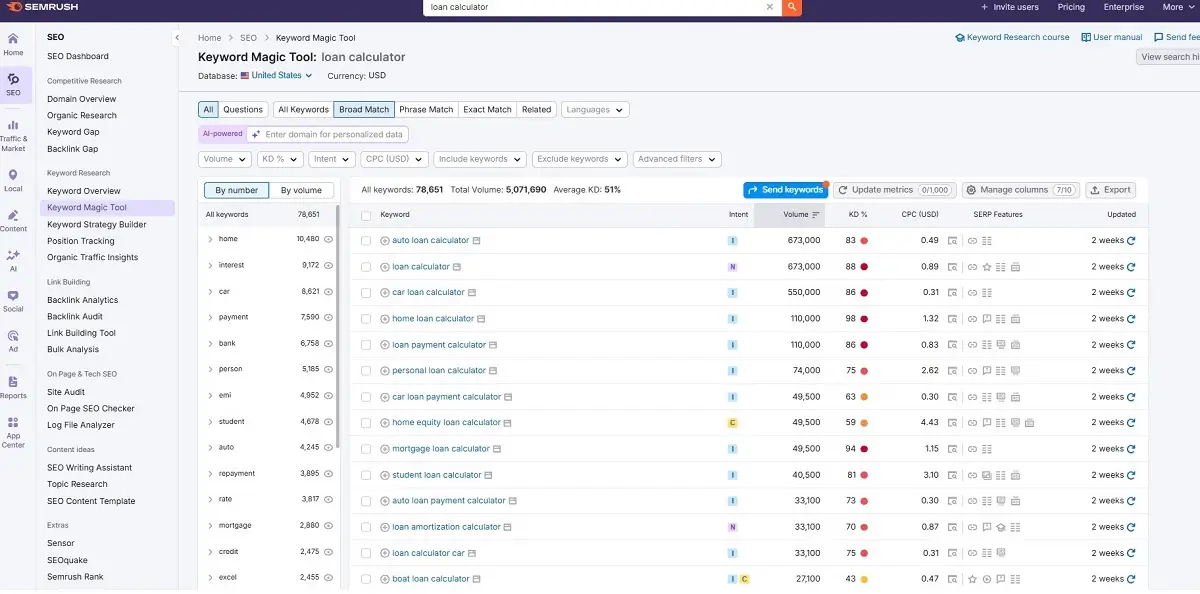
- Massive keyword database
- Keyword Magic Tool generates extensive keyword ideas, analyzes keyword difficulty score, and helps filter by keyword search intent
- Filters for search intent, funnel stage, and related topics
- Tracks ads and SERP features
Extra Tools I Use
- Google Search Console: For actual keyword queries
- Google Keyword Planner: For broader PPC support
- AnswerThePublic: For long-tail and questions
Winner: SEMrush (for content depth and segmentation)
2. Backlink Analysis (What I Use Most)
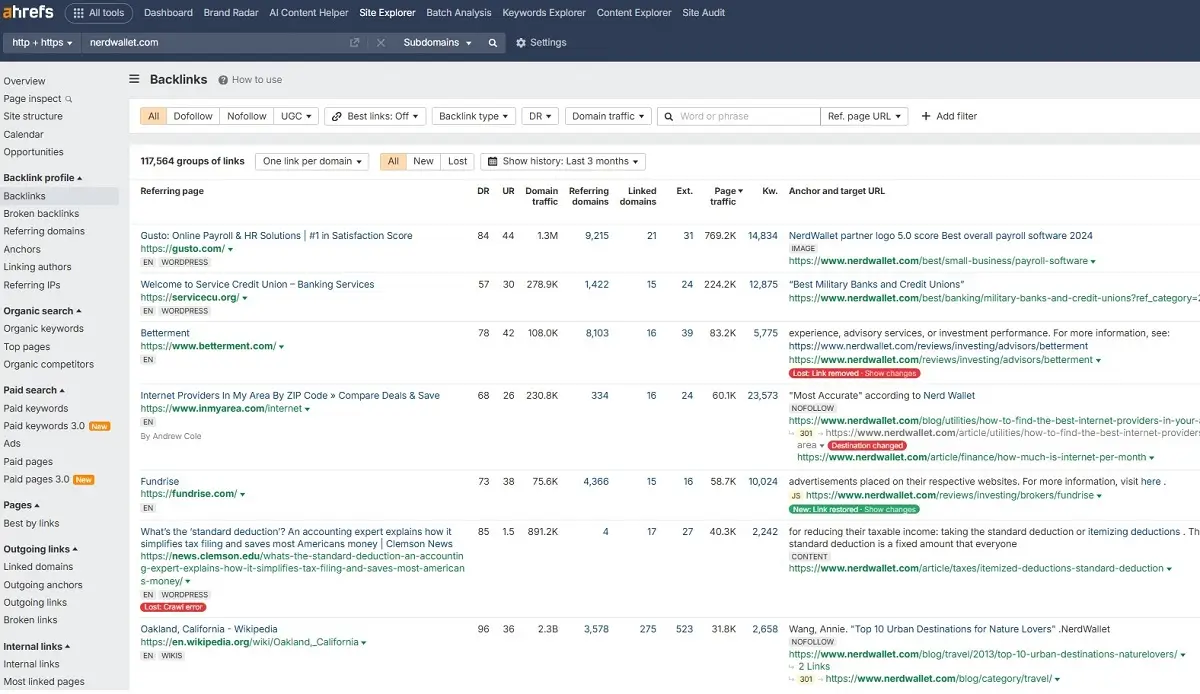
Link-building is still a significant part of my SEO work, especially when trying to compete in saturated spaces. I’ve relied on Ahrefs for years for backlink data. If I had to pick one feature I trust the most in Ahrefs, it’s this.
Both Ahrefs and SEMrush offer powerful backlink analysis tools that help identify broken links and opportunities for outreach and effective link-building strategies. These tools are essential for discovering new link-building opportunities and improving your site’s authority.
Why It Matters: Backlinks are still the most powerful signal in SEO. Knowing where links come from, what anchors are used, and how fast your competitors earn them gives you a strategic edge.
Ahrefs
- Live link data, refreshed constantly
- Largest link index outside Google
- Anchor, context, and historical link profile
- Site Explorer for in-depth backlink analysis and discovering link building opportunities
SEMrush
- Link audit tools, disavow integration
- Toxicity scoring for cleanup projects
Extra Tools I Use
- Google Search Console (Links): Verified links from Google
- Majestic: For trust/citation flow
Winner: Ahrefs (for outreach, monitoring, and link growth)
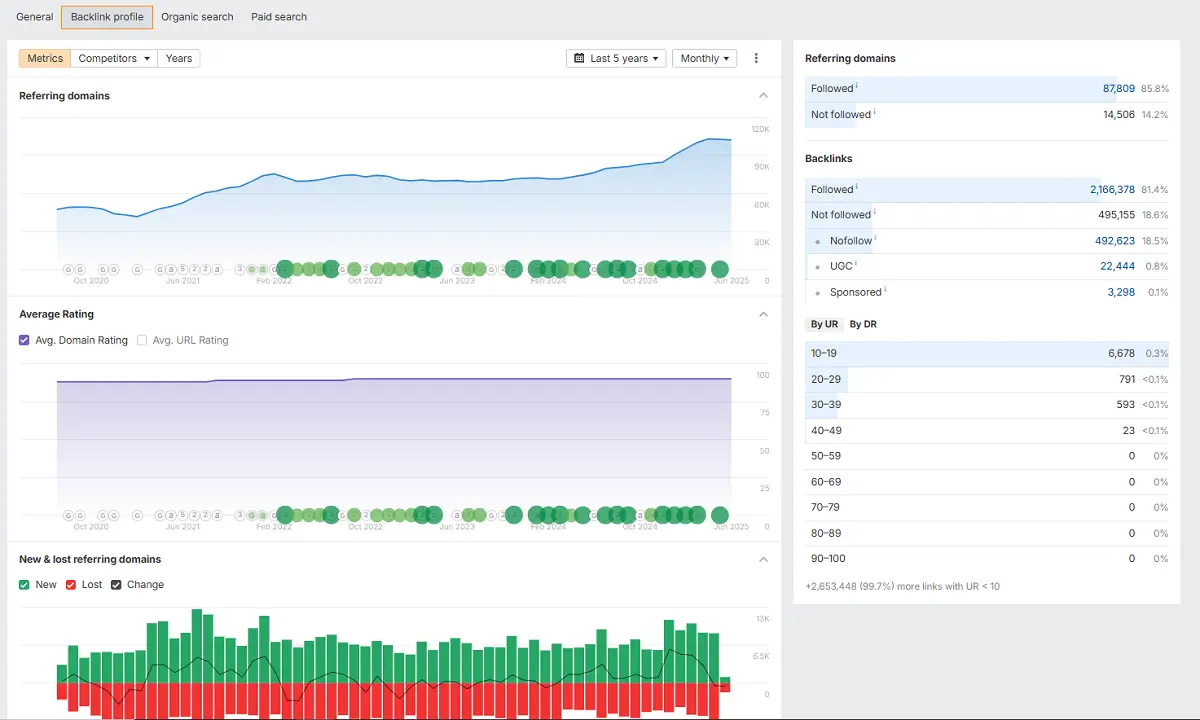
3. Rank Tracking (How I Monitor Progress)
Rank tracking gives me a pulse check — it’s how I know if my work is actually moving the needle. I track positions across dozens of sites and keywords, and here’s how each platform holds up in the real world. A dedicated rank tracker or rank tracker tool is essential for monitoring search rankings and effective keyword tracking over time, ensuring you stay updated on your SEO performance.
Why It Matters: Knowing your rankings is table stakes. But good rank tracking shows how you’re doing by device, location, and SERP features—which affects your real visibility.
Ahrefs
- Simple and reliable daily tracking
- Global and mobile vs. desktop view
SEMrush
- Local SERP tracking (city/ZIP)
- Tracks snippets, knowledge panels, and more
- SEMrush’s position tracking tool offers daily updates for monitoring keyword rankings
Extra Tools I Use
- Google Search Console (Performance): Best source for avg. positions
- AccuRanker: Quick snapshots
Winner: SEMrush (for local and feature tracking)
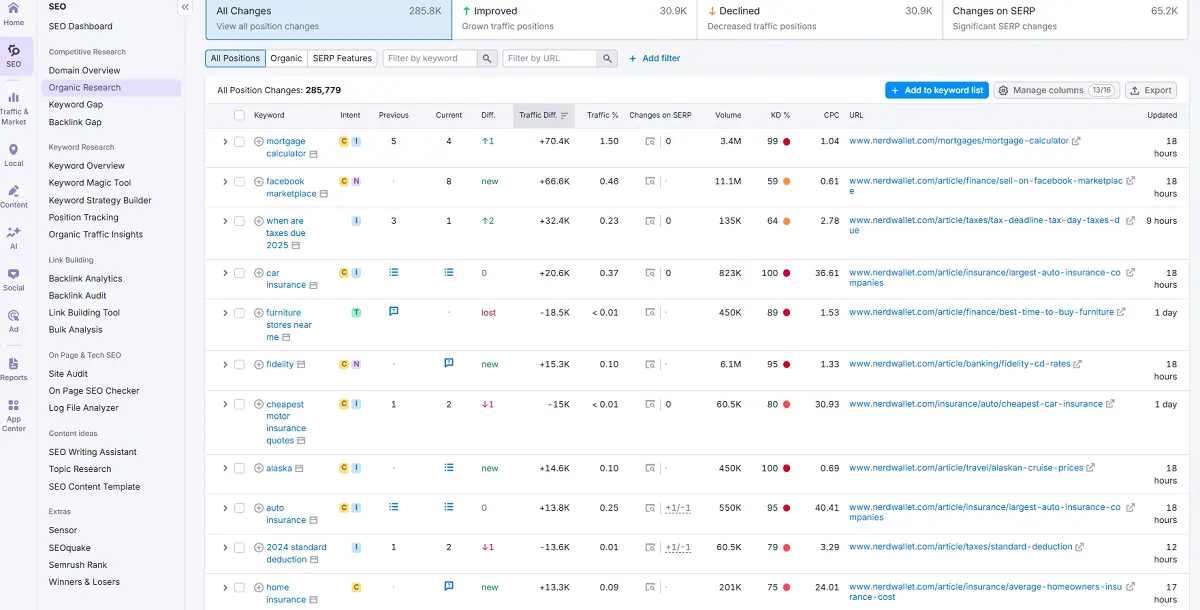
4. Site Audits (Where I Catch the Hidden Problems)
Technical SEO is a big part of my work, especially for clients with messy CMS setups or outdated structures. I use site audits regularly to spot and fix issues that could be holding back performance, and over time, I’ve learned where each tool shines and falls short.
Why It Matters: Technical SEO often separates good sites from great ones. A proper audit tool will surface issues quickly and let you act before rankings drop.
Ahrefs
- Great for deep technical audits
- Finds crawl errors, JS issues, and orphaned pages
- Provides a health score metric from site audits to evaluate overall SEO health in real time
SEMrush
- Easy for beginners to understand
- Prioritized recommendations with explanations
Extra Tools I Use
- Google Search Console (Indexing/Core Web Vitals)
- Screaming Frog SEO Spider
- Lighthouse (Chrome DevTools)
Winner: Ahrefs (for advanced audits)
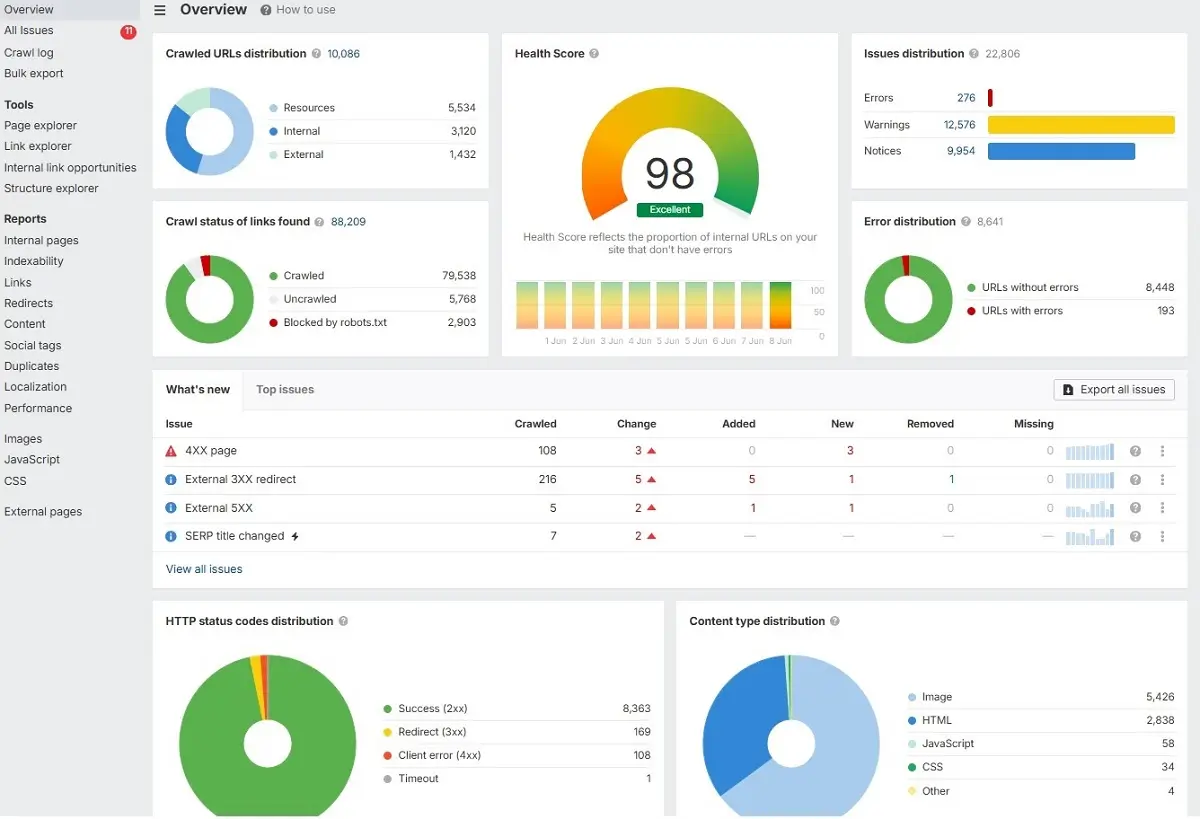
5. Keyword Gap Analysis (My Go-To for Fast Wins)
This is one of my favorite strategies when auditing a new site or planning a content roadmap. Comparing a domain to its top competitors quickly uncovers opportunities I can act on right away — especially when there’s low-hanging fruit no one’s targeting properly. Using competitive analysis tools like those in Ahrefs and SEMrush helps identify keyword gaps and opportunities by providing features such as keyword gap analysis, traffic analytics, and backlink gap analysis..
Why It Matters: One of the easiest ways to find opportunities is to compare your rankings to a competitor’s. This shows exactly where you’re missing out.
Ahrefs
- Fast domain vs. domain keyword comparison
SEMrush
- Filter by paid/organic, funnel intent, keyword group
Extra Tools I Use
- Search Console: Queries with low positions
- Surfer / Clearscope: NLP gap analysis
Winner: SEMrush (more filtering and depth)
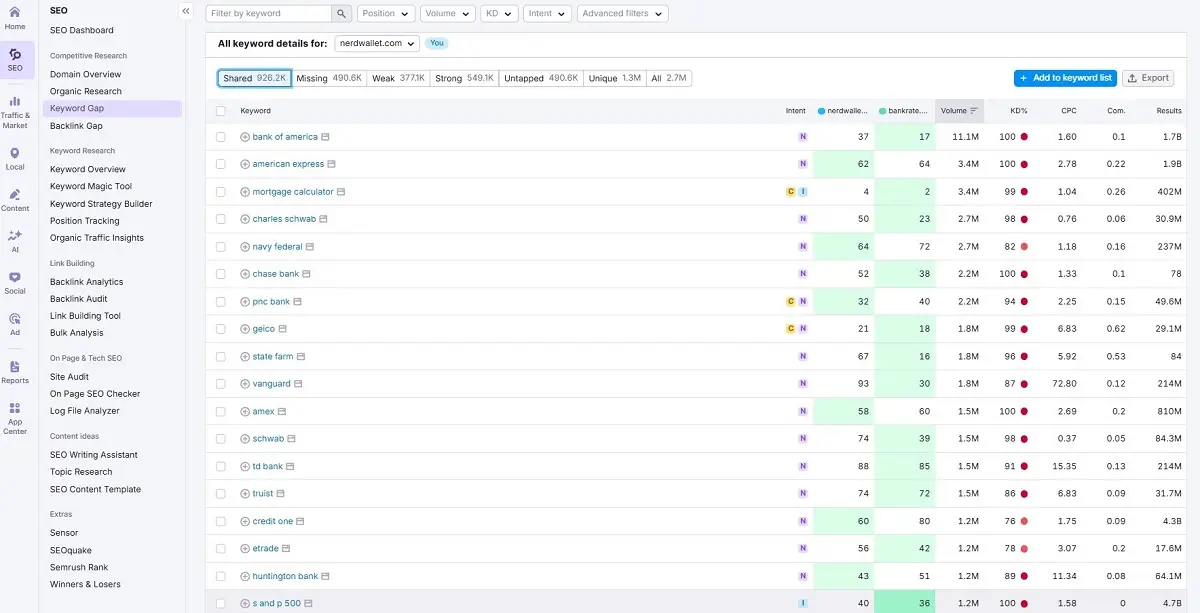
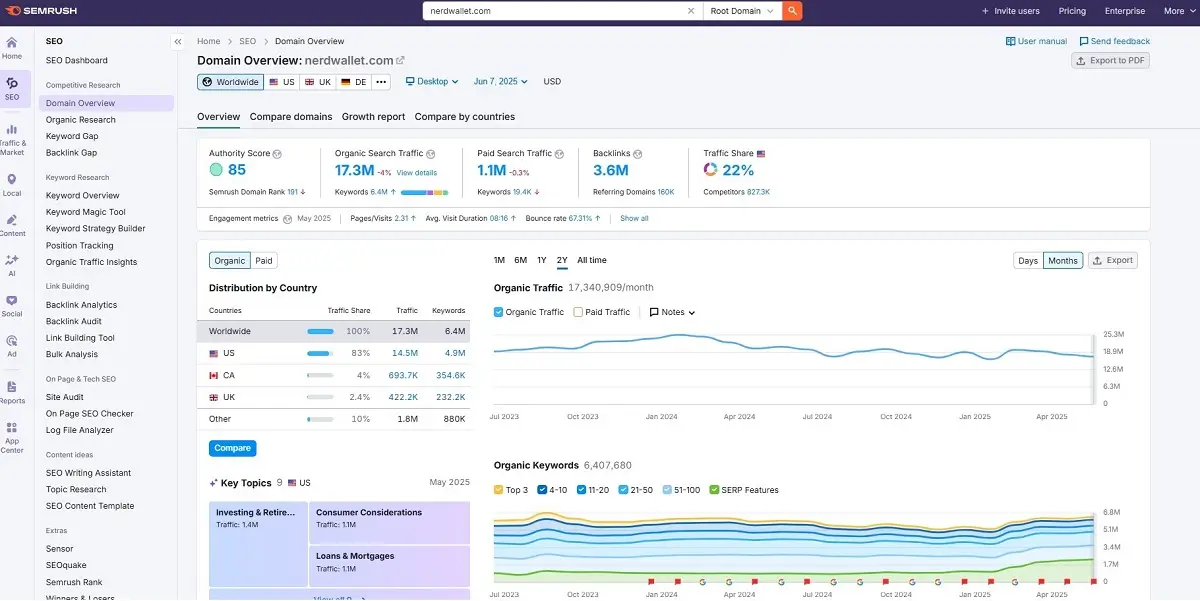
6. Organic Traffic Estimation (What I Trust — and What I Don’t)
Traffic estimation tools are helpful — but they’re not perfect. I always compare tool data to what I see in Google Analytics and Search Console. That said, they give me a good general picture, especially when I’m benchmarking competitors.
Why It Matters: No SEO strategy is complete without understanding how much traffic you or your competitors are pulling in—and where it’s coming from.
Ahrefs
- Conservative, clean traffic estimates
- Identifies organic keywords that drive traffic to your site, helping you analyze which keywords you rank for naturally in search engine results
SEMrush
- Traffic broken down by brand, device, and region
Extra Tools I Use
- Google Analytics 4
- Google Search Console (Performance)
Winner: SEMrush (better visibility modeling)
7. Competitor Analysis (How I Build Smarter Strategies)
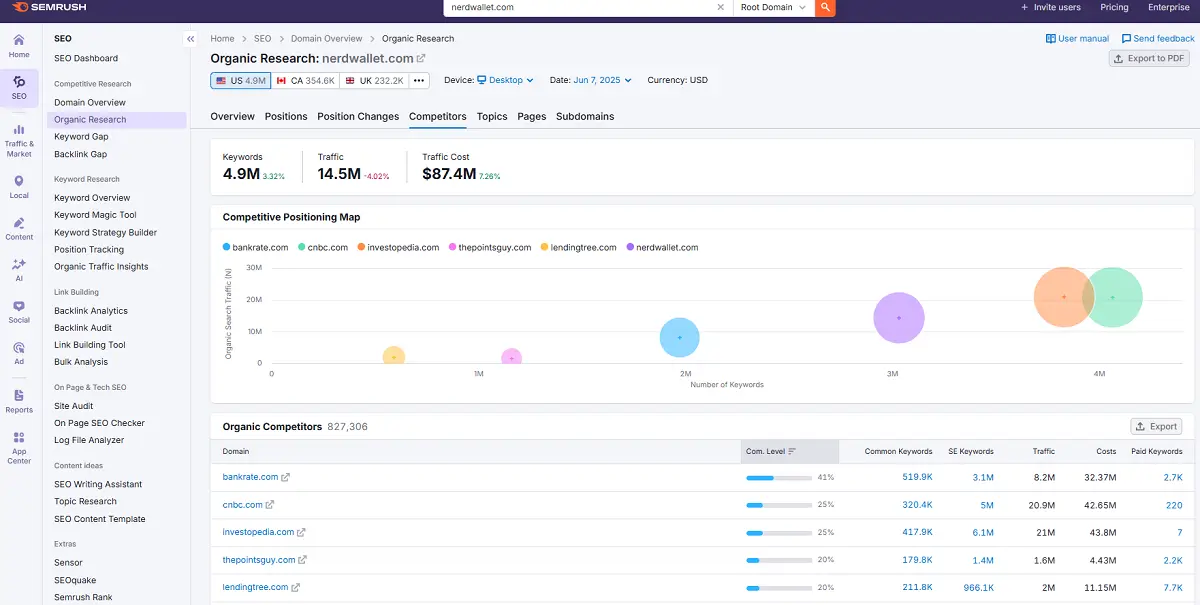
I’ve worked on competitive SEO in almost every industry, from SaaS to e-commerce. One thing that never changes is that the better you understand your competitors, the better you can position your own site. Using an analysis tool to benchmark your site against competitors across different search engines is essential for effective keyword strategies. This is how I use both tools to get that edge.
Why It Matters: SEO is never in a vacuum. Seeing where your competitors rank, get traffic, and earn links is one of the fastest ways to build a smarter strategy.
Ahrefs
- Focused on organic traffic and backlinks
SEMrush
- Covers paid ads, shopping, branded terms, social
Extra Tools I Use
- Similarweb: General traffic benchmarking
- BuzzSumo: Viral content and links
- BuiltWith: Tech stack and CMS intel
Winner: SEMrush (if you’re looking beyond SEO)
8. Content Marketing Tools (What Helps Me Build Better Pages)
Creating content that ranks isn’t just about keywords — it’s about structure, intent, and giving real value. I’ve used these tools to brainstorm ideas, build briefs, and help teams write smarter content that’s more likely to perform.
Why It Matters: Planning content that ranks is part research, part execution. The right tool helps you discover ideas and shape SEO-friendly copy.
Ahrefs
- Content Explorer: Search for high-performing content by topic or keyword
SEMrush
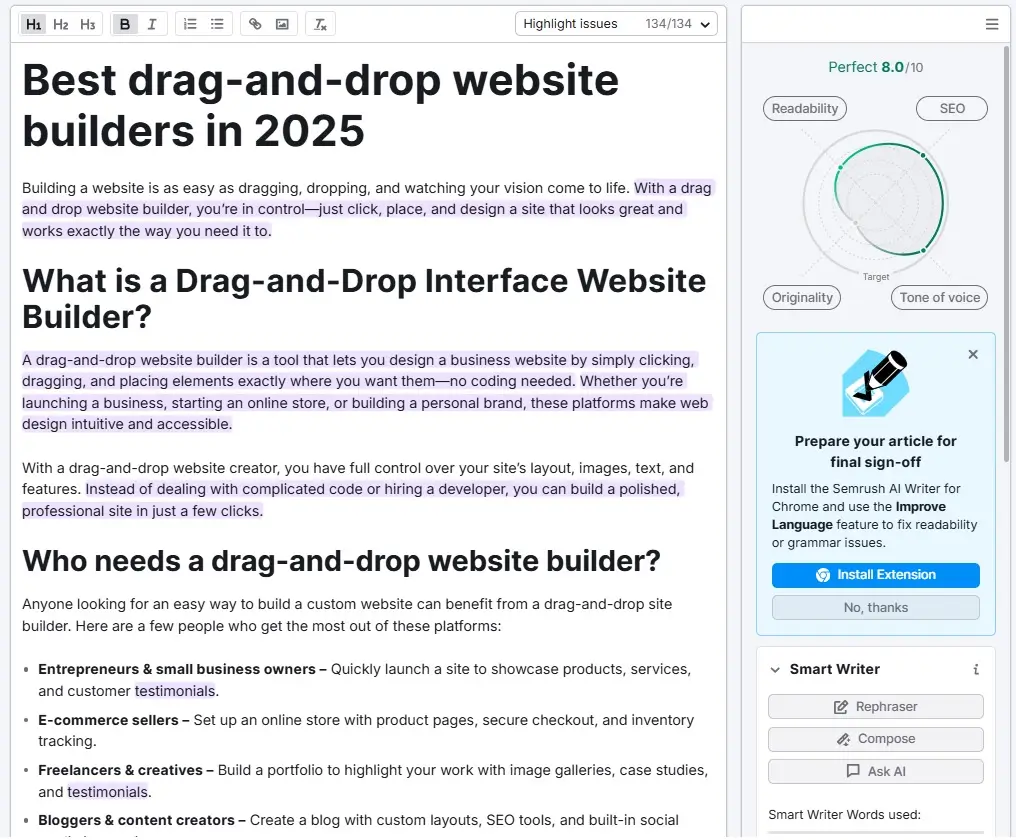
- Topic Research, AI briefs, SEO Writing Assistant, readability checker
Extra Tools I Use
- Surfer / Frase / Clearscope: On-page optimization
- Google Trends
- AlsoAsked / AnswerThePublic
Winner: SEMrush (end-to-end content workflow)
AI, Automation & Smart features
In 2026, AI is the new battlefield. SEMrush has integrated AI throughout its suite, most notably in its “SEO Writing Assistant,” which uses machine learning to suggest related keywords and tone of voice.
Ahrefs takes a more cautious approach, using AI primarily to help users categorize “Parent Topics” or generate meta tags. They focus on using AI to make their data more accurate rather than just generating content.
Real-World Scenarios
Example 1: The Freelance Graphic Designer
A solo designer wants to start a blog to attract organic clients. They need to find “low-hanging fruit” keywords and make sure their site doesn’t have technical errors.
Winner: Ahrefs Lite. The UI is less distracting, and the “Site Audit” tool will keep their portfolio site healthy without the “marketing noise” of a larger tool.
Example 2: The 20-Person Marketing Agency
This agency manages SEO, Google Ads, and Facebook for 15 clients. They need to send monthly reports and track local rankings for a plumbing business in three different cities.
Winner: SEMrush Guru. The ability to track local ZIP codes and combine PPC/SEO data into one automated report saves dozens of hours of manual labor every month.
Pricing Comparison
Pricing isn’t just about entry-level cost. You have to look at project limits, keyword caps, user access, historical data, crawl credits, and how fast you hit upgrade triggers.
Ahrefs uses a “usage-based” model. You get a set number of “credits” per month; if you click around a lot or open many reports, you will burn through credits and may need to pay for more. SEMrush allows for more “browsing” but limits the number of results you can export and charges significantly for additional user seats ($45–$100 per user).
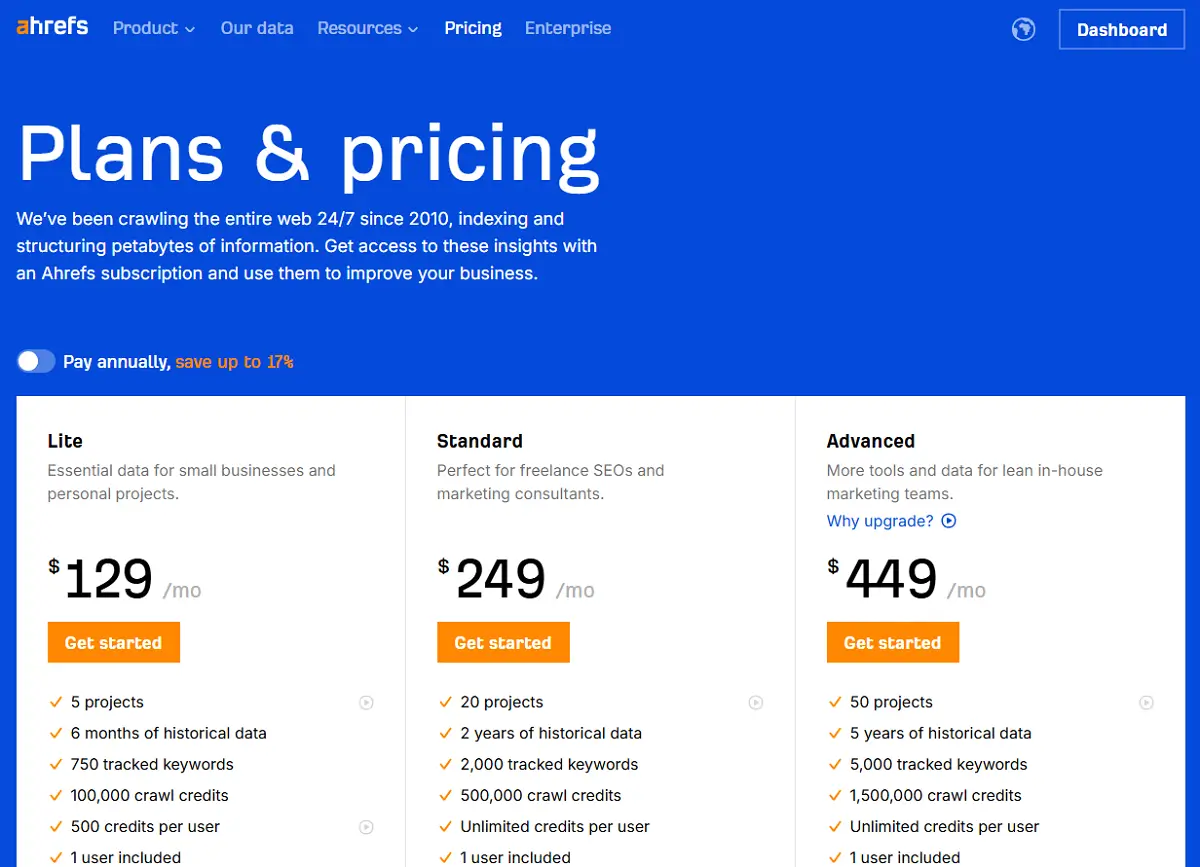
Ahrefs Pricing
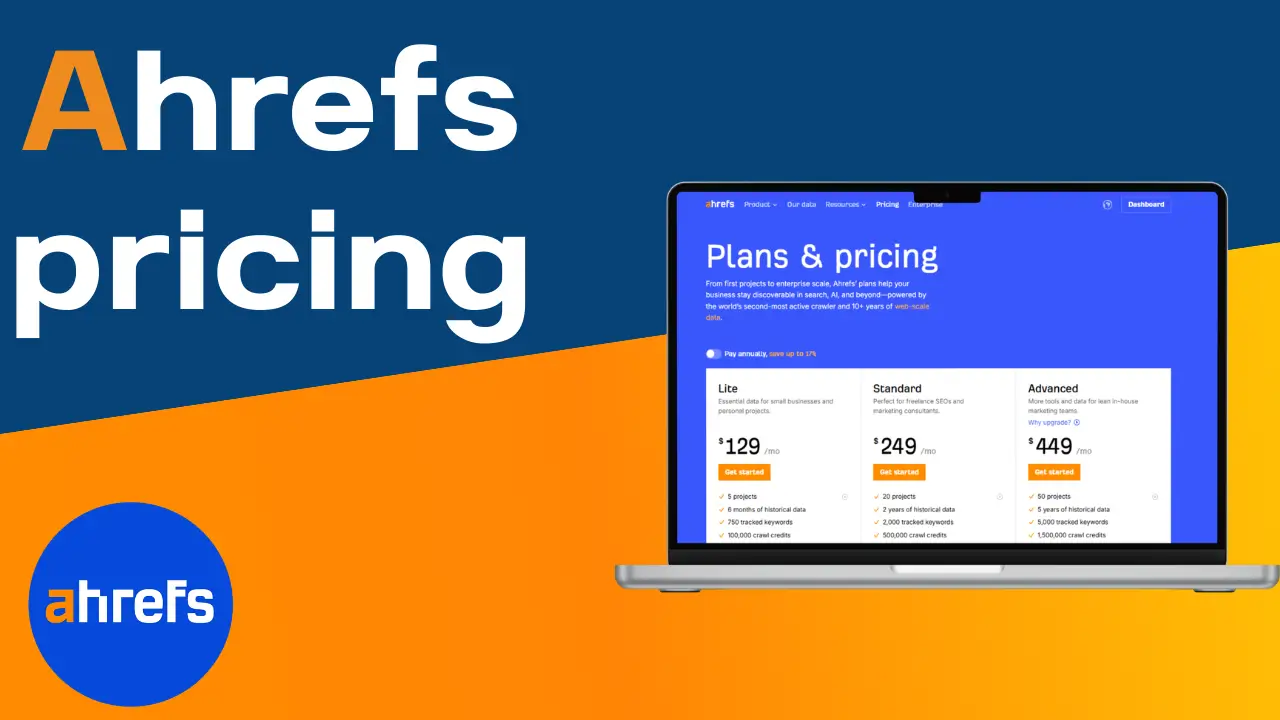
Ahrefs’ pricing method is based on usage, meaning users are billed according to the amount of data or features they utilize.
| Plan | Price | Projects | Keywords | Historical Data | Crawl Credits | Users | Best For |
| Lite | $129/mo | 5 | 750 | 6 months | 100,000 | 1 (+$40/user) | Small businesses, basic SEO needs |
| Standard | $249/mo | 20 | 2,000 | 2 years | 500,000 | 1 (+$60/user) | Freelancers, consultants |
| Advanced | $449/mo | 50 | 5,000 | 5 years | 1,500,000 | 1 (+$80/user) | In-house teams, larger operations |
SEMrush Pricing
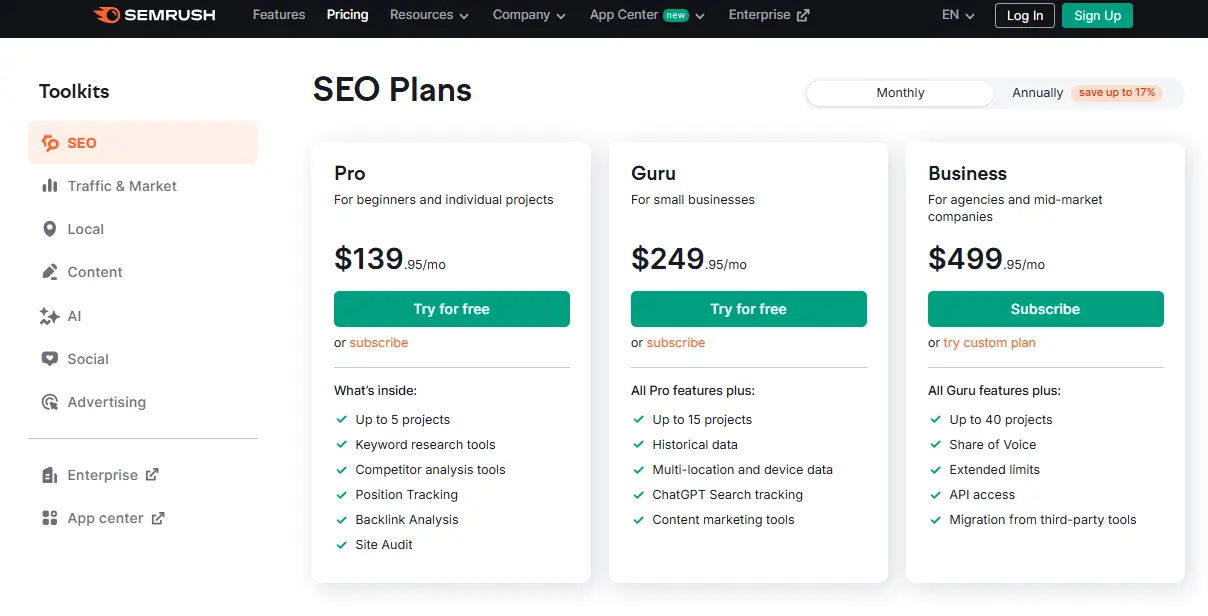
SEMrush’s pricing structure is determined by the number of user seats and the specific projects you wish to track, allowing for customization based on your team’s size and analytical needs.
| Plan | Price | Projects | Keywords | Historical Data | Limits | Users | Best For |
| Pro | $139.95/mo | 5 | 500 | No | Fair usage | 1 | Solo SEOs, bloggers |
| Guru | $249.95/mo | 15 | 1,500+ (approx.) | Yes | Expanded | 1 | Content teams, small agencies |
| Business | $499.95/mo | 40 | 5,000+ (approx.) | Yes + API | Highest tier | Custom | Agencies, enterprise marketing teams |
Annual Discounts (billed yearly):
- Ahrefs: Save ~17% when billed annually (e.g., Lite drops to $108/mo)
- SEMrush: Also saves ~17% (e.g., Pro drops to $117.33/mo)
Which Plan Fits Your Team?
- Solo SEOs & Freelancers: Ahrefs Lite or SEMrush Pro — both are usable but limited. Site owners may prefer these plans for straightforward outreach and link building.
- SEO Specialists, Content Teams & Agencies: SEMrush Guru or Business — better workflow, more features. SEO specialists often favor Ahrefs for its SEO-focused features and simplicity, while agencies may prefer SEMrush for its comprehensive toolset.
- In-House & Enterprise SEO Teams: Ahrefs Advanced or SEMrush Business — more scale, more credits, more users.
Heads-up:
- Ahrefs offers fewer bells and whistles but is very clear on usage limits.
- SEMrush offers a lot upfront but starts charging for more exports, users, and advanced features faster.
- Small Businesses / Freelancers: Choose Ahrefs Lite or SEMrush Pro. Both are fine for basic SEO, but Ahrefs offers a cleaner, faster experience.
- Agencies / Content Teams: SEMrush Guru or Business — better for reporting, content briefs, and integrated tools.
- Large Enterprises / SEO Departments: Ahrefs Advanced or SEMrush Business — both allow API access, more tracked keywords, and user control.
Watch out: SEMrush charges for add-ons (like additional users, historical data, and extra reports). Ahrefs clarifies limitations but restricts access to core features unless you go to a higher tier.
Related Articles


Not Ready for Paid Tools Yet?
If you’re just getting started with SEO, maybe it’s your first site, a small blog, or a one-person business, don’t overcomplicate it. You don’t have to jump into SEMrush or Ahrefs right away. Honestly? You can learn a ton and make real progress using only free tools.
When I was starting out, I leaned heavily on what Google gives you for free:
- Google Search Console: It’s your direct line to what Google sees. You’ll learn which keywords drive impressions and clicks, which pages are doing well, and where indexing issues hold you back.
- Google Analytics (GA4): Helps you track what happens after users land on your site — who bounces, who stays, and what content keeps people engaged.
- Google Tag Manager: Lets you track clicks, scrolls, form submissions — all without needing a dev. It’s a must if you’re serious about UX and conversion behavior.
Use these tools to get the basics right. Start by determining what pages are performing well, and ask yourself why. What’s different about them? Is it the topic? The structure? The length? Try to reverse-engineer what’s working and double down on it.
You don’t need 10 tools. You need one good habit — consistency. SEO isn’t about chasing quick wins. It’s a long-term game. What matters most is that you keep showing up, publishing valuable content, and learning from your site’s data.
And most importantly, think about your users. Not just traffic numbers. Not just positions. Actual people. The better you solve their problem, the better your SEO will perform.
You can win with the basics. You just have to use them well.
Final Verdict: Choose Based on What You Do Most
| SEO Task | Best Tool | Why |
| Keyword Research | SEMrush | Content segmentation and clustering |
| Backlink Analysis | Ahrefs | Fast, deep, reliable |
| Rank Tracking | SEMrush | Local + SERP features |
| Site Audits | Ahrefs | Technical depth for pros |
| Keyword Gap Analysis | SEMrush | More insight with funnel/intent filtering |
| Organic Traffic Estimations | SEMrush | Multi-layered traffic modeling |
| Competitor SEO Research | Ahrefs | Faster and SEO-specific |
| Multi-channel Competitor Research | SEMrush | Cross-channel coverage |
| Content Ideation | Ahrefs | Top-performing page discovery |
| Content Optimization | SEMrush | Writing assistant + optimization tools |
My Bottom Line
If you’re focused mainly on technical stuff — like SEO health, backlinks, or fixing site issues — then Ahrefs is probably the better choice. It’s fast, easy to navigate, and gives you solid data about what’s going on behind the scenes. It’s my go-to when I want to dive deep into audits or track link-building campaigns.
If you spend more time working on content—building pages, researching keywords, and checking what your competitors are doing, then SEMrush might be a better choice. It has more tools for content planning, reporting, and even checking how your ads or social campaigns perform.
Do you need both? Not really. However, using both tools can give you a more complete picture if you work across multiple areas, like SEO, content, reporting, and strategy. That’s what I do: Ahrefs helps me handle technical SEO and backlinks, while SEMrush supports me with content strategy and deeper research.
This is what works for me. Feel free to reach out if you’re unsure which one is right for you. I’ve helped many teams determine what matters in their day-to-day work.
You can win with the basics. You just have to use them well.
FAQ
Which tool is more accurate?
It depends on the data type. Ahrefs is generally more accurate for backlink discovery because their crawler is faster. SEMrush is often more accurate for US-based search volume because they use a more complex machine-learning model to supplement clickstream data.
Why do search volumes differ between Ahrefs and SEMrush?
This happens because of different data sources. Ahrefs relies heavily on “clickstream” data (anonymized data from browser extensions), while SEMrush uses a blend of clickstream and proprietary data models. One tool may have crawled a specific keyword more recently than the other.
Why aren’t my backlinks showing up in Ahrefs?
If a backlink isn’t appearing, the site might be blocking Ahrefs’ crawler (AhrefsBot) in their robots.txt file, or the page might have a “noindex” tag. It also takes time for crawlers to find new pages on the web.
Does SEMrush have a free version?
Yes, SEMrush offers a limited free version that allows 10 searches per day. Ahrefs does not have a “free version” of their full suite, but they do offer “Ahrefs Webmaster Tools” for free, which lets you audit your own verified website.
Which is better for local SEO?
SEMrush is the winner here. It has dedicated tools for “Listing Management” (syncing your business info across directories) and allows you to track keyword rankings down to the specific city or ZIP code.
Is Ahrefs better than SEMrush for beginners?
Ahrefs is often easier for beginners to navigate because the menu is simpler. However, SEMrush provides more “educational” tooltips and a “Writing Assistant” that tells you exactly how to improve your content
Can I use both?
Many professional SEOs do. They use Ahrefs for technical audits and link building and SEMrush for keyword research and reporting. For most SMBs, however, this is an unnecessary expense.
What do people on Reddit think?
The general consensus on subreddits like r/SEO is that Ahrefs has a superior UI and link data, while SEMrush offers better value for money if you need a “marketing Swiss Army knife.”