
Best Keyword Research Tools to Boost Your Rankings

Keyword research is still one of the most important parts of SEO, but its role has changed.
Today, you're no longer optimizing only for Google's traditional search results. Your content also needs to appear in AI-powered search experiences, including Google AI Overviews, ChatGPT, Gemini, Perplexity, and other AI assistants that retrieve and summarize information.
Modern keyword research isn't about finding the keyword with the highest search volume. Instead, it's about identifying the topics, questions, and search intent your ideal customers have, and building comprehensive content that answers them better than anyone else.
Good keyword research helps you:
- Define the exact topic your page should focus on.
- Discover long-tail keywords that are easier to rank for and often convert better.
- Find semantic keywords and related entities that help search engines and AI systems fully understand your content.
- Create pages that satisfy multiple user questions instead of targeting a single keyword.
Search volume is still useful, but it should no longer be the deciding factor. The best keywords are the ones that closely match your products, services, and audience, even if they receive fewer searches.
This approach helps you capture highly qualified traffic, appear for thousands of long-tail searches, improve visibility in AI-generated answers, and ultimately generate more revenue instead of simply increasing visitor numbers.
What is Keyword Research?
Keyword research is the process of understanding how people search for information, products, and services online, and identifying the topics, questions, and language they use throughout their buying journey.
Modern keyword research goes beyond finding high-volume keywords. It also includes:
- Understanding search intent
- Discovering long-tail search queries
- Identifying semantic keywords and related entities
- Mapping keywords to customer journey stages
- Finding questions people ask AI assistants and search engines
Effective keyword research creates a content strategy that helps your pages rank in traditional search results while also increasing the likelihood of being referenced in AI-generated search experiences.
Best Keyword Research Tools
Tool | Best For | Standout Feature | Free Plan Limitations |
|---|---|---|---|
Detailed SEO insights | Comprehensive SEO health reports | No free plan is offered | |
Organic Keywords monitoring | Performance reporting | Unlimited | |
Trend analysis | Search interest trends over time | Unlimited | |
SERP Checker | Competitive analysis | Topics/keyword intent | Unlimited |
All-around research | Keyword prioritization metrics | 10 queries per month | |
Advanced SEO Analytics | Extensive toolkit for SEO and PPC | 14 days free trial | |
Entry-level SEO insights and audits | SEO audit tools | Limited searches per day | |
Content ideation | Visualization of search questions | Limited searches per day |
Keyword research involves identifying and analyzing the search terms people use in search engines to find information, products, or services. Choosing the right, highly relevant keywords is essential for effectively reaching the target audience. This strategic selection boosts both click-through rates (CTR) and conversions, as it aligns content with what users are actively searching for. By optimizing content around these keywords, you improve search engine visibility and drive organic traffic, helping your content perform better in search engine results and attract more qualified visitors.
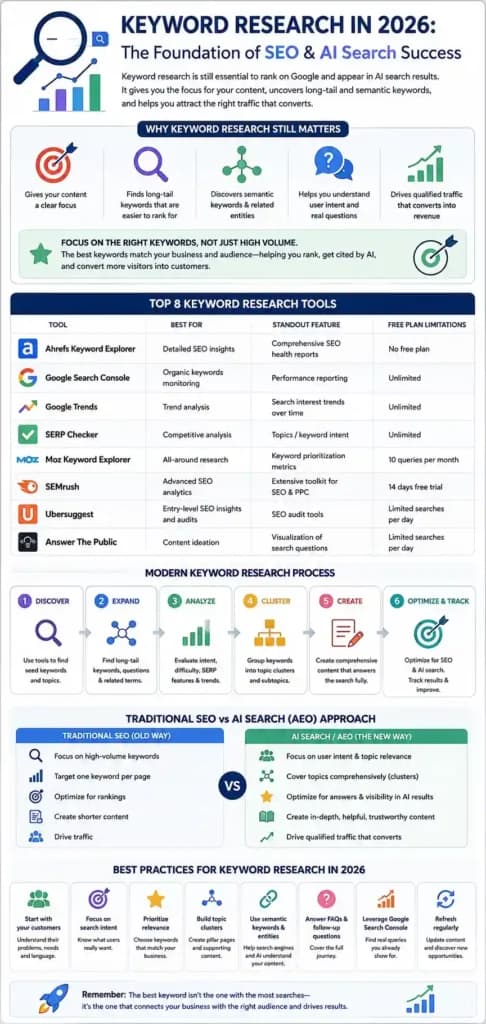
Top 8 Keyword Research Tools
1. Ahrefs Keyword Explorer Tool
Ahrefs keyword explorer tool extends beyond the capabilities of Google Search Console, offering detailed insights into SEO health, keyword rankings, and backlinks. It’s particularly powerful for identifying and resolving over 140 different SEO issues, providing deep analysis capabilities that help you understand and optimize your site’s performance effectively. Additionally, Ahrefs provides accurate search volume data, which helps users understand keyword popularity and refine their SEO strategies.
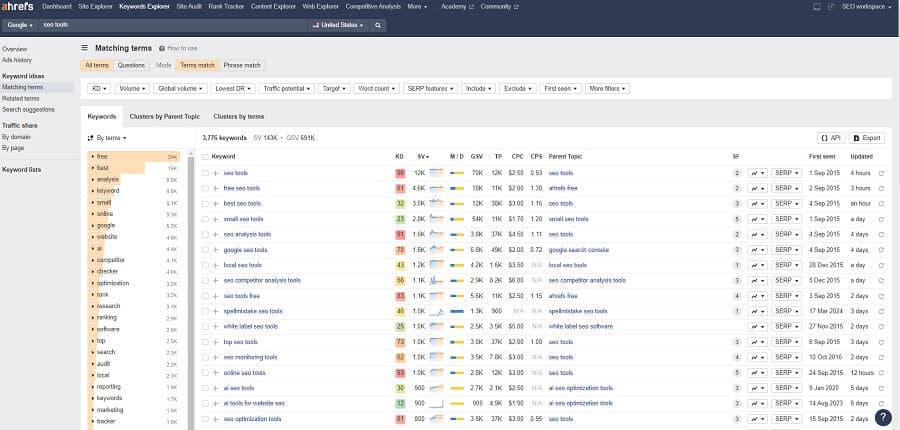
- Best for: Website owners seeking comprehensive SEO insights
- Standout Feature: Extensive SEO health reports
- Free Plan: No free plan is offered.
- Features & Functionality: Offers robust site audits, backlink analysis, and performance metrics.
- Pros: Comprehensive issue detection and in-depth SEO reporting.
- Cons: Providing only the full versions.
- Ideal for: Those requiring detailed analysis of their site's SEO and competitive positioning.
2. Google Search Console
Google Search Console provides essential tools for monitoring your website's performance in Google Search. It offers valuable insights into search traffic, indexing status, and optimization issues, making it indispensable for SEO management.
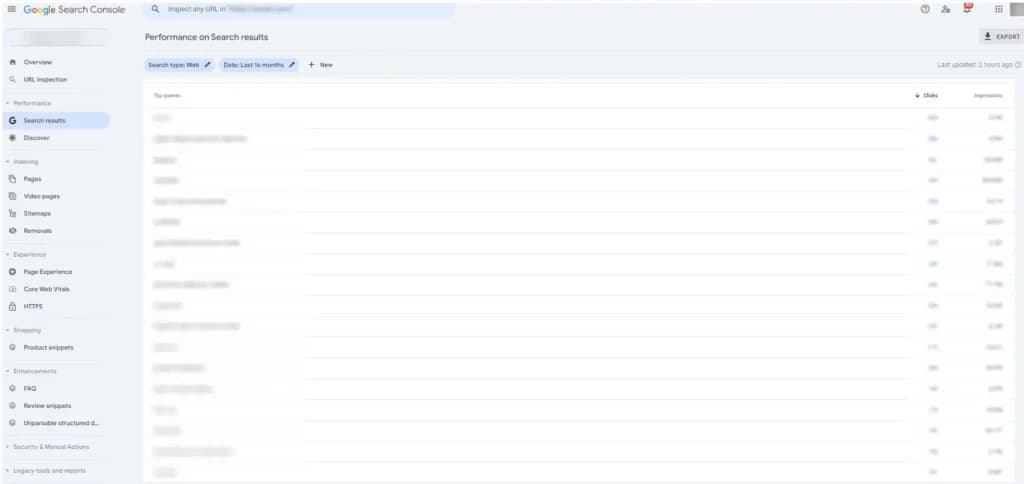
- Best for: Monitoring and optimizing website performance in Google search
- Standout Feature: Performance reporting for top 1,000 keywords
- Free Plan: Full access to search performance data
- Features & Functionality: Tracks search traffic, manages sitemap submissions, and monitors and resolves website errors.
- Pros: Direct integration with Google, detailed reporting on search performance.
- Cons: May be less intuitive for beginners.
- Ideal for: SEO professionals and site administrators needing detailed search analytics.
Best SEO Tools

- Research database with 24B+ keywords
- Competitor data: Keywords, backlinks & ads

- Find content ideas & link opportunities
- Audit & optimize your website SEO

- Competitor analysis tool to stay ahead
- Seamless integration with marketing tools

3. Google Trends
Google Trends analyzes the popularity of search queries across many regions and languages, providing a dynamic way to gauge public interest and identify trending topics.
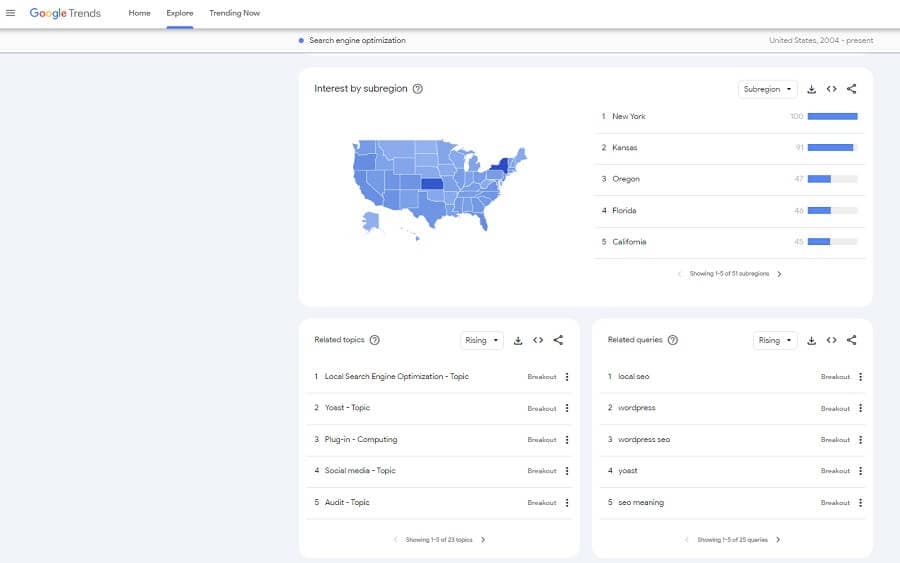
- Best for: Identifying trending topics and keywords
- Standout Feature: Visualization of search interest trends over time
- Free Plan: Unlimited access
- Features & Functionality: Tracks search term popularity over time and across different locations.
- Pros: Useful for identifying market trends and seasonal demand.
- Cons: Relative search volume data requires additional context for full analysis.
- Ideal for: Marketers and content creators looking to create relevant and timely content.
4. Moz Keyword Explorer
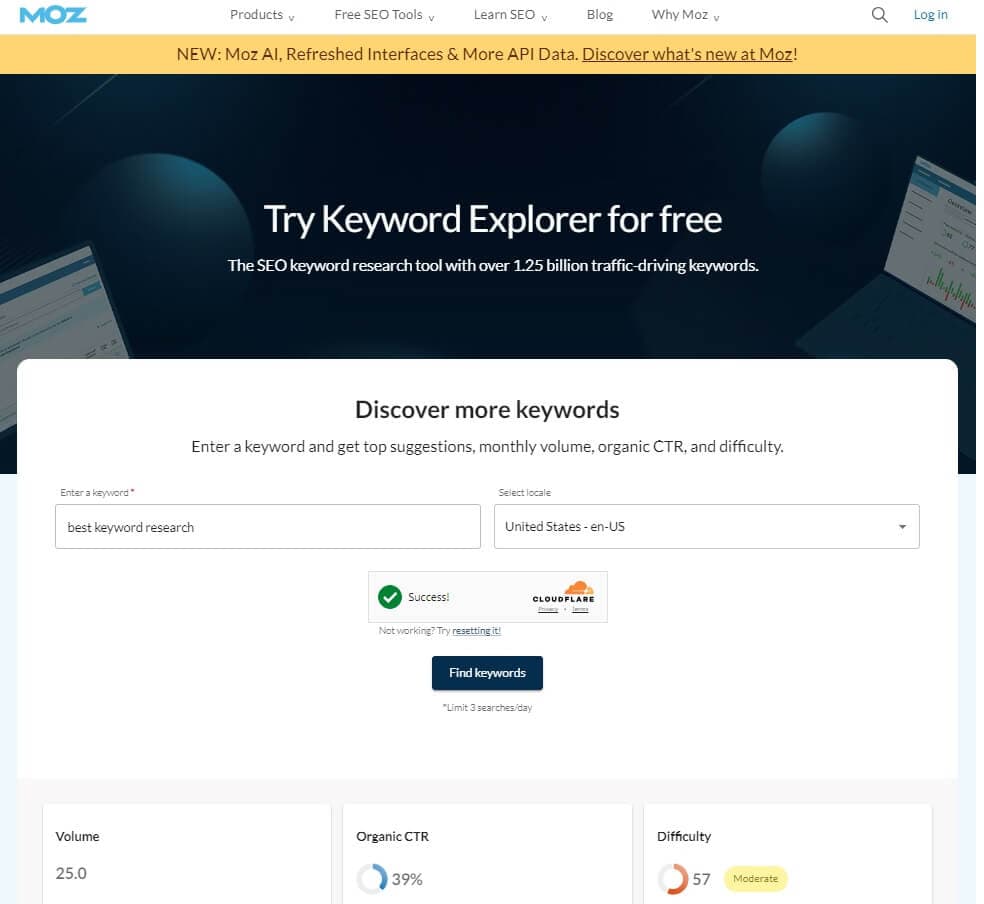
Moz Keyword Explorer is a comprehensive tool offering extensive insights into keyword suggestions, search volume data, keyword difficulty, and SERP analysis. It is a versatile free keyword tool useful for search engine optimization and PPC campaigns.
- Best for: All-around keyword research
- Standout Feature: Keyword prioritization metrics
- Free Plan: Limited to 10 queries per month
- Features & Functionality: Provides search volume, forecasting, SERP features, and competitive keyword insights.
- Pros: User-friendly interface with actionable data.
- Cons: Limited queries in the free version.
- Ideal for: SEO specialists and marketers who need thorough and actionable keyword insights.
5. SEMrush
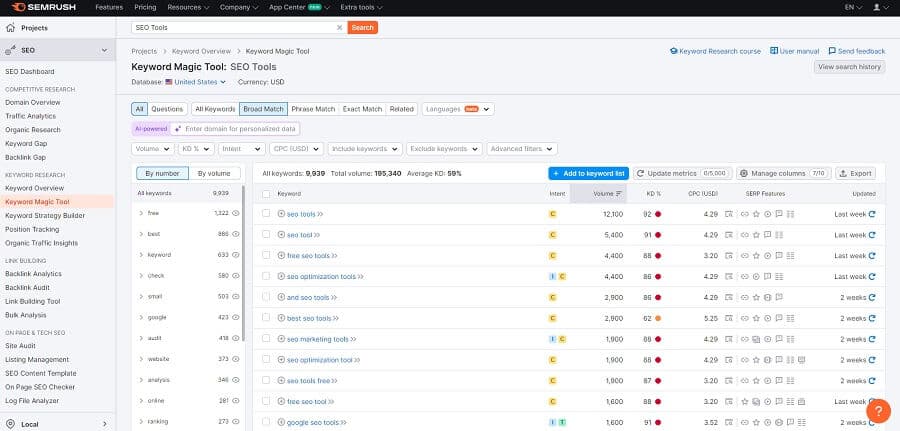
SEMrush is known for its detailed dataset and tools covering many SEO aspects such as keyword research, site audits, competitor analysis, and more. It’s a robust suite designed for SEO professionals looking to conduct in-depth marketing analysis. SEMrush's Keyword Magic Tool provides detailed keyword data, such as search volume and keyword difficulty, facilitating exploratory keyword research.
- Best for: Advanced SEO analytics and competitive research
- Standout Feature: Comprehensive toolkit for SEO, content marketing, and PPC
- Free Plan: 14 days free trial
- Features & Functionality: Includes keyword analytics, site audits, traffic analysis, and competitor tracking.
- Pros: Extensive features covering many aspects of digital marketing.
- Cons: Complex interface that may be overwhelming for beginners.
- Ideal for: Digital marketing professionals and agencies requiring a full spectrum of SEO tools.
6. Ubersuggest
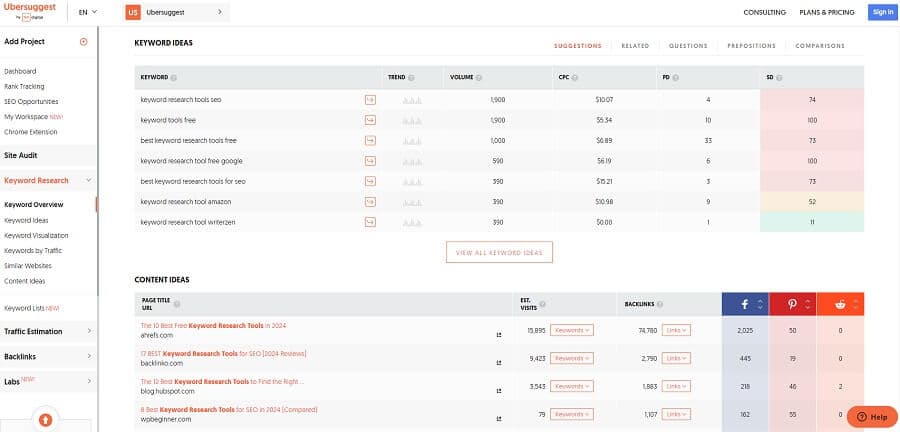
Ubersuggest provides keyword discovery, competition insights, and SEO audit features. It's particularly accessible for beginners and offers a straightforward approach to SEO audits and keyword research.
- Best for: Entry-level SEO insights and audits
- Standout Feature: SEO audit tools
- Free Plan: Limited to three free searches per day
- Features & Functionality: Offers SEO insights, keyword suggestions, and content ideas.
- Pros: Easy to use, with intuitive tools for beginners.
- Cons: Limited depth in the free version.
- Ideal for: Small business owners and novice marketers starting with SEO.
7. Answer The Public
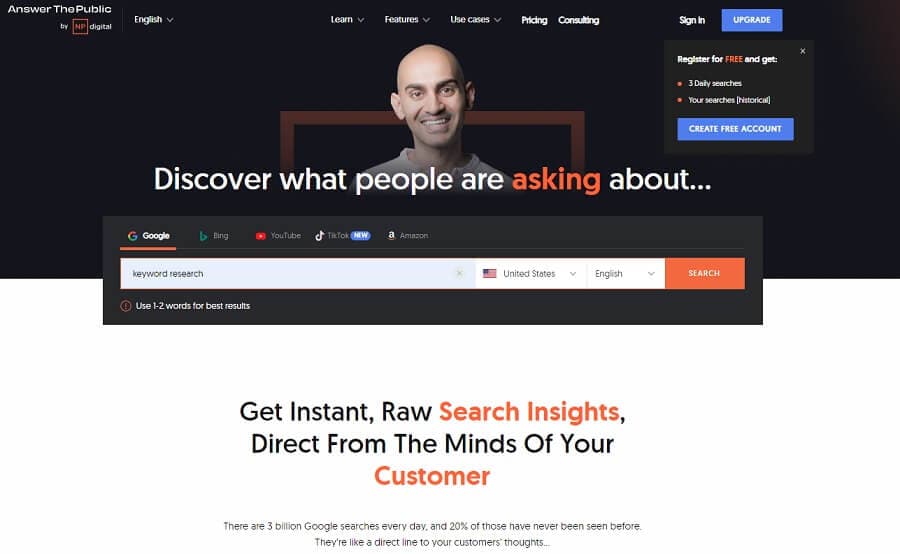
Answer The Public provides insights into the questions and queries people are searching for around a specific keyword. It’s great for uncovering content ideas and understanding audience needs. It is one of the most effective free keyword research tool, particularly useful for generating keyword ideas without upfront costs.
- Best for: Content ideation and question-based keyword research
- Standout Feature: Visualization of search questions and prepositions
- Free Plan: Provides a few searches per day
- Features & Functionality: Generates lists of questions, prepositions, and comparisons based on input keywords.
- Pros: Excellent for generating content ideas and answering audience queries.
- Cons: Limited searches in the free plan.
- Ideal for: Content marketers and writers looking for direct insights into audience interests.
8. SERP Checker
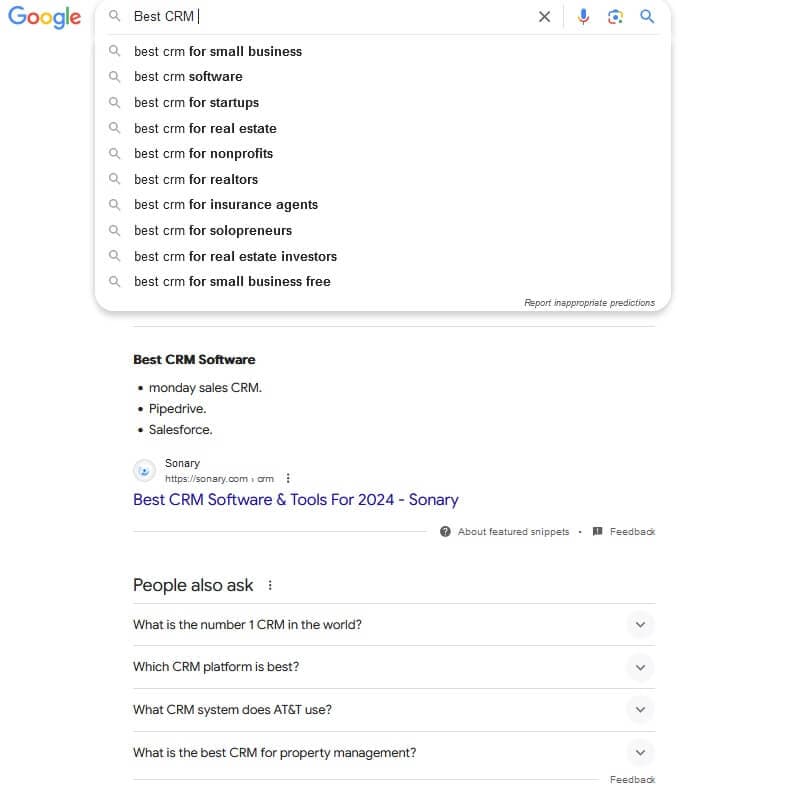
SERP (Search Engine Result Pages) Checker looks at the top-ranking pages for specific keywords, helping you understand the competitive landscape and potential long-tail keywords and topics for ranking terms.
- Best for: Competitive analysis of SERP listings
- Standout Feature: Top-ranking keywords based on user intent
- Free Plan: Unlimited access
- Features & Functionality: Provides competitive insights and traffic estimation for keywords.
- Pros: Helps gauge the difficulty and potential of ranking for specific keywords.
- Cons: Limited insights.
- Ideal for: SEO experts and content strategists aiming to understand and compete in specific keyword niches.
Advanced Keyword Research Strategies
Advanced keyword research strategies involve using sophisticated tools and techniques to uncover valuable keyword opportunities that your competitors may have missed. Some advanced strategies include:
- Using Long-Tail Keywords: Target specific search queries with long-tail keywords, which are less competitive and more specific to user intent.
- Analyzing Competitor Keywords: Identify gaps in the market by analyzing the keywords your competitors are targeting.
- Keyword Clustering: Group related keywords together to create comprehensive content covering multiple search queries.
- Analyzing Search Volume and Competition: Evaluate the search volume and competition levels of the best keywords to target.
- Identifying Trending Keywords: Use keyword research tools to discover trending keywords and topics, allowing you to stay ahead of the curve and create timely, relevant content.
Keyword Tracking and Analysis
Keyword tracking and analysis involve monitoring your website’s performance for specific keywords and analyzing the data to optimize your SEO and PPC campaigns. This includes tracking keyword rankings, search volume, and competition and analyzing user behavior and conversion rates. By regularly tracking and analyzing your keywords, you can identify areas for improvement and make data-driven decisions to enhance your content and marketing strategies. This ongoing process helps you stay competitive and ensures that your efforts effectively drive traffic and conversions.
Location-Based and International Keyword Research
Location-based and international keyword research targets keywords specific to a particular geographic region or language. This approach helps you reach a more targeted audience and drive more relevant traffic to your website. Location-based keyword research focuses on keywords specific to a particular city, state, or country, while international keyword research targets keywords relevant to a specific language or region. Tools like Google Keyword Planner and SEMrush can assist in conducting location-based and international keyword research, providing insights into search volume and competition. You can effectively expand your reach and connect with a diverse audience by tailoring your keyword strategy to different locations and languages.
Why Keyword Research Is Still Important for SEO and AI Search
Keyword research remains one of the foundations of successful SEO, but today it also plays a major role in AI search optimization (AEO).
Search engines and AI assistants no longer evaluate pages based on one exact keyword. Instead, they assess how comprehensively a page covers a topic.
Good keyword research helps you:
- Identify the primary topic your page should own.
- Discover long-tail queries with strong buying intent.
- Find semantic keywords and related entities that improve topical relevance.
- Understand the questions users ask throughout the customer journey.
- Build topical authority by covering related subtopics.
- Improve your chances of appearing in Google AI Overviews and AI-powered search tools.
Rather than chasing the highest search volume, prioritize keywords that are most relevant to your business and customers. Pages optimized around the right intent often generate significantly more leads and sales than pages targeting broad, high-volume keywords.
How to Find Low-Competition Keywords That Drive Traffic
Discovering low-competition keywords that still attract substantial traffic can transform your SEO strategy. It enables you to invest less in each keyword and even capture ever-growing niche markets in your industry. Here’s how to find these valuable keywords:
- Use Keyword Tools: Start with tools like Google Keyword Planner, Moz, or SEMrush to generate initial keyword ideas. Look for keywords with decent monthly search volumes but low competition scores.
- Focus on Long-Tail Keywords: Long-tail keywords are more specific and less competitive. Because they are more specific to user intent, they often have lower search volumes but higher conversion rates.
- Analyze Search Intent: Understand the intent behind the keywords. Are users looking to buy, learn, or find a specific location? Tailoring content to match this intent increases the likelihood of attracting targeted traffic.
- Check the SERPs: Evaluate the search engine results pages for your chosen keywords. Are there well-established websites ranking for them? If not, these keywords might offer a good opportunity for you.
Instead of only filtering by keyword difficulty, analyze whether AI Overviews already answer the query. If AI-generated answers dominate the results, focus on creating content that provides deeper expertise, first-hand experience, original research, or unique insights that AI systems can reference.
How to Use AI Tools for Keyword Research
AI has become an essential part of modern keyword research, not because it replaces keyword tools, but because it helps you discover topics, organize content, and better understand search intent.
Here's an effective workflow:
1. Start with a traditional keyword tool
Use platforms like Ahrefs, Semrush, Google Search Console, or Google Trends to identify core keywords and understand search demand.
2. Expand topics with AI
Use ChatGPT, Gemini, Claude, or Perplexity to generate:
- related questions
- customer pain points
- comparison topics
- FAQs
- beginner questions
- expert questions
- long-tail keyword ideas
3. Build topical clusters
Ask AI to organize keywords into logical content clusters instead of treating each keyword as a separate article.
4. Identify semantic entities
AI can help identify products, brands, technologies, concepts, people, locations, and industry terminology that strengthen topical relevance.
5. Optimize for AI search
Use your keyword research to answer complete questions naturally, cover related subtopics, and provide original insights. This increases the likelihood that AI-powered search engines will reference your content.
Keyword Research Best Practices for SEO and AI Search
Include:
- Start with your customers—not keyword volume.
- Focus on search intent first.
- Prioritize relevance over traffic potential.
- Build topic clusters instead of isolated pages.
- Include entities and semantic keywords naturally.
- Cover FAQs and follow-up questions.
- Use Google Search Console to discover real queries.
- Refresh keyword research regularly.
- Track conversions—not just rankings.
This section targets many emerging AEO-related searches.
Final Thoughts
Keyword research has evolved, but it hasn't become less important.
The goal is no longer to find the highest-volume keyword. Instead, successful SEO and AI optimization begin with understanding your audience, their questions, their intent, and the language they naturally use.
By combining traditional keyword research tools with AI-powered topic discovery, you can create content that ranks in search engines, appears in AI-generated answers, attracts highly qualified visitors, and converts more of that traffic into customers.
Remember: the best keyword isn't always the one with the most searches—it's the one that connects your business with the people most likely to become customers.
FAQ
Q: What are the best free tools for keyword research?
A: There are several great free tools for keyword research, including Ahrefs Webmaster Tools, Google Search Console, Google Trends, Moz Keyword Explorer, SEMrush, Ubersuggest, Answer The Public, and SERP Checker. Each offers unique features to help you optimize your SEO strategy.
Q: How can I find low-competition keywords?
A: To find low-competition keywords, use tools like Google Keyword Planner, Moz, or SEMrush to generate keyword ideas. Focus on long-tail keywords, analyze search intent, and evaluate the SERPs to identify opportunities where competition is lower but traffic potential is still good.
Q: How do AI tools help in keyword research?
A: AI tools like Google Gemini and ChatGPT enhance keyword research by processing large datasets and identifying patterns and trends that might not be apparent through manual analysis. They can generate content ideas, keyword suggestions, and provide deeper insights into keyword performance.
Q: Why is keyword research important for SEO and content strategy?
A: Keyword research helps you understand what your target audience is searching for, allowing you to tailor your content to meet their needs. It improves your visibility in search engine results, informs your content strategy, and provides competitive insights to help you achieve your SEO goals.