Target Audience: How to Identify Yours and Reach Them Without Wasting Money


Knowing your target audience is the single most important decision a small business can make. According to HubSpot’s Marketing Report, businesses that define their audience and create buyer personas see up to 73% higher conversions than those that don’t. If you run a micro or small business, you don’t have the luxury of marketing to everyone. Every dollar you spend on the wrong person is a dollar that doesn’t grow your business.
This guide will show you exactly how to identify your target audience, build a practical audience profile, and use customer targeting strategies that work — without expensive tools or a marketing degree.
What Is a Target Audience? (And Why Most Small Businesses Get It Wrong)
A target audience is the specific group of people most likely to buy your product or service because it solves a problem they have right now. It is defined by a combination of who they are (demographics) and why they buy (psychographics).
Here is where most small businesses go wrong: they define their audience as “everyone.” But marketing to everyone means connecting with no one. The businesses that win are not the ones with the biggest reach — they are the ones who are deeply relevant to a specific group of people.
Target Audience vs. Target Market: These terms are often used interchangeably, but they are different. A target market is the broad group of potential customers (e.g., all homeowners in Texas). A target audience is the precise segment you are actively speaking to right now (e.g., homeowners in Texas with a roof older than 15 years). Your target market is your pond. Your target audience is the fish you are casting your line toward today.
The 3 Types of Target Audiences Every Business Should Know
Understanding who is in your orbit — and what role they play — is the foundation of smart customer targeting.
1. The Primary Audience
These are your most valuable customers. They have the problem you solve, the budget to pay for it, and they are actively looking for a solution right now. All of your core messaging should speak directly to this group first.
Example: If you sell project management software for freelancers, your primary audience is freelancers who are currently losing clients because they have no system to track their work.
2. The Secondary Audience
These people don’t always buy the product themselves, but they directly influence the person who does. Ignoring them is a costly mistake.
Example: A child asking their parent for a specific toy brand. The child is the secondary audience — the parent holds the wallet, but the child drives the decision.
3. The Tertiary Audience
These are brand advocates, casual followers, and future buyers. They might not purchase today, but they share your content, recommend you to friends, and build your organic reach over time. They are worth nurturing with content even if they are not your primary revenue source.
How to Build an Audience Profile in 4 Steps
An audience profile (also called a buyer persona) is a semi-fictional description of your ideal customer based on real data and reasonable assumptions. You don’t need a 50-page research report. You need to answer four things clearly.
Step 1: Define the Demographics (The “Who”)
Demographics are the factual, measurable characteristics of your audience. These include:
- Age range — e.g., 30–45 years old
- Gender — if relevant to your product
- Location — city, region, or country depending on your business model
- Income level — critical for pricing strategy
- Education and occupation — relevant for B2B targeting
- Family status — e.g., parents of young children
Step 2: Define the Psychographics (The “Why”)
Psychographics are the inner traits that drive purchasing decisions. For most small businesses, this is more powerful than demographics alone. These include:
- Values — What does this person care deeply about?
- Interests and hobbies — Where do they spend time and money?
- Pain points — What problem keeps them up at night?
- Goals — What outcome are they trying to achieve?
- Buying triggers — What event causes them to search for a solution?
Example: Two people can both be 38-year-old mothers earning $70,000/year (same demographics) but have completely different psychographics. One values luxury and brand names; the other values practicality and savings. They require completely different messaging, tone, and channels.
Step 3: Map Their Buying Behavior
Understanding how your audience makes purchasing decisions helps you show up at the right moment. Ask:
- Do they research online before buying, or do they buy on impulse?
- Do they trust reviews, expert recommendations, or word-of-mouth?
- How long is their decision-making process?
- What objections do they typically raise before buying?
Step 4: Name and Visualize Your Ideal Customer
Give your audience profile a real name and a face. This sounds simple, but it is one of the most effective techniques in audience research. Instead of writing “women aged 30–40,” write: “Sarah, 34, a freelance graphic designer in Austin, TX, who is overwhelmed by admin tasks and needs a faster way to invoice clients.”
Suddenly, your marketing becomes a conversation instead of a broadcast.
How to Identify Your Target Audience: The 3-Question Method
You do not need to pay for market research to identify your target audience. Start by answering these three questions about your business.
Question 1: What Problem Am I Actually Solving?
Do not describe your product. Describe the outcome it delivers.
- ❌ “I sell accounting software.”
- ✅ “I help small business owners stop dreading tax season.”
The outcome is what identifies the audience. The person whose life is genuinely harder without your product is your target customer.
Question 2: Who Is Currently Struggling With This Problem?
Think specifically. Use phrases like:
- “My customer is a person who…”
- “They get frustrated when…”
- “Their day would be easier if…”
The more specific your answer, the more powerful your marketing becomes.
Question 3: What Makes You the Right Solution for Them?
Your unique value directly shapes who your audience is. Consider:
| Your Unique Value | Your Ideal Audience |
| You are the most affordable option | Budget-conscious buyers who want value |
| You are the fastest | Buyers in a hurry, with deadlines |
| You are the most specialized | Buyers with complex needs and bigger budgets |
| You are the most local | Buyers who trust community over corporations |
Target Market Examples Across 5 Common Business Types
Real-world target market examples make this concept concrete. Here is how different businesses define their audience:
1. Local Toy Store (Physical Retail)
- Target audience: Parents aged 30–45 with two or more children, median household income
- Psychographic insight: Second-time parents are practical buyers. They know toys break fast. They prioritize price-to-quality ratio over brand names.
- Key channel: Local Facebook groups, community boards, neighborhood apps like Nextdoor
2. Freelance Web Designer
- Target audience: Small business owners aged 35–55 who have no website or an outdated one that is costing them credibility
- Psychographic insight: They are not buying a website — they are buying the feeling that their business is finally “legitimate”
- Key channel: LinkedIn, local Chamber of Commerce events, Google Search
3. Online Fitness Coach
- Target audience: Women aged 28–42 who have returned to work after having children and want to rebuild their fitness without going to a gym
- Psychographic insight: Time is their biggest barrier, not motivation
- Key channel: Instagram, Pinterest, targeted Facebook ads. Managing content across all three? A dedicated social media marketing tool makes it far more manageable.
4. B2B SaaS Tool
- Target audience: HR Managers and Operations Directors at companies with 20–200 employees
- Psychographic insight: They are evaluated on efficiency. They buy tools that make them look good to their CEO.
- Key channel: LinkedIn, industry newsletters, G2 and Capterra reviews
5. Local Restaurant
- Target audience: Office workers within a 1-mile radius looking for a fast, quality lunch under $15
- Psychographic insight: They are time-poor and decision-fatigued by noon. Make choosing easy.
- Key channel: Google Business Profile, Instagram, flyers in nearby office buildings
Customer Targeting Strategies That Work for Small Businesses
Once you know who your audience is, the next step is customer targeting — actually reaching them with the right message, in the right place, at the right time.
Strategy 1: Use the Language Your Audience Uses
The words your customers use to describe their problem are the same words you should use in your marketing. If they search for “cheap dog wash near me,” and you use the word “premium grooming services,” you will never appear in their search. Tools like Google’s free People Also Ask feature, or paid SEO tools like Ahrefs and Semrush, show you exactly what language your audience uses online.
Strategy 2: Show Up Where They Already Are
You don’t need to be everywhere. You need to be on the two or three platforms where your specific audience spends time. For B2B audiences, this is usually LinkedIn and email. For consumer audiences aged 25–40, this is usually Instagram or TikTok. For local services, this is Google Search and Google Maps. A good social media management tool can help you manage all of these from a single dashboard without doubling your workload.
Strategy 3: Segment and Personalize
Not every customer is identical. Use a simple CRM tool like HubSpot (free tier) or Pipedrive to tag your customers by their main motivation. If budget is a concern, Sonary has a dedicated guide to the best free CRM options for small businesses. For example:
- Tag A: “Price-Driven” — they came to you because you were affordable
- Tag B: “Quality-Driven” — they came to you for expertise or results
- Tag C: “Urgency-Driven” — they needed a fast solution
Send different messages to each group. This simple segmentation can dramatically improve your email open rates and conversion rates. To get the most out of segmentation, pair your CRM with a dedicated email marketing platform that lets you automate campaigns for each customer tag.
Strategy 4: Mine Your Existing Customers for Clues
Your current customers are the most valuable research tool you have. Look at your last 10–20 customers and ask:
- What do they have in common?
- Why did they choose you over a competitor?
- What was the first thing they said to you?
- What objection did they raise before buying?
The patterns you find in these answers are your audience profile in its most honest form.
Strategy 5: Study Your Competitors’ Reviews
If you have no customers yet, go to your top competitors’ Google, Yelp, or Amazon reviews. Read the negative ones carefully. What are people consistently complaining about? That gap is your opportunity — and those unhappy customers are your ready-made target audience. For a more structured approach, Sonary’s guide to competitor analysis in digital marketing walks you through this process step by step.
What Makes a Target Audience “Good” for a Small Business?
A well-defined audience for a small or micro business must satisfy three criteria simultaneously:
- They have a problem you can solve — without this, there is no reason to buy
- They have the budget to pay your price — without this, there is no business
- You can actually reach them — without this, even a perfect product goes unsold
If your audience has the problem but no budget, you have a passion project, not a business. If they have the budget but no problem, no marketing in the world will convert them. All three criteria must be true.
How to Adjust Your Tone of Voice for Your Target Audience
Identifying your audience is only half the job. Speaking to them in the right way is the other half. Your tone of voice should directly reflect the values and personality of your ideal customer.
| Audience Type | Recommended Tone | What to Avoid |
| Corporate B2B buyers | Professional, data-driven, concise | Slang, humor, casual language |
| Young consumer audience | Conversational, bold, relatable | Stiff, overly formal language |
| Parents and families | Warm, trustworthy, reassuring | Edgy, sarcastic, complex jargon |
| Budget-conscious buyers | Direct, transparent, value-focused | Vague promises, excessive upselling |
| Luxury buyers | Elevated, aspirational, exclusive | Discount language, urgency tactics |
How Often Should You Revisit Your Target Audience?
Your target audience is not fixed forever. Consumer behavior shifts, your business evolves, and new competitors enter your space. As a general rule:
- Review your audience profile every 6–12 months
- Revisit it immediately after launching a new product or entering a new market
- Update it whenever you notice a significant change in who is actually buying from you
Many businesses discover after 2–3 years that their real best customers are different from who they originally targeted. That is not a failure — it is valuable data.
Conclusion: Stop Guessing, Start Targeting
The businesses that grow consistently are not the ones with the biggest budgets. They are the ones who understand their target audience better than anyone else. When you know exactly who you are talking to, your marketing stops being a cost and starts being an investment.
Your action step for today: Take 15 minutes and write a one-paragraph description of your single most important customer. Give them a name, a job, a problem, and a reason they chose you. Then read your last five social media posts or emails and ask honestly: does this speak to that person?
If the answer is no, you now know exactly where to start.
Frequently Asked Questions
Q: What is a target audience? A target audience is the specific, defined group of people most likely to buy your product or service because it directly solves a problem they have. It is defined by both demographic facts (age, location, income) and psychographic traits (values, motivations, and buying behavior).
Q: What is the difference between a target market and a target audience? A target market is the broad pool of potential buyers (e.g., all pet owners in the US). A target audience is the precise, active segment you are marketing to right now (e.g., first-time dog owners aged 25–35 in urban areas who are looking for natural pet food). Your target audience is always a subset of your target market.
Q: How do I identify my target audience if I have no customers yet? Start by studying your competitors. Read their customer reviews — especially the negative ones. Look at who is engaging with their social media content. Use free tools like Google Trends or the “People Also Ask” section of Google Search to understand what your potential audience is searching for. Sonary’s full guide on market research for small businesses covers this in more depth.
Q: Can a small business have more than one target audience? Yes, but it is strongly recommended to focus on one primary audience first. Trying to speak to two different audiences at the same time often means your message resonates with neither. Once your primary audience is profitable and well-served, expand to a second segment.
Q: How is an audience profile different from a buyer persona? They are essentially the same thing described differently. An audience profile tends to be more data-focused (demographics, behavior patterns), while a buyer persona is typically more narrative and humanized (a named character with a story, goals, and pain points). The most effective approach combines both.
Q: What are psychographics and why do they matter? Psychographics are the internal characteristics that drive purchasing decisions — values, interests, attitudes, lifestyle, and motivations. They matter because two people with identical demographics (same age, income, location) can have completely different buying behaviors. For small businesses, psychographics often predict who will buy more accurately than demographics alone.
Q: How do I know if my target audience is too broad? If you find yourself describing your audience as “anyone who needs this” or “all adults,” it is too broad. A well-defined audience should feel almost uncomfortably specific. If you feel like you might be excluding someone, you are probably on the right track.
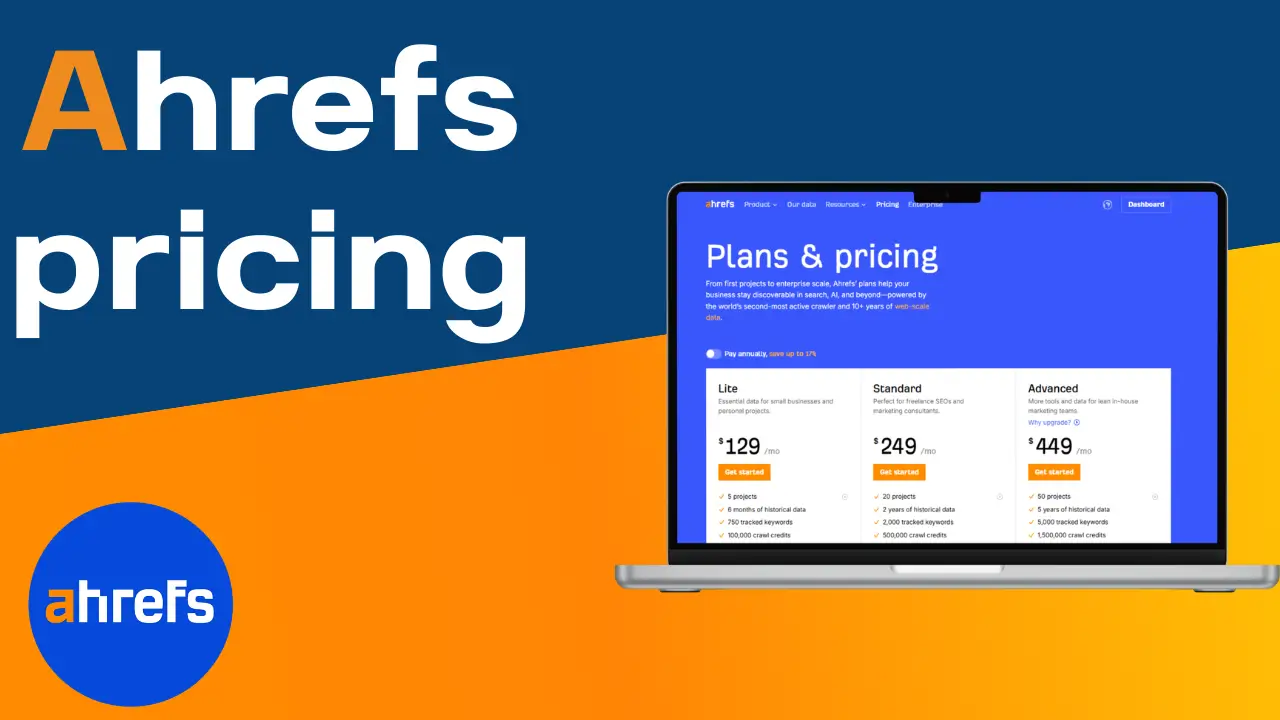
Q: What tools can I use for audience research without spending money? Several free tools are extremely effective: Google’s “People Also Ask” feature, Google Trends, your competitors’ review pages (Google, Yelp, Amazon), relevant Facebook or Reddit groups in your industry, and your own existing customer conversations. Paid tools like Semrush, Ahrefs, and HubSpot offer free tiers that provide additional keyword and behavioral data. You can also explore Sonary’s roundup of the best marketing tools for small businesses to find options that match your budget.
Q: How does my unique value affect who my target audience is? Directly and significantly. If your main advantage is being the most affordable option, your audience is value-conscious buyers on a budget. If your advantage is deep expertise, your audience is buyers who have a complex problem and are willing to pay a premium for the best solution. Your positioning and your audience must be aligned, or your marketing will feel incoherent.
Q: How often should I update my target audience definition? At a minimum, once per year. More frequently, if you launch a new product, change your pricing, or notice that the people actually buying from you are different from the people you originally targeted. Treating your audience definition as a living document rather than a one-time exercise is one of the key habits that separates growing businesses from stagnant ones.