
Gusto vs. BambooHR Payroll: Which is better for your small business in 2026?

Gusto wins on payroll. BambooHR wins on HR. The problem is that most small businesses shopping this comparison need both, and only one of these platforms was actually built to deliver both well.
If payroll is your priority, Gusto is the cleaner choice. If you're already invested in BambooHR as your HR system and your payroll is straightforward, adding their payroll module can work — but go in knowing its limits. The moment your payroll gets complicated, BambooHR's add-on module will feel exactly like what it is: an afterthought.
TL;DR
- Gusto is a payroll-first platform with HR features built in. Better for businesses that want compliance, benefits, and onboarding handled without stitching systems together.
- BambooHR is an HR-first platform with payroll added on (acquired from TRAXPayroll). Better for businesses that already use BambooHR and have simple, standard payroll needs.
- Gusto pricing is fully transparent: starts at $49/mo + $6/employee. BambooHR pricing requires a sales call — payroll is a paid add-on on top of the HR platform.
- BambooHR payroll works well under ~25–50 employees with standard U.S. payroll. It breaks down fast for multi-state complexity, certified payroll, or ERP integration.
- Gusto has its own failure patterns: tax filing errors, support that disappears when you need it, and a pricing restructure that blindsided existing customers.
- Neither platform handles international payroll. Look at Deel or Remote if you have employees outside the U.S.
Gusto vs. BambooHR: Quick comparison
Feature | Gusto | BambooHR |
|---|---|---|
Starting price | $49/mo + $6/employee | Quote-based; payroll is a paid add-on |
Pricing transparency | Fully public | Requires sales contact |
Payroll built-in or add-on | Built-in (core product) | Add-on (acquired module) |
Multi-state payroll | Plus plan ($80/mo) | Available, but limited for complex needs |
Certified payroll | No | No |
Benefits administration | Built-in marketplace | Available as separate add-on |
HR tools | Included (onboarding, PTO, org chart) | Strong — this is BambooHR's core strength |
Reporting | Standard + custom (Premium) | Basic; standard reports can't be edited |
QuickBooks integration | Journal entry sync (needs mapping) | Available; known issues reported |
International payroll | No | No |
Best for | Payroll-first small businesses | HR-first teams with simple payroll |
Company size sweet spot | 1–100 employees | 1–50 employees |
Who each platform is built for
Gusto is built for small business owners who need payroll to just work. The founder running a 12-person team who doesn't have time to think about tax filings, the HR-department-of-one who needs new hires to onboard themselves, the bookkeeper managing payroll across a handful of clients — these are Gusto's people. It assumes you're not a payroll expert and builds accordingly.
BambooHR was built for HR professionals who want a real HR system. The people ops manager who needs robust employee records, performance review cycles, and engagement surveys in one place — that's who BambooHR was designed for. Payroll came later, through the acquisition of a product called TRAXPayroll, and the seams still show. As one payroll professional who evaluated both put it:"their payroll module is not in the same league as their HR module."That's not a criticism of BambooHR as a company — it's just an honest description of what the product is.
The question isn't which platform is better overall; it's which gap costs you more: a payroll product built second, or an HR layer built on top of a payroll core.
Gusto: Features and real-world performance

- Hire, pay and grow like a pro
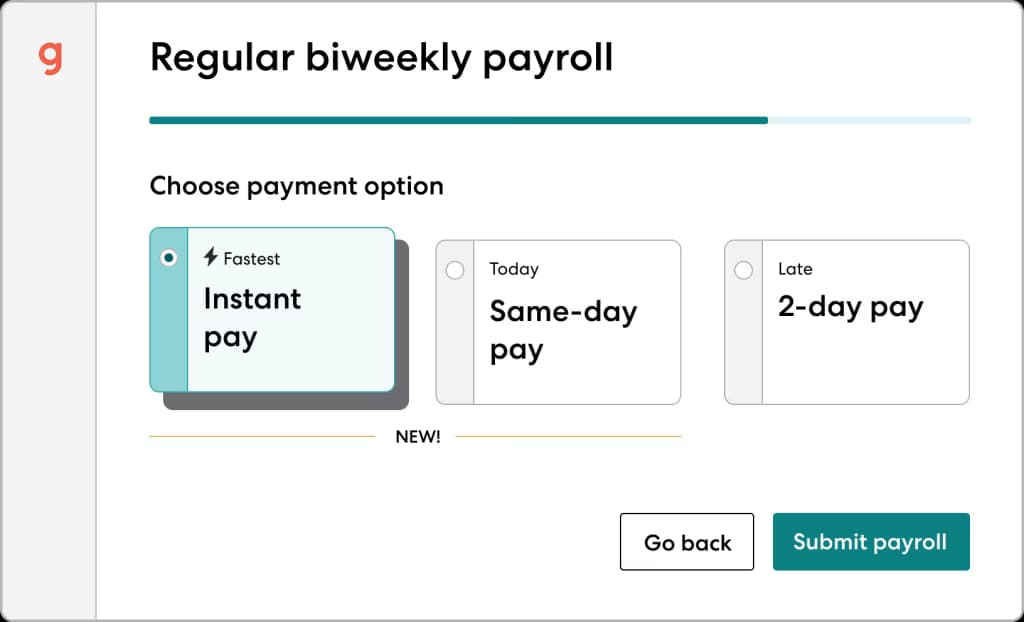
- Run automated payroll in 5 minutes flat
What Gusto does well
- Federal, state, and local tax filings are handled automatically— W-2s, 941s, new hire reporting, the works. You don't need to think about it. For a small business owner who's also the bookkeeper, the office manager, and occasionally the IT department, that's the point.
- Benefits administration is built in. Gusto's benefits marketplace covers health insurance, 401(k), FSA, HSA, and life and disability — all connected to payroll so deductions sync automatically. Employees enroll themselves. No broker coordinating paperwork by hand, no separate portal to log into. At the Plus tier, next-day direct deposit is available, which matters when cash flow is tight.
- Onboarding and HR tools come standard. The first time a new hire completes their own setup — offer letter, direct deposit, benefits enrollment — without you chasing a single form, you understand what the platform was built to do. Digital offer letters, org charts, PTO tracking, and self-service employee profiles are included across all plans.
- Simple pricing, no surprises upfront. Every plan is publicly listed. You know what you're paying before you sign up, and there's no annual contract. Month-to-month, cancel anytime.
Where Gusto falls short
- Tax filing failures are a real risk, not a theoretical one. This is the part of the Gusto conversation that gets glossed over in recommendation threads. Users have reported $8,000 in IRS penalties from late tax deposits, unfiled state returns for multiple quarters, and federal withholding that showed up on paystubs but never got remitted. One nonprofit user described getting $0 in federal withholding all year — three employees collectively owed $9k at tax time — and Gusto's response was a shrug. These aren't isolated edge cases. They're a pattern, and the pattern matters.
- If you use Gusto, verify your tax deposits independently. You can create a login on EFTPS and review up to 16 months of payment history. Don't assume because the software ran payroll that the taxes got filed.
- Support has declined significantly since the Guideline merger. Users across multiple communities describe the same arc: Gusto used to be excellent. Starting around 18 months ago, something changed. Complex issues get routed overseas. Reps repeat questions back rather than solving problems. Escalation paths don't exist in any meaningful way. One bookkeeper who works with multiple payroll platforms summarized it bluntly:"Gusto’s customer support is basically just overseas reps trying to sell you something”.
- The support divide is also now explicitly tied to revenue. Since the Guideline merger, premium-tier support is behind a paywall. Small businesses on the Simple plan get basic support — the same support that has frustrated bookkeepers to the point that some now refuse to onboard new Gusto clients.
- The pricing restructure caught people off guard. Gusto reorganized its plan tiers and automatically moved existing customers to what it called "equivalent" plans — plans that, in some cases, cost roughly 90% more than what customers had been paying. There was no opt-out. If you're evaluating Gusto today, you're looking at current pricing, but it's worth knowing that pricing changes have happened before without meaningful notice.
- QBO mapping is a persistent friction point. Gusto doesn't integrate natively with QuickBooks Online — it sends a journal entry that requires manual mapping. The initial setup isn't terrible, but every new deduction type, child support order, or 401(k) addition creates a new unmapped item that breaks the sync. Bookkeepers who manage Gusto clients report this as a recurring maintenance task, not a one-time setup.
- No international payroll. Gusto is U.S.-only. For contractors or employees outside the country, you'll need a separate platform.
BambooHR: Features and real-world performance

- All-in-one payroll software
- Over 130+ seamless app integrations
What BambooHR does well
- The HR platform is genuinely strong. Employee records, onboarding, performance management, time off tracking, org charts, eNPS surveys, document storage — BambooHR built all of this first, and it shows. If HR administration is the primary job to be done, BambooHR is one of the better tools in the market for teams under 100 people. The interface is intuitive and the onboarding experience is smooth.
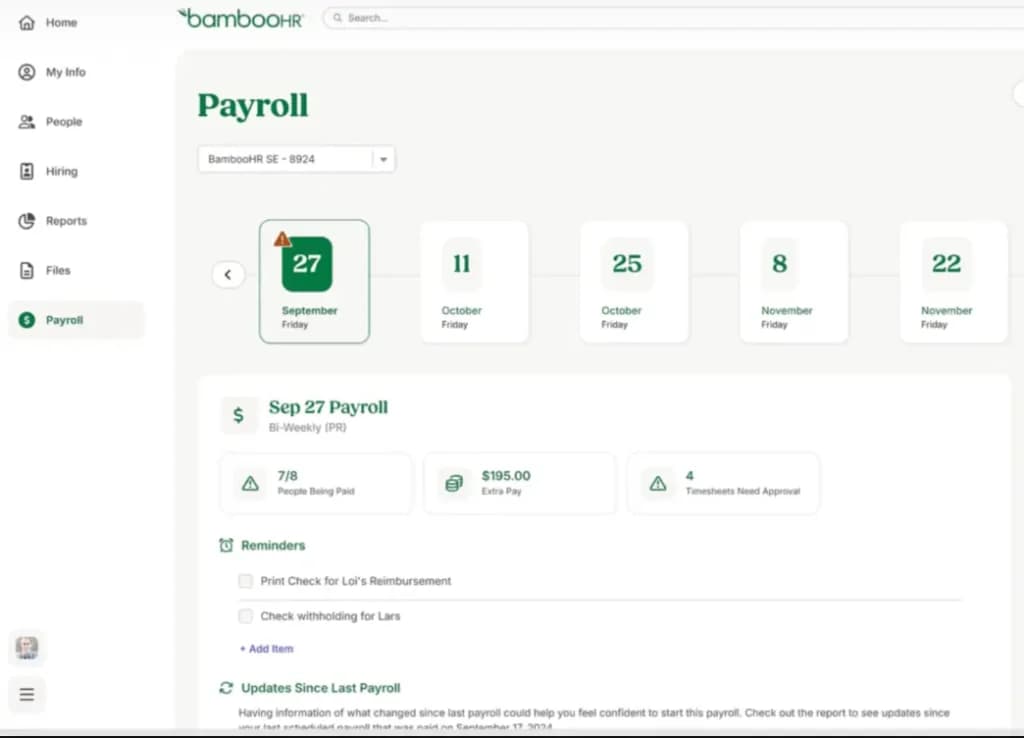
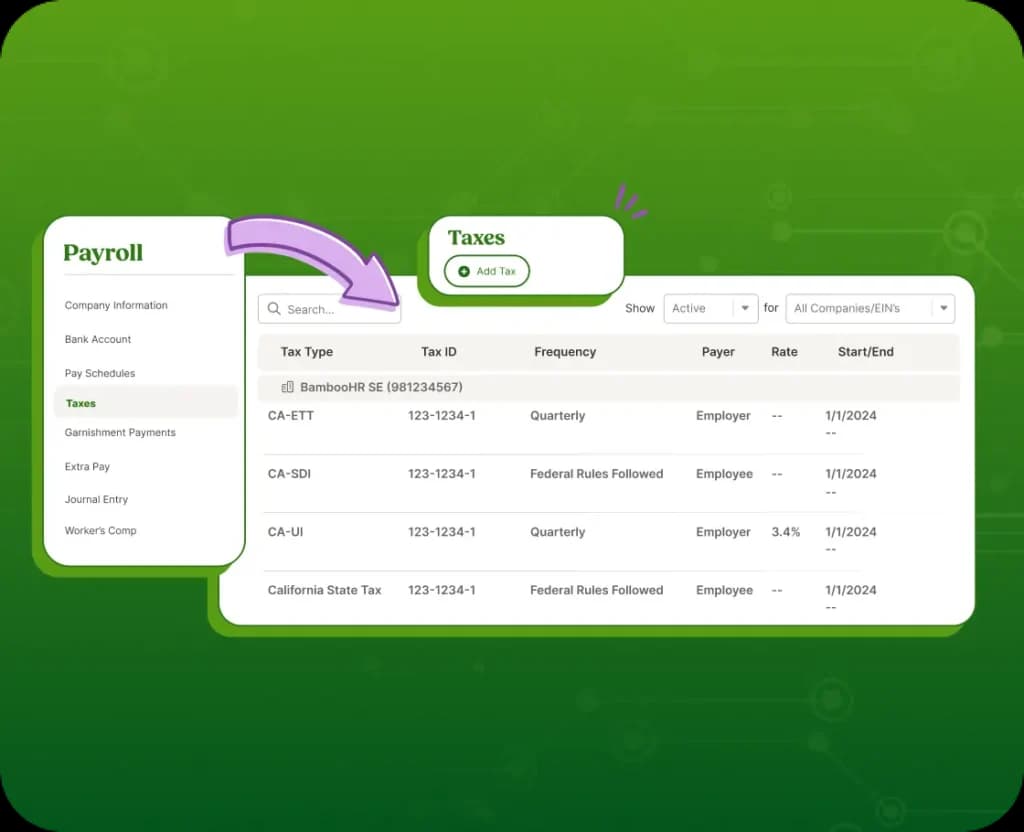
- For simple, standard payroll it works. If you have U.S.-based employees, straightforward pay schedules, and no unusual complexity, BambooHR payroll does the job. Federal and state tax filings are handled automatically. One HR professional described running payroll for the first time with zero training and finishing in 15 minutes. For small teams with basic needs, that experience is real.
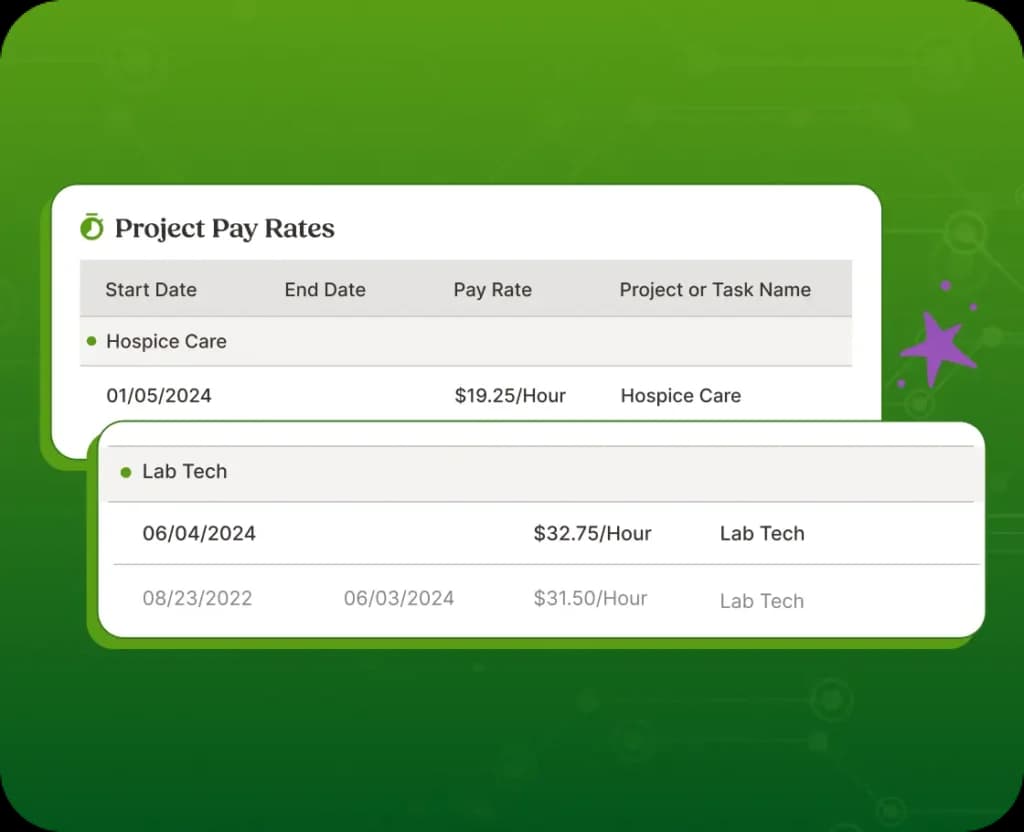
- Everything lives in one place — when you use all of it. The appeal of BambooHR is consolidation: HR data, payroll data, benefits, time tracking all in one system. When it works, it genuinely reduces administrative overhead. Compensation changes, new hire data, and benefits deductions flow into payroll without manual re-entry.
- Volume discounts and nonprofit pricing are built in. BambooHR automatically applies discounts as headcount grows, and offers an additional 15% to registered nonprofits. No negotiating required.
Where BambooHR falls short
- Payroll was acquired, not built. BambooHR's payroll module came from the acquisition of TRAXPayroll — described by those who evaluated it at the time as "a very dated platform with an outdated tech stack." The integration with BambooHR's HR side has improved, but gaps remain. The honest verdict from payroll professionals who've worked with both sides of the platform: the payroll module is still catching up to the HR module, and it shows in edge cases.
- Complex payroll is a hard no. Certified payroll, prevailing wage, union rules, multi-state complexity, construction job costing — BambooHR wasn't built for any of it. The advice from experienced payroll professionals is consistent: if your payroll has any of these requirements, don't evaluate BambooHR. The product will eventually show its limits, and switching mid-stream is painful. As one payroll professional put it:"For construction, purpose-built payroll systems tend to age better than HR-first tools with payroll added on."
- ERP integration is a problem. If your business is moving to or already running on NetSuite or a similar ERP, BambooHR payroll is not the right fit. The integration isn't built for it, and trying to make it work creates more complexity than it solves. Multiple professionals who evaluated BambooHR during an ERP migration specifically flagged this as a reason to look elsewhere.
- Reporting is limited in a frustrating way. Standard reports can't be edited. Custom reporting is available, but users describe the experience as constrained. One HR director said simply,"The reporting is terrible. There are standard reports that you cannot edit, no matter what."For a business that needs payroll data to feed into broader financial reporting, this is a real limitation.
- If payroll lives elsewhere, BambooHR becomes document storage. This might be the sharpest observation from the user community:"If you don't completely work inside of it... if your time and payroll will live outside of it, it's basically a pretty storage space for documents."BambooHR's value proposition depends on consolidation. If you're using it alongside another payroll tool, you're paying for an HR system with fewer integrations than you'd like and a platform that's less useful than its full potential.
- Pricing opacity is a real issue for comparison shopping. BambooHR doesn't publish pricing for its payroll add-on. You have to speak with sales to get a number. For a small business trying to compare options without a 45-minute vendor call, that friction is real — and it usually signals that pricing varies enough that they'd rather negotiate than publish.
- Support and implementation quality is inconsistent. Some users report smooth implementations with responsive support. Others describe poor vendor responsiveness during evaluation — BambooHR reportedly couldn't answer basic questions during RFPs and didn't follow up when pushed. Post-implementation support has also drawn criticism, with complaints that escalation paths are limited and serious concerns get dismissed rather than resolved.
Pricing breakdown
Gusto pricing (verified July 2026)
Plan | Base fee | Per employee | What's included |
|---|---|---|---|
Contractor Only | $35/mo | $6/contractor | Contractor payments and 1099s only |
Simple | $49/mo | $6/employee | Full payroll, single state, benefits admin, basic HR |
Plus | $80/mo | $12/employee | Multi-state, next-day pay, time tracking |
Premium | $180/mo | $22/employee | Dedicated advisor, HR experts, priority support |

Is Gusto worth it? For a team of 5 on the Simple plan, you're paying $79/mo. That's a fair price if you need full-service payroll with automated compliance. The jump to Plus ($140/mo for 5 employees) makes sense if you're multi-state or need next-day deposit — not otherwise. Just factor in that priority support is now a paid add-on on the Simple and Plus plans, not a baseline expectation.
BambooHR pricing (verified July 2026)
BambooHR doesn't publish exact payroll pricing publicly. What's confirmed from official sources:
Structure | Detail |
|---|---|
HR platform tiers | Core and Pro (pricing by quote) |
Payroll | Paid add-on (US only); requires sales contact for pricing |
≤25 employees | Flat monthly rate (approx. $250/mo for HR platform) |
25+ employees | Per-employee, per-month pricing |
Bundle discount | 15% off when combining Payroll + Benefits Admin with Core or Pro |
Nonprofit discount | Additional 15% off for registered nonprofits |
Volume discounts | Automatically applied — no negotiation needed |
Is BambooHR worth it? If you're already paying for BambooHR as your HR system and your payroll is simple, adding the payroll module can make sense — you're consolidating systems and the incremental cost may be reasonable. If you're evaluating BambooHR from scratch purely for payroll, the pricing opacity makes comparison-shopping harder than it needs to be. Get the full quote — HR platform plus payroll add-on — before making any decisions.
Three scenarios: Which platform wins
Scenario 1: 10-person professional services firm, all U.S.-based, no HR system yet
You need payroll to run reliably and HR tools to handle onboarding and PTO without a dedicated HR hire. Gusto's Simple plan covers payroll, compliance, and the basic HR layer in one product at a transparent price. BambooHR would require paying for the HR platform and then adding payroll on top — more cost, more setup, and payroll was the secondary consideration when they built it. Gusto wins.
Scenario 2: 35-person company already using BambooHR for HR, straightforward single-state payroll
Your team lives in BambooHR. Employee records, onboarding, performance reviews — it's all there. Adding the payroll module keeps everything in one system, avoids a new vendor relationship, and your HR data flows directly into payroll without re-entry. The payroll is simple enough that BambooHR's module handles it fine. BambooHR wins.
Scenario 3: 20-person construction company, multi-state employees, certified payroll required
Neither platform is right for this, but BambooHR is more wrong. Certified payroll, prevailing wage, and multi-state complexity are explicitly outside what BambooHR payroll handles. Gusto doesn't do certified payroll either. For construction, look at purpose-built platforms like Lumberfi or a payroll provider with specific construction compliance support. Neither wins — look elsewhere.
Related Articles


Final verdict
Choose Gusto if: Payroll is the job, and you want a product that was built around it. The compliance automation, benefits integration, and onboarding tools make it a genuine all-in-one for small U.S. businesses. Just go in with realistic expectations about support — it's tiered, it's inconsistent, and when something goes wrong, you'll need to advocate for yourself. Monitor your tax deposits independently. Keep a dedicated payroll bank account.
Choose BambooHR if: HR is the job, and payroll is simple enough to be secondary. If you're already on the platform and love it, adding payroll makes sense as long as your needs stay standard. The moment you hit complexity — certified payroll, ERP integration, multi-state edge cases, detailed reporting — you'll feel the ceiling.
The uncomfortable truth about both platforms is the same one users keep landing on:"Payroll software always becomes support software."The best pick isn't the one with the better demo. It's the one you trust to pick up the phone when something goes wrong — and whose product is actually built to handle your specific situation when it does.
Gusto vs. BambooHR for Payroll: People also asked
Q: Is Gusto or BambooHR better for small business payroll?
A: Gusto is the stronger payroll product. It was built as a payroll-first platform, handles compliance automatically, and includes benefits and HR tools in the base plans. BambooHR's payroll module was acquired and is still maturing — it works for simple, standard payroll but isn't the primary strength of the platform.
Q: Does BambooHR do payroll?
A: Yes, but it's a paid add-on to the HR platform, not included by default. BambooHR payroll handles direct deposit, federal and state tax filing, and standard pay schedules for U.S. employees. It's best suited for small teams with straightforward payroll needs. It doesn't handle certified payroll, complex multi-state compliance, or ERP integration well.
Q: How much does BambooHR payroll cost?
A: BambooHR doesn't publish payroll pricing publicly — you need to contact their sales team for a quote. The HR platform itself starts at approximately $250/mo for teams of 25 or fewer, and payroll is billed as an additional add-on. A 15% bundle discount applies when combining payroll and benefits administration.
Q: How much does Gusto cost?
A: Gusto's Simple plan starts at $49/mo plus $6 per employee. The Plus plan (multi-state, next-day pay, time tracking) is $80/mo plus $12 per employee. Premium is $180/mo plus $22 per employee. All pricing is publicly listed with no annual contract.
Q: Can Gusto handle certified payroll?
A: No. Gusto does not support certified payroll reporting, which is required for federally funded construction projects. If you need certified payroll, you'll need a platform built specifically for construction, such as Lumberfi or similar purpose-built tools.
Q: Is BambooHR good for growing companies?
A: Up to a point. BambooHR is well-suited for teams under 50 employees with standard HR and payroll needs. Beyond that — particularly beyond 100 employees — users consistently report outgrowing the platform, with payroll limitations becoming a constraint before the HR features do.
Q: Which has better customer support — Gusto or BambooHR?
A: Both have mixed track records. Gusto's support quality has declined since its Guideline merger, with complex issues increasingly routed to overseas teams with limited resolution authority. BambooHR's support quality varies by implementation — some report smooth experiences, others describe poor responsiveness and no real escalation path. Neither platform should be chosen based on support as a differentiator.
Q: What's the best alternative if neither fits?
A: For complex payroll needs, Rippling, ADP, or Paylocity are commonly recommended for growing teams. For construction-specific payroll, look at purpose-built platforms. For international payroll, Deel or Remote are the standard recommendations.gusto