
Shopify vs BigCommerce: Which E-commerce Platform Scales Best in 2026?

Choosing between Shopify vs BigCommerce is a strategic decision that shapes your online store’s flexibility, scalability, and profitability. This guide offers a complete comparison, covering pricing, features, AI innovations, market share, and more, to help business owners choose the best e‑commerce platform for long-term success.
Key Points (At a Glance)
- Shopify leads in global adoption, ease of use, and AI-powered store creation tools.
- BigCommerce (now Commerce.com) packs more enterprise and B2B features built in, minimizing reliance on external apps.
- Pricing begins at $29/month for both, but Shopify often requires additional apps to scale, whereas BigCommerce auto-upgrades and includes more within base plans.
- 2025 AI innovations: Shopify offers AI Store Builder, Sidekick 2.0, predictive analytics; BigCommerce delivers AI personalization, dynamic pricing, omnichannel APIs.
- For small e‑commerce businesses, Shopify remains the most practical choice; for fast-scaling B2B or global sellers, BigCommerce is stronger.
BigCommerce vs Shopify: Quick Comparison
Starting from: $29/month
Basic
$29
seat/month
Pros
- Large suite of marketing tools to grow your website
- You’re able to sell online, offline, and through multiple marketplaces
- It has a built-in payment processor
- Supports unlimited products on every plan
Cons
- It charges you for third party payment processors
- The basic plan doesn’t have access to pro reports

Starting from: $29/month
Core
$29
seat/month
Pros
- Can use HTML and CSS for deep design flexibility
- Large ecosystem of third-party integration
- 24/7 support for all customers
- Even on the entry-level plan, you get many advanced features
Cons
- Pricing plans are tied to your yearly sales volume
- Difficult to edit orders after they’ve been placed
1. Quick Overview
Feature | Shopify | BigCommerce |
|---|---|---|
Best For | SMBs to enterprise via app flexibility | Enterprise, B2B, global sellers without app reliance |
Ease of Use | Extremely beginner-friendly | Moderate learning curve |
Starting Price | $29/month | $29/month |
Free Trial | Yes | Yes |
App Ecosystem | 16,000+ apps | Strong built-in features, smaller app base |
Ideal User | Flexible, growing small businesses | Multi-store, global, B2B operations |
2. Full Pricing Breakdown ()2026
Shopify Plans
Plan Name | Monthly Cost | Ideal For |
|---|---|---|
Basic Shopify | $29 | New stores need basic functionality |
Shopify | $79 | Growing stores requiring reporting tools |
Advanced | $299 | High-volume sellers, detailed analytics |
Shopify Plus | ~$2,300+ | Large-scale, enterprise-level operations |
Note: Transaction fees apply if not using Shopify Payments (0.5–2%).
BigCommerce Plans
Plan Name | Monthly Cost | Ideal For |
|---|---|---|
Standard | $29 | New sellers, built-in tools |
Plus | $79 | Adds abandoned cart recovery and customer segmentation |
Pro | $299 | High-volume sellers, product filtering |
Enterprise | Custom | B2B, multi-store, global commerce |
Note: No transaction fees; plans auto-upgrade when sales exceed set limits.
3. Feature Comparison
Feature | Shopify | BigCommerce |
|---|---|---|
Payments | Shopify Payments + 100+ gateways; extra fees otherwise | 65+ gateways, no extra fees |
Sales Channels | Amazon, eBay, social media, and POS | Same channels supported, built-in |
Marketing Tools | Email, coupons, gift cards, SEO apps | Built-in SEO, promotions, abandoned cart, coupons |
SEO | Strong via apps and controls | Powerful native SEO, fast performance |
AI (2025) | StoreBuilder, Sidekick 2.0, content AI, predictive tools | AI personalization, pricing, inventory, fraud detection |
Analytics | Advanced reporting in higher plans, predictive analytics | Robust built-in analytics |
B2B Features | Via apps or Shopify Plus | Built-in wholesale, pricing tiers, customer groups |
Scalability | Excellent, with Shopify Plus | Excellent, with Enterprise & headless flexibility |
Shopify vs. BigCommerce: An In-Depth Feature Comparison
1. Payments
Shopify
- Integrates Shopify Payments(powered by Stripe) as the default processor, plus over 100 other gateways like PayPal, Klarna, and Authorize.Net.
- Data: Over 80% of U.S. Shopify merchants use Shopify Payments to avoid extra transaction fees; supports 130+ currencies.
- Impact on SMBs: Simplifies setup — no third-party merchant account needed. Great for sellers who want fast onboarding.
- Why it’s powerful: Built-in fraud analysis, currency conversion, and real-time payment tracking keep transactions smooth.
BigCommerce
- Connects to 65+ gateways without imposing extra transaction fees — you pay only the gateway’s own fees.
- Data: Merchants can save 0.5%–2% per transaction compared to Shopify if using a non-default processor.
- Impact on SMBs: More flexibility to keep your preferred processor or negotiate better rates.
- Why it’s powerful: No penalty for using the gateway that works best for your market or business model.
2. Sales Channels
Shopify
- Integrates with Amazon, eBay, Instagram, Facebook, TikTok, and POS systems. All channels sync inventory and orders.
- Data: Omnichannel sellers on Shopify see 23% higher revenue on average. Shopify POS is active in over 175 countries.
- Impact on SMBs: Lets local businesses expand into online and social selling without inventory headaches.
- Why it’s powerful: Unifies all sales touchpoints, keeping stock and customer data consistent.
BigCommerce
- Supports the same major channels — Amazon, eBay, social media, POS — with many integrations built-in rather than app-based.
- Data: Centralized channel management reduces setup time and technical complexity.
- Impact on SMBs: Quicker multichannel expansion without extra app costs.
- Why it’s powerful: Eliminates reliance on third-party connectors that can break or add fees.
Related Articles


3. Marketing Tools
Shopify
- Offers coupons, gift cards, email campaigns, and automation through apps. SEO features come via both core tools and app add-ons.
- Data: Abandoned cart apps for Shopify recover 10–15% of lost sales for typical SMBs.
- Impact on SMBs: Highly customizable campaigns but can lead to higher monthly app spend.
- Why it’s powerful: Vast app marketplace enables niche marketing strategies from influencer tracking to advanced segmentation.
BigCommerce
- Includes SEO, promotions, coupons, and abandoned cart recovery natively on the Plus plan and above.
- Data: Built-in abandoned cart recovery can increase conversion by up to 15%without extra tools.
- Impact on SMBs: Ready-to-go marketing from day one; no need to stack apps for core features.
- Why it’s powerful: Fewer moving parts = lower costs and less tech maintenance.
4. SEO
Shopify
- Allows editing of meta tags, URLs, alt text, and redirects. Advanced SEO like schema markup often requires apps.
- Data: Proper on-page SEO can drive 30–50% of site traffic for well-optimized Shopify stores.
- Impact on SMBs: Offers full basic SEO control, but scaling organic traffic may require paid apps or custom development.
- Why it’s powerful: Integrates SEO directly into product and blog workflows for consistent optimization.
BigCommerce
- Delivers advanced native SEO — faster page speed, auto image optimization, and built-in schema markup.
- Data: Many BigCommerce sites score 90+ on Google PageSpeed, boosting ranking potential.
- Impact on SMBs: Saves money on SEO apps while offering competitive organic performance from day one.
- Why it’s powerful: Performance and SEO optimization are automatic, reducing the workload for non-technical sellers.
5. AI (2025)
Shopify
- What it does:
- AI Store Builder: Generates full store design from keywords.
- Sidekick 2.0: Multilingual AI assistant for setup, analytics, and strategy.
- Shopify Magic: Writes product descriptions, email copy, and social captions.
- Predictive Analytics: Forecasts sales trends and demand.
- Data: AI store setup can cut launch time from weeks to hours.
- Impact on SMBs: Faster time-to-market, less need for manual content creation.
- Why it’s powerful: Combines creativity, strategy, and data science in one interface.
BigCommerce
- What it does:
- AI personalization for product recommendations.
- Dynamic pricing that adjusts in real time.
- Predictive inventory to reduce stockouts.
- AI-driven fraud detection for secure transactions.
- Data: Personalized recommendations can lift average order value by 10–15%.
- Impact on SMBs: Drives higher revenue per visitor and reduces lost sales from stockouts.
- Why it’s powerful: Optimizes for profit and efficiency, not just speed of setup.
6. Analytics
Shopify
- Offers basic analytics on lower plans, advanced reporting and custom reports on higher tiers.
- Data: Custom report builders are available on Advanced and Plus plans, helping merchants identify growth levers.
- Impact on SMBs: Data access scales with budget — small sellers might need app add-ons for deeper insights.
- Why it’s powerful: Predictive analytics help businesses forecast demand and manage inventory proactively.
BigCommerce
- Provides robust analytics across all plans, including customer segmentation, sales reports, and marketing performance.
- Data: All plans include metrics that are typically reserved for enterprise tiers on other platforms.
- Impact on SMBs: Gives access to deep insights without needing to upgrade or pay for analytics apps.
- Why it’s powerful: Levels the playing field for small sellers competing with data-rich enterprise brands.
7. B2B Features
Shopify
- B2B features, such as custom pricing, bulk order portals, and account management, are available primarily through Shopify Plus or third-party apps.
- Data: Shopify Plus adoption is growing among hybrid B2B/B2C brands, but at ~$2,300/month, it’s a major investment.
- Impact on SMBs: SMBs are feasible only if B2B is a core revenue stream.
- Why it’s powerful: Integrates wholesale and retail operations in one back end.
BigCommerce
- Offers native wholesale pricing, price lists, and customer group segmentation on Enterprise (and some on lower tiers).
- Data: B2B e-commerce will hit $36T globally by 2030, making these features increasingly valuable.
- Impact on SMBs: Enables wholesale sales without a platform upgrade, lowering entry barriers.
- Why it’s powerful: Makes B2B expansion accessible at lower budgets.
8. Scalability
Shopify
- Scales from small stores to Shopify Plus with enterprise features like multi-store management and automation via Flow.
- Data: Shopify Plus merchants report 126% YoY growth after upgrading.
- Impact on SMBs: Easy to start small and expand without changing platforms.
- Why it’s powerful: Lets you grow at your own pace, choosing only the features you need.
BigCommerce
- Enterprise-level scalability out of the box — supports millions of SKUs, high-traffic volumes, and headless commerce setups.
- Data: Handles traffic spikes without costly hosting upgrades.
- Impact on SMBs: Ready for rapid scale without major re-platforming.
- Why it’s powerful: Especially suited for businesses expecting fast or large-scale growth, including international expansion.
4. AI & Platform Enhancements2026
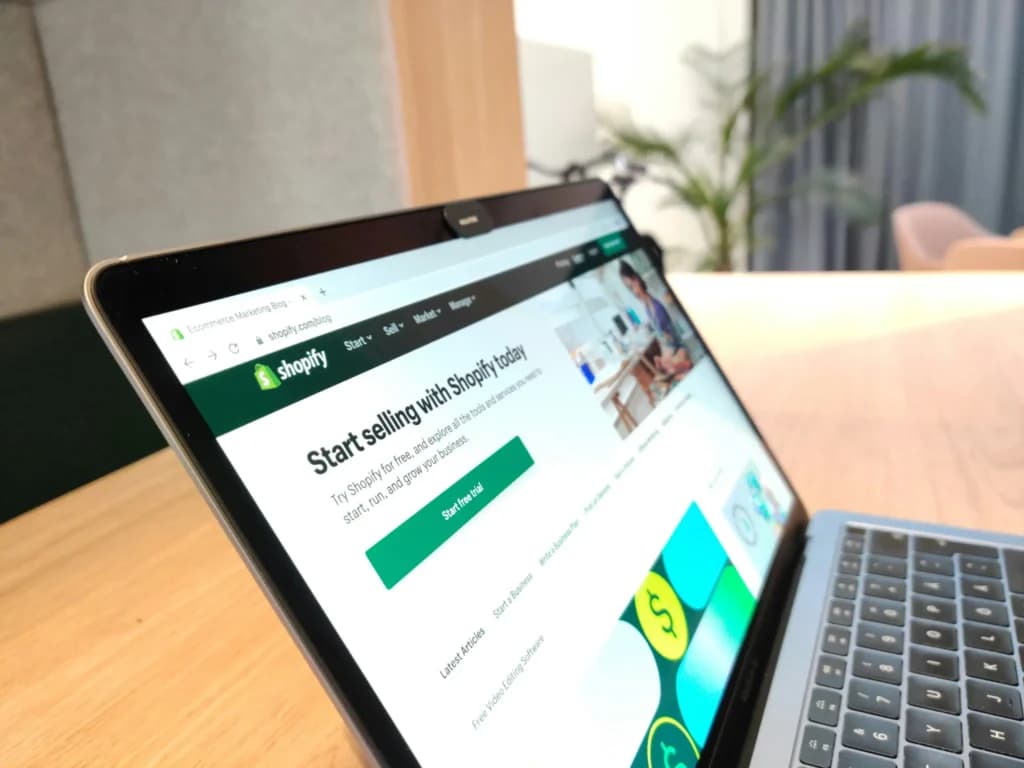
Shopify
- AI Store Builder: Instantly generate a full store using simple keywords
- Horizons Update: Over 150 product improvements, including AI theme design, Sidekick 2.0 assistant, multi-entity setup, and developer tools
- Tariffguide.ai: Simplifies global tariff and duties management
- Shopify Magic: AI-generated marketing copy, product content, image editing
- Predictive Analytics: Forecast trends and demand efficiently
BigCommerce
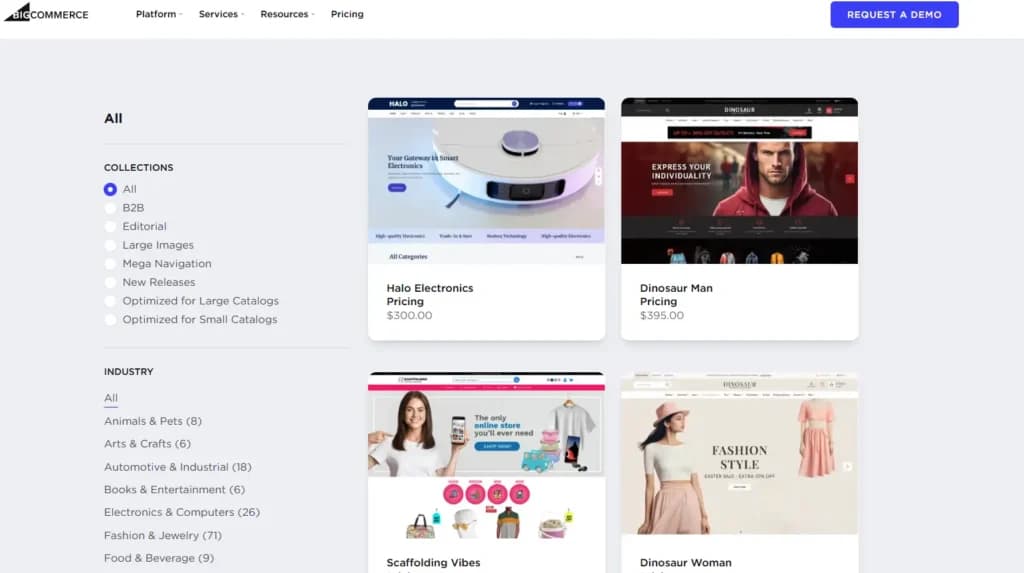
- Rebranded to emphasize an AI-first commerce approach
- AI Personalization: Product recommendations, dynamic pricing, fraud protection
- Headless Commerce Expansion: Enhanced APIs for flexible storefronts
- Omnichannel Advancements: Integrated marketplace and POS tools
- Enterprise Upgrades: Stronger CMS, B2B, multi-store support
5. Market Share & Usage Data
Platform | Market Share & Usage Insights |
|---|---|
Shopify | ~10% global share, ~29–30% U.S. e‑commerce; over 5 million active stores; processed $292B in transactions in 2024 |
BigCommerce | ~3.2% global share, ~0.2% of top 1M sites (~41k current live stores) |
Additional insights:
- BigCommerce merchants average AOV of $137 and 2.5% conversion rate-both solid performance metrics
- Merchant retention on BigCommerce is strong: ~75% report 50%+ retention, with annual GMV surge, demonstrating platform stickiness and satisfaction
- Shopify's subscription revenue surpassed $2.35B in 2024, underscoring aggressive growth
6. Pros & Cons
Platform | Advantages | Drawbacks |
|---|---|---|
Shopify | Easy setup, vast app ecosystem, AI tools, scalability | Transaction fees if not using Shopify Payments; app costs add up |
BigCommerce | Enterprise-strength tools, no fees, built-in SEO & B2B | Slightly steeper learning curve; revenue-triggered plan upgrades |
7. Best for Small E-commerce Businesses
Choose Shopify if you want:
- Quick, intuitive setup with minimal learning curve
- Customizable features via apps as you grow
- AI-powered tools to automate design and marketing
- A proven platform for long-term scaling (Shopify Plus)
Choose BigCommerce if you:
- Require strong SEO, multi-currency, and comprehensive B2B features from the get-go
- Prefer built-in tools over third-party reliance
- Plan to scale across regions or launch multiple storefronts quickly
8. Final Verdict & Comprehensive Summary
In , both2026Shopify and BigCommerce lead the pack-but they cater to distinct business needs.
- Shopify stands out for its unmatched ease of use, app-driven flexibility, and intelligent AI automation that accelerates store building, marketing, and operations.
- BigCommerce emerges as the top choice for enterprise e-commerce, offering deep built-in capabilities, especially for global, B2B, or multi-store models. It has no transaction fees and more predictable costs.
Summary:
- For most small to mid-sized e-commerce businesses seeking agility and growth potential, Shopify is the best e-commerce platform.
- For businesses with complex requirements-whether B2B, multi-currency, or white-label-BigCommerce offers enterprise-caliber features without app dependency.