
SEO Best Practices That Drive Real Growth in 2026

SEO best practices are proven methods for helping search engines discover, understand, and rank your website while making your content more useful to visitors. They include keyword research, search-intent matching, on-page optimization, technical SEO, internal linking, and building trust through original, reliable content.
For small businesses, the priority is to focus on the changes most likely to improve organic visibility and attract relevant visitors. This checklist explains what to optimize, how to do it, and how to measure the results.
This guide shows the exact tactical steps for each, built for small and micro-businesses operating in a where Google AI Overviews 2026 appear on 85% of informational queries.
SEO Best Practices Checklist: Quick Overview
Use this checklist to identify the most important areas to review on your website.
- Research keywords: Understand what your audience searches for and what they expect to find.
- Create helpful content: Answer questions accurately and provide information that adds real value.
- Optimize on-page SEO: Improve title tags, headings, URLs, meta descriptions, and page content.
- Check technical SEO: Make sure search engines can crawl and index your important pages.
- Build internal links: Connect related pages to help visitors and search engines discover your content.
- Improve page experience: Make your website fast, accessible, mobile-friendly, and easy to navigate.
- Optimize images: Use appropriate formats, descriptive filenames, and useful alt text.
- Use structured data correctly: Help search engines understand eligible content without expecting guaranteed ranking benefits.
- Build authority: Earn relevant backlinks and establish credibility through reliable information and genuine expertise.
- Measure performance: Track organic clicks, impressions, rankings, conversions, and technical issues.
You do not need to implement everything at once. Start with technical problems affecting important pages, then improve keyword targeting, content quality, and internal linking.
Traditional SEO vs. SEO + AEO in 2026
Feature | Traditional SEO | SEO + AEO ( Strategy) 2026 |
Primary Goal | Rank #1 on SERPs to drive clicks. | Secure Brand Mentions and AI Citations. |
Content Style | Long-form "Ultimate Guides" (2,000+ words). | Answer-First: Direct, factual blocks (40–60 words) at the top. |
Structure | Standard H1–H3 for human readability. | Machine-Readable: Nested Schema (JSON-LD), bulleted summaries, and comparison tables. |
Keywords | Exact match & LSI search volume. | Entity-Based: Semantic topics, conversational prompts, and "People Also Ask" mapping. |
Success Metric | Traffic volume & Organic CTR. | Share of Model (SoM): Frequency of being the "selected source" in LLMs (ChatGPT, Gemini, Perplexity). |
Freshness | Updated every 6–12 months. | Continuous: Quarterly "Version History" blocks and live dateModified Schema timestamps. |
Authority | Domain Authority (Backlinks). | Omnichannel E-E-A-T: Backlinks + Reddit/Wikipedia presence + YouTube/LinkedIn entity signals. |
User Journey | Problem $\rightarrow $ Search $\rightarrow $ Compare $\rightarrow $ Click. | Problem $\rightarrow $ AI Answer $\rightarrow $Action/Transaction. |
Conversion | Higher volume, lower intent (avg. 2–3%). | Lower volume, 5x higher conversion(avg. 14–16%) via pre-qualified AI referrals. |
Why SEO Is Essential for Every Business Today
Imagine having a salesperson who works 24/7, never asks for a raise, and keeps bringing in customers month after month.
That is what SEO is.
Unlike paid ads, where the moment you stop paying the traffic disappears, SEO keeps delivering. One good page can bring in leads for years. When you start stacking multiple high-ranking pages together, the effect compounds – your traffic, brand recognition, and revenue all grow in sync.
Google’s own data shows that businesses who invest in SEO see sustained growth even in competitive markets. Take Saramin for example, after improving their SEO foundations and content, they doubled their organic search traffic, boosted new sign-ups by 93%, and increased conversions by 9% without buying more ads (Google Case Study).
The bottom line is that if you want your brand to be found when customers are actively looking, SEO is not just important; it is essential.
Understanding SEO
What is Search Engine Optimization (SEO)?
Search Engine Optimization (SEO) enhances a website’s visibility and ranking on search engine results pages (SERPs) through various techniques and strategies. SEO involves understanding how search engines work, what people search for, and the keywords and phrases they use. By optimizing a website for search engines, businesses can increase their online visibility, drive more traffic to their website, and ultimately boost their sales and revenue. SEO encompasses a range of activities, from keyword research and content creation to technical optimizations and link building, all aimed at improving a website’s performance in search engine rankings.
How Search Engines Work
Search engines like Google, Bing, and Yahoo use complex algorithms to rank websites based on relevance, content quality, and user experience. When a user enters a keyword or phrase into a search engine, the algorithm analyzes various factors to determine the most relevant results. These factors include the website’s content, structure, loading speed, mobile responsiveness, and overall user experience. The search engine’s goal is to provide the best possible results to the user, ensuring that the information presented is accurate, reliable, and useful. Understanding these algorithms and optimizing your website accordingly is crucial for achieving higher rankings and attracting more organic traffic.
Importance of SEO for Online Success
SEO is essential for online success because it helps businesses increase their online visibility, drive more traffic to their website, and boost their sales and revenue. By optimizing their website for search engines, businesses can:
- Increase Online Visibility: Appearing on the first page of search engine results can significantly enhance your brand’s visibility and reach a wider audience.
- Drive More Traffic: Higher rankings in search results lead to more clicks and visits to your website, increasing your chances of converting visitors into customers.
- Boost Sales and Revenue: Targeting relevant keywords and phrases helps attract potential customers who are actively searching for products or services like yours, leading to higher conversion rates.
- Improve Brand Reputation and Credibility: Consistently appearing in search engine results pages (SERPs) establishes your brand as an authority in your industry, building trust and credibility with your audience.
Adding verifiable statistics, hard numbers, and authoritative citations to your content improves AI search visibility by up to 40% (Source)
1. Research Keywords and Match Search Intent
Keyword research helps you understand what people search for, what information they need, and which pages your website should provide.
Effective keyword research starts with understanding your audience, their questions, and what they want to accomplish. Follow our step-by-step guide on how to do keyword research for small businesses to find relevant search terms, analyze search intent, and prioritize opportunities that can attract the right visitors.
How to do keyword research
Step 1: Identify your audience's needs.
Start by listing the problems your audience wants to solve. Consider the questions they ask before purchasing a product, choosing a service, or making a business decision.
For example, a small business owner looking for customer relationship management software might search for CRM pricing, CRM features, free CRM tools, or the best CRM software for a small business.
Step 2: Find relevant keywords.
Use tools such as Google Search Console, Google Keyword Planner, Ahrefs, or Semrush to discover relevant queries and understand their potential.
Look at search volume, competition, search intent, and the relevance of each keyword to your website.
Step 3: Analyze search intent.
Search intent describes what a user wants to accomplish when entering a query.
The four common intent categories are:
- Informational: The user wants to learn something, such as how SEO works.
- Commercial investigation: The user is researching options before making a decision, such as comparing SEO tools.
- Transactional: The user is ready to take an action, such as purchasing a service.
- Navigational: The user wants to find a specific website or page.
Keyword research tools can help you discover search terms, analyze competitors, and identify opportunities for your website. If you're comparing your options, explore our guide to the best keyword research tools to find a solution that fits your needs and budget.
Step 4: Choose the right page format.
Different searches require different content.
Search query | Likely intent | Suitable page |
|---|---|---|
What is CRM software? | Informational | Educational guide |
CRM best practices | Informational | Practical guide or checklist |
Best CRM software for small business | Commercial investigation | Software comparison |
CRM software pricing | Commercial investigation | Pricing guide |
Buy CRM software | Transactional | Product or vendor page |
Use the search results to confirm the appropriate format before creating a new page.
Step 5: Map keywords to existing pages.
Assign each primary keyword to the most relevant page on your website. Use supporting keywords to enrich the content rather than creating a separate page for every variation.
This helps reduce unnecessary content duplication and gives each page a clear purpose.
How to prioritize keywords
Prioritize keywords that:
- Match your audience's needs.
- Align with your website's expertise and offerings.
- Have a clear search intent you can satisfy.
- Offer a realistic opportunity to compete.
- Support meaningful business outcomes.
High search volume alone does not make a keyword valuable. A more specific query may attract fewer visitors but generate more relevant traffic.
2. Create People First Content (E-E-A-T)
High-quality content helps users accomplish their goals and gives search engines meaningful information to understand.
The objective is not to publish the longest article or include every related keyword. It is to provide an accurate, useful answer that satisfies the reader's needs.
What makes content useful?
Answer the main question early.
Explain the topic near the beginning of the page. Readers should not have to navigate through several introductory paragraphs before finding the information they need.
Cover the important follow-up questions.
Think about what readers will need to know after receiving the initial answer. Include relevant explanations, examples, comparisons, and practical steps.
Provide original insights.
Add information that goes beyond repeating common advice. This might include firsthand experience, original research, practical examples, expert commentary, or documented case studies.
Support factual claims.
Use reliable sources for statistics, technical recommendations, and claims that require evidence. Make sure the source supports the specific statement being made.
Demonstrate relevant experience and expertise.
Identify the author and explain their relevant background when it helps readers assess the content's credibility.
Google describes the concepts of experience, expertise, authoritativeness, and trustworthiness as E-E-A-T. These concepts help explain qualities associated with reliable content, but E-E-A-T is not a single score that guarantees rankings.
Keep content accurate and current.
Update information when prices, products, regulations, technologies, or established recommendations change. Do not change publication dates merely to make an article appear fresh.
Avoid unnecessary repetition.
Every section should serve a purpose. Repeating the same information to increase word count does not make a page more useful.
How to improve existing content
Before rewriting an article, review:
- Whether it answers the primary search query.
- Whether important questions remain unanswered.
- Whether its facts, statistics, and recommendations are accurate.
- Whether the examples are relevant and useful.
- Whether the content provides value beyond what competing pages already offer.
- Whether readers can easily find the information they need.
Update the sections that need improvement instead of automatically rewriting the entire page.
Sites that implemented E-E-A-T improvements often see faster indexing and better keyword stability, according to Google’s Helpful Content Guidance.
3. Optimize On-Page SEO Elements
On-page SEO involves optimizing the content and HTML elements of a page so that users and search engines can understand its purpose.
These elements should accurately represent the content rather than simply repeat keywords.
On-page SEO checklist
Element | Best practice |
|---|---|
Title tag | Write a descriptive, relevant title that communicates the page's main topic. |
H1 heading | Use a clear main heading that accurately describes the content. |
Meta description | Summarize the page's value and encourage relevant clicks. |
URL | Use a clear, descriptive URL without unnecessary complexity. |
H2 and H3 headings | Organize the content into logical, easy-to-follow sections. |
Main content | Address the user's question accurately and provide meaningful detail. |
Images | Use relevant images with appropriate filenames and alt text. |
Internal links | Connect the page to useful, related resources. |
Optimize title tags
Your title tag helps search engines and users understand the page's topic.
A good title should be descriptive, specific, and relevant to the search intent.
For example:
Instead of: "Our Guide to Growing Your Business"
Use: "SEO Best Practices: A Practical Checklist to Improve Rankings"
Include your primary keyword naturally when it accurately describes the content.
There is no universal title length that guarantees better rankings. Search engines may display different title text depending on the query and other factors.
Write useful meta descriptions
A meta description summarizes what users can expect from the page.
For example:
"Learn SEO best practices for better rankings, including keyword research, on-page optimization, technical SEO, internal linking, and performance tracking."
Google may use your meta description to generate a search-result snippet, but it can also select text directly from the page.
Meta descriptions are not a direct ranking factor. Their value is in accurately communicating the page's relevance and potentially improving click-through rates.
Use headings to organize content
Use one clear main heading and organize the content with descriptive H2 and H3 headings.
Headings should help readers understand what each section covers.
For example:
- H1: SEO Best Practices: A Practical Checklist
- H2: How to Research Keywords
- H2: How to Optimize On-Page SEO
- H3: How to Write Effective Title Tags
- H3: How to Improve Internal Linking
Do not force keywords into every heading. Clarity and logical organization are more important than repetition.
Use keywords naturally
Include your primary keyword in prominent locations where it makes sense, such as the title, main heading, introduction, and relevant sections.
Use related terms when they help explain the topic.
Avoid keyword stuffing, which makes content unnatural and can violate Google's spam policies.
There is no universal keyword-density percentage that guarantees better rankings.
Match Your Content to Search Intent
Every keyword has a purpose – informational, transactional, or commercial investigation. If your content doesn’t match that intent, it won’t rank well or convert.
Best Practice:
- Use guides and tutorials for “how to” queries
- Use comparison pages for “best” or “vs” queries
- Use product or service pages for “buy” keywords
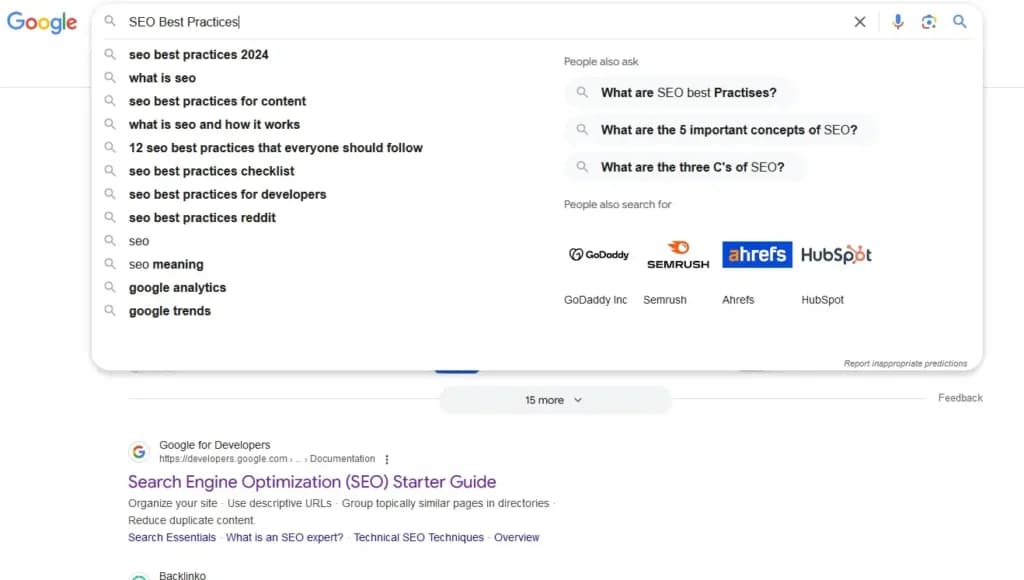
Why It Works: Alignment with intent improves relevance, keeps users on your page longer, and increases conversions.
Google’s Quality Rater Guidelines focus on “needs met” scores, directly tied to intent matching (Google Guidelines).
Related Articles


4. Build a Strong Technical SEO Foundation
Technical SEO helps search engines access, crawl, understand, and index your website.
A technically accessible website is important because even excellent content can struggle to appear in search results if important pages cannot be discovered or indexed.
Best Practice:
- Load in under 3 seconds(check with Google PageSpeed Insights).
- Use HTTPS security.
- Make your site mobile responsive.
- Submit XML sitemaps in Google Search Console
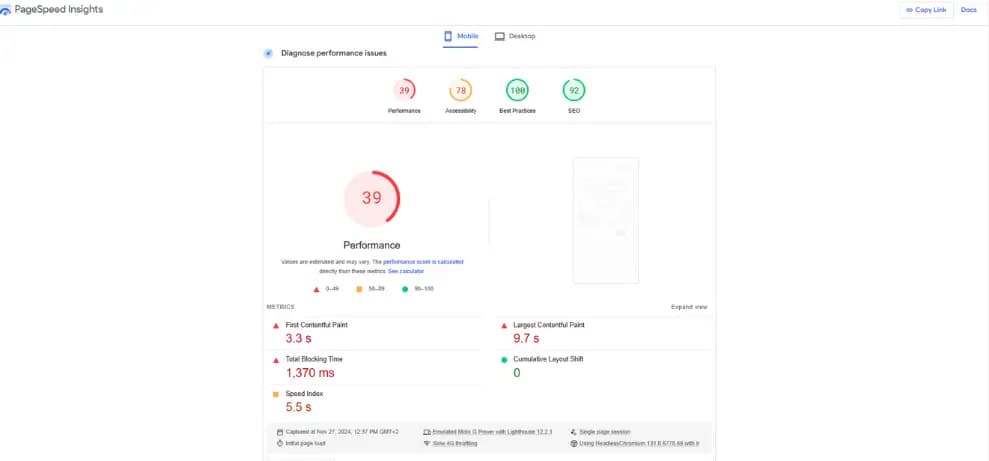
Why It Works: Good technical health ensures your site is crawlable and delivers a smooth user experience.
Core Web Vitals improvements often lead to measurable ranking gains (Google SEO Starter Guide)
Pages with structured data and schema markup are 3x more likely to earn AI Overview citations than unstructured pages. (Source)
Technical SEO checklist
Check indexability.
Use Google Search Console to investigate whether important URLs are indexed.
If a page is not indexed, determine why before requesting indexing or changing the content.
Review crawlability.
Ensure search engines can discover important pages through crawlable internal links.
Check that your robots.txt file does not unintentionally block important resources or pages.
Remember that blocking crawling in robots.txt is not the same as preventing a URL from being indexed.
Check HTTP status codes.
Important pages should generally return the appropriate successful response.
Investigate unexpected 404 errors, server errors, redirect chains, and redirect loops.
Use canonical tags correctly.
Canonical tags help indicate which URL should be treated as the preferred version when duplicate or substantially similar pages exist.
Make sure canonical tags point to the intended URL and do not accidentally exclude important pages.
Maintain an XML sitemap.
Include appropriate canonical URLs that you want search engines to discover.
Submit your sitemap through Google Search Console and monitor for errors.
Submitting a sitemap helps search engines discover URLs, but it does not guarantee indexing.
Review JavaScript rendering.
If your website relies on JavaScript, confirm that important content and links are accessible to search engines after rendering.
Do not assume that content visible in a browser is necessarily available in the same way to every crawler.
Check redirects.
When changing URLs, use appropriate redirects where necessary to preserve useful navigation and help search engines understand the move.
Avoid redirecting unrelated pages to a generic destination simply to eliminate 404 errors.
Improve Core Web Vitals
Core Web Vitals measure aspects of real-world page experience, including loading performance, responsiveness, and visual stability.
Google's recommended thresholds are:
Metric | What it measures | Good threshold |
|---|---|---|
Largest Contentful Paint (LCP) | Loading performance | 2.5 seconds or less |
Interaction to Next Paint (INP) | Responsiveness | 200 milliseconds or less |
Cumulative Layout Shift (CLS) | Visual stability | 0.1 or less |
These thresholds are generally evaluated at the 75th percentile of real-user page loads.
Use PageSpeed Insights and available real-user data to identify performance problems. Prioritize fixes based on their impact and the resources required.
Good Core Web Vitals are desirable, but passing these thresholds does not guarantee higher rankings.
5. Build a Strong Internal Linking Structure
Internal links connect pages within your website.
They help users discover related information and help search engines understand how your pages relate to one another.
A logical internal linking structure is especially important for websites with many articles, product pages, comparisons, and category pages.
How to improve internal linking
Step 1: Identify important pages.
Determine which pages are most valuable to your audience and business objectives.
These might include your main category pages, comparison pages, product reviews, or important educational resources.
Step 2: Find relevant supporting content.
Identify articles that discuss related topics and could naturally direct readers to your important pages.
For example, an article about CRM best practices could link to a CRM pricing guide or a comparison of CRM software for small businesses.
Step 3: Use descriptive anchor text.
Anchor text is the clickable text of a link.
Use wording that clearly describes the destination.
For example, "compare CRM software for small businesses" is more informative than "click here" when it accurately describes the linked page.
Step 4: Link related pages together.
Connect supporting articles when the links help readers explore a topic in more depth.
Avoid adding links that are unrelated to the surrounding content.
Step 5: Review important pages regularly.
Use a website crawler to identify important pages with few internal links, broken internal links, or links that point to redirected URLs.
There is no fixed number of internal links that every page needs. Focus on relevance, usefulness, and a logical site structure.
6. Use Structured Data Correctly
Structured data is a standardized way of describing information on a webpage so that search engines can interpret it more easily.
Depending on the page and the applicable search features, structured data may help make content eligible for enhanced search-result presentations.
However, structured data does not guarantee higher rankings, rich results, or citations in AI-generated answers.
Best Practice:
- Add schema for products, articles, FAQs, videos, and events
- Test with Google’s Rich Results Test tool
- Why It Works: Rich results increase click-through rates and make your listing stand out in crowded search results.
Why it works: Rich results grab attention, increase click-through rates, and help your content appear in new features like Google’s AI-powered answers.
MX Player added structured data and video sitemaps, tripled organic traffic, and doubled video page views per session (Google Case Study).
Structured data best practices
Choose an appropriate schema type.
For an editorial article, Article or BlogPosting markup may be appropriate.
Other schema types should be selected according to the actual content and the applicable search engine guidelines.
Keep markup accurate.
Structured data must reflect the visible page content.
Do not add information, reviews, ratings, or other details that are not supported by the page and its underlying data.
Include relevant article information.
Where appropriate, article markup can describe:
- Headline.
- Author.
- Publisher.
- Publication date.
- Modification date.
- Representative image.
The properties used should accurately reflect the page.
Validate your implementation.
Use Google's Rich Results Test when applicable and check relevant structured data reports in Search Console.
Remember that a technically valid implementation does not guarantee that a search feature will appear.
Do not add schema just for AI visibility.
There is no general-purpose schema type that guarantees inclusion in AI Overviews or other generative search experiences.
Choose structured data based on the content and supported search features, not unsupported promises about rankings.
7. Optimize Content for Answer Engines and AI Search
Search experiences increasingly include direct answers, AI-generated summaries, and conversational interfaces.
Answer Engine Optimization (AEO) and Generative Engine Optimization (GEO) describe approaches to making information easier to understand, retrieve, and potentially reference in these experiences.
However, neither discipline has a universal optimization formula that guarantees inclusion in AI-generated answers.
The most reliable starting point is to create useful content that is accurate, clearly structured, technically accessible, and supported by credible evidence.
Best practices:
- Write in natural, conversational language
- Use clear headings and bullet points
- Add FAQ schema so AI can pull direct answers
- Name specific entities (brands, locations, products) for context
Why it works: The cleaner and more structured your content, the easier it is for AI to surface it in answers.
Pages with clean Q&A formatting and schema are more likely to appear in AI summaries (Google Structured Data Guidance).
Brands are 6.5x more likely to be cited by AI platforms through authoritative third-party sources than through their own domain. (Source)
AEO and GEO best practices
SEO remains the foundation of organic search visibility, while AEO and GEO focus on how your content may appear in direct answers and AI-generated responses. Read our guide to the differences between SEO, AEO, and GEO to understand how these approaches work together and what small businesses should prioritize.
Start each major section with a clear explanation of the topic before expanding into details.
For example:
What are SEO best practices?
SEO best practices are methods for improving a website's discoverability, relevance, technical accessibility, and usefulness. They include keyword research, on-page optimization, technical SEO, internal linking, original content, and earning relevant backlinks.
This format helps readers find the answer quickly while providing context for search engines and other systems.
Use descriptive headings.
Headings such as "How to Check Whether a Page Is Indexed" communicate the purpose of a section more clearly than vague headings such as "Important Considerations."
Make information easy to verify.
Support statistics and factual claims with credible sources. Place citations close to the claims they support and include dates when the information can change.
Define important concepts.
Explain technical terms when introducing them. Clear definitions help readers understand the content without requiring additional research.
Include specific examples.
Demonstrate how a recommendation works in practice. Examples, original research, and documented experience can make content more useful than generic advice.
Make expertise and authorship clear.
Provide accurate author information and explain relevant experience when appropriate.
Maintain technical accessibility.
Ensure important content is available to search engines and that internal links lead to relevant pages.
Measure visibility where possible.
Monitor relevant brand mentions and citations in AI search experiences using available analytics and documented checks. Treat these measurements separately from traditional organic search metrics.
Does content need to be written differently for AI search?
Not necessarily.
Clear answers, descriptive headings, useful examples, and reliable sources are good content practices regardless of where a reader discovers the information.
There is no universal requirement to use a specific answer length, repeat questions in a fixed format, or add special AI schema to qualify for AI-generated answers.
Focus on providing accurate, useful information that satisfies the reader's needs.
To go beyond traditional search optimization, explore our guide to SEO for AI search, which covers content structure, original information, and ways to improve your website's visibility in AI-powered search experiences.
8. Build Authority Through Relevant Backlinks and Brand Mentions
Backlinks are links from other websites to your website.
Relevant, editorially earned links can help search engines discover content and provide signals of reputation and authority.
However, link quality and context matter more than simply accumulating a large number of links.
Best Practice:
- Publish original research or data
- Contribute guest posts to industry sites
- Build partnerships for content collaboration
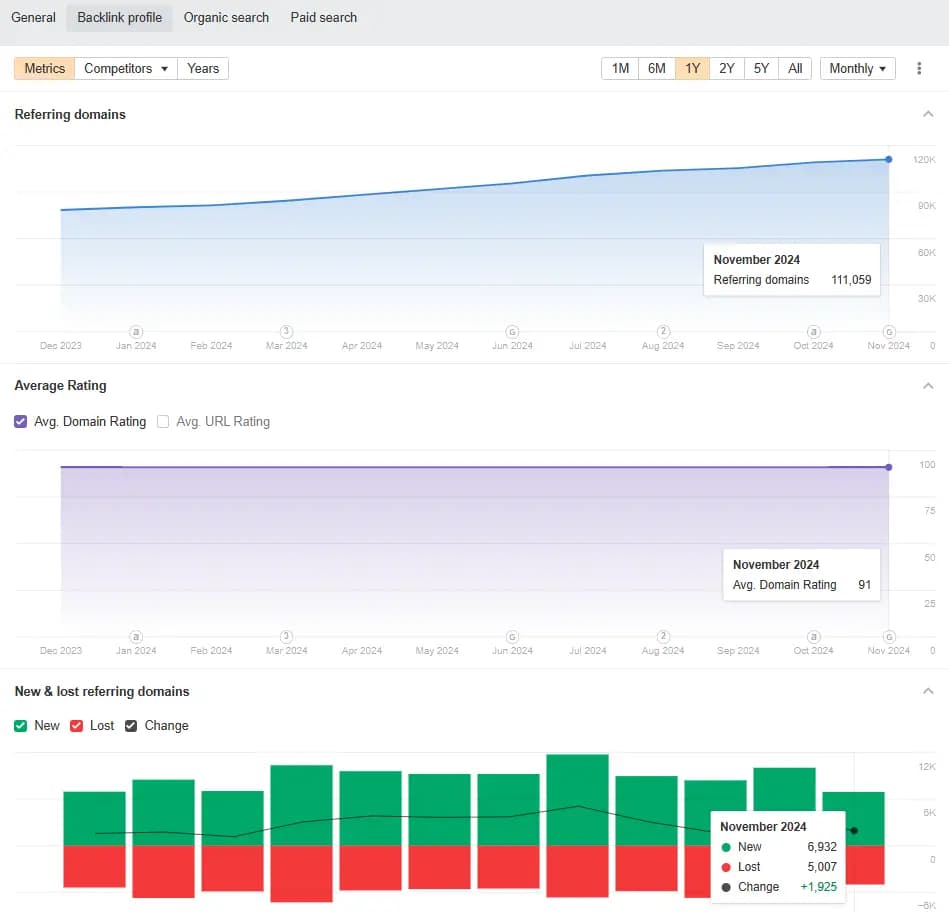
Why It Works: Quality backlinks remain one of the strongest ranking factors in Google’s algorithm.
A B2B brand that earned industry backlinks through research saw a 60% traffic increase in six months (Google Search Essentials).
How to earn relevant backlinks
Publish useful resources.
Original research, detailed guides, practical tools, and credible industry data can provide reasons for other websites to reference your content.
Contribute genuine expertise.
Share relevant insights with industry publications, professional communities, and websites that serve your target audience.
Build meaningful partnerships.
Collaborations can lead to legitimate editorial coverage when they provide value to both audiences.
Create content worth referencing.
Useful statistics, original examples, clear explanations, and well-maintained resources may attract natural references from other publishers.
Monitor your backlink profile.
Use SEO tools to review referring domains, identify relevant links, and investigate unusual patterns when necessary.
Third-party metrics such as Domain Rating and Domain Authority are comparative indicators, not Google ranking factors.
What to avoid
Avoid buying links to manipulate rankings, participating in automated link schemes, publishing large volumes of low-quality guest posts for SEO purposes, or pursuing links solely because a website has a high third-party authority score.
Also distinguish between backlinks and brand mentions. A brand can be mentioned without a hyperlink, and an unlinked mention is not equivalent to a backlink.
For AI search, relevant third-party references may help establish a brand's visibility and reputation, but no particular number of mentions guarantees AI citations.
9. Measure SEO Performance and Improve Results
SEO requires ongoing measurement.
Tracking the right metrics helps you understand whether your website is becoming more visible, attracting relevant visitors, and generating business results.
SEO metrics to monitor
Metric | What it tells you | Where to check |
|---|---|---|
Organic clicks | How many clicks your pages receive from Google Search | Google Search Console |
Impressions | How often your pages appear in search results | Google Search Console |
Click-through rate (CTR) | How frequently impressions result in clicks | Google Search Console |
Search queries | Which terms generate impressions and clicks | Google Search Console |
Average position | Your pages' average ranking position for measured results | Google Search Console |
Indexing status | Whether important URLs are indexed | Google Search Console |
Organic conversions | Whether organic visitors complete valuable actions | Web analytics and conversion tracking |
Core Web Vitals | Real-user loading, responsiveness, and visual stability | PageSpeed Insights and available Search Console reports |
AI mentions and citations | Whether your brand or pages appear in relevant AI answers | Available AI visibility tools and documented checks |
Each metric answers a different question.
For example, increasing impressions may indicate greater search visibility, but it does not necessarily mean your traffic or revenue will increase.
Similarly, higher organic traffic is not always beneficial if the visitors are looking for something your website does not provide.
How to diagnose an underperforming page
Step 1: Check technical accessibility.
Confirm that the page is accessible, indexable, and not affected by an unintended technical issue.
Step 2: Review search performance.
Compare clicks, impressions, CTR, and relevant queries in Google Search Console.
Step 3: Identify the problem.
Determine whether the page has limited visibility, receives impressions but few clicks, attracts irrelevant traffic, or fails to convert visitors.
Step 4: Analyze the search results.
Review competing pages and determine whether your content matches the current search intent.
Step 5: Make targeted improvements.
Improve the sections, metadata, internal links, or technical elements that address the identified problem.
Step 6: Monitor the results.
Allow sufficient time for changes to be reflected in search performance. Compare equivalent periods and consider seasonality and other changes that may affect results.
Avoid changing many unrelated elements simultaneously if you want to understand which improvements made a difference.
adapt
Final Thoughts: Focus on SEO Improvements That Matter
SEO best practices work together to help search engines discover your website and help visitors find useful information.
Start by identifying your biggest opportunities. Fix technical issues affecting important pages, improve content that doesn't satisfy search intent, strengthen internal linking, and measure the results.
You do not need to implement every recommendation at once. A focused, evidence-based approach will help you use your time and resources more effectively.
As your website grows, continue to review your content, monitor search performance, and adapt your strategy to your audience's needs.
The goal is not simply to rank for more keywords. It is to attract relevant visitors, provide useful answers, and turn organic visibility into meaningful business results.
FAQ
- What are the most critical SEO best practices right now?
The most important SEO best practices include researching keywords, matching search intent, creating helpful content, optimizing on-page elements, ensuring important pages are crawlable and indexable, building relevant internal links, and measuring performance. The best starting point depends on your website's current problems and business goals. - How important is keyword research for SEO?
Keyword research helps you understand what your audience searches for and how to organize your content around their needs. It also helps you identify relevant topics, prioritize opportunities, and avoid creating multiple pages that compete for the same search intent. Keyword research should guide your content strategy rather than dictate every sentence. - Are long-tail keywords still worth targeting?
Yes—especially for capturing voice search and AI-generated queries. Long-tail queries often show higher conversion potential. - What should I fix first when improving SEO?
Start with problems that prevent important pages from being discovered or indexed. Next, review whether your pages target the right queries and satisfy search intent. Then improve content quality, on-page optimization, internal linking, and performance based on available evidence. - Which technical issues should I fix first?
Key priorities: site speed, mobile responsiveness, secure HTTPS, and crawlability (handled via XML sitemaps and error-free navigation). - How do I earn backlinks in 2026?
Create content that’s genuinely valuable: original research, in-depth guides, or highly shareable visuals. Then reach out or share where relevant. - Should I optimize for AI search tools differently?
Yes—format your content with clear headings, bullet lists, FAQ-style answers, and entity naming; this improves AI extraction and visibility. - How frequently should I refresh my top SEO-driven pages?
Update content when information becomes outdated, important facts change, or performance data indicates that the page needs improvement. The appropriate schedule depends on the topic. Pricing guides, software comparisons, and rapidly changing technical topics may require more frequent reviews than evergreen educational resources. - Can FAQ schema still help SEO now?
Structured data helps search engines understand information on a page and may make eligible content available for supported search features. However, adding schema does not guarantee higher rankings, rich results, or AI citations. Use accurate markup that reflects the visible content and follow the applicable search engine guidelines. - How do I balance SEO with user experience?
Optimize for both: fast load times, readability, conversational tone, and structured layouts ensure both search engines and users benefit. - How do I test if my structured data is working?
Use Google’s Rich Results Test to validate schema markup, then monitor Search Console for rich result impressions and clicks.