
Best Supply Chain Management Software for 2026
Supply chain management software is a powerful digital tool that simplifies and enhances the end-to-end processes involved in acquiring, producing, and distributing goods, ensuring greater efficiency and coordination across stages of work with suppliers, manufacturers, warehouses, and transportation. By implementing the best supply chain management software, you can enhance operational efficiency, improve collaboration, and gain real-time insights into your supply chain performance. Let's explore the key features and benefits of these transformative tools.
Last updated: September 2026

- Enhance manufacturing with IoT integration
- Boost sustainability in your supply chain
- Agile SCM for rapid market changes
- Access tons of useful supply chain software solutions
- The intuitive and visual design makes it a dream to use
- Customizable dashboard provides urgent alerts and suggestions for improvements
- Leverages AI and machine learning to handle massive amounts of data
- Could improve search capabilities when managing work orders
- Drag and drop would make the platform even more beginner-friendly
- Enhance manufacturing with IoT integration
- Boost sustainability in your supply chain
- Agile SCM for rapid market changes
- Access tons of useful supply chain software solutions
- The intuitive and visual design makes it a dream to use
- Customizable dashboard provides urgent alerts and suggestions for improvements
- Leverages AI and machine learning to handle massive amounts of data
- Could improve search capabilities when managing work orders
- Drag and drop would make the platform even more beginner-friendly

- Connects with accounting and ERP systems
- Dedicated supplier management tools
- Customizable approval processes
- Intuitive interface and design
- Comprehensive supplier management tools
- Excellent real-time tracking capabilities
- Comprehensive reporting features
- Limited phone support
- Advanced features only in higher tiers
- The initial setup can be complex
- No 24/7 support available
- Connects with accounting and ERP systems
- Dedicated supplier management tools
- Customizable approval processes
- Intuitive interface and design
- Comprehensive supplier management tools
- Excellent real-time tracking capabilities
- Comprehensive reporting features
- Limited phone support
- Advanced features only in higher tiers
- The initial setup can be complex
- No 24/7 support available

- Automated packing & shipping
- Real-time data for quick decisions
- Effortless scaling during peaks
- Comprehensive inventory and order management features
- User-friendly interface with easy navigation
- Reporting tools for performance tracking
- Strong integration capabilities with various platforms
- Some advanced features may require higher-tier plans
- Limited support options outside of business hours
- Automated packing & shipping
- Real-time data for quick decisions
- Effortless scaling during peaks
- Comprehensive inventory and order management features
- User-friendly interface with easy navigation
- Reporting tools for performance tracking
- Strong integration capabilities with various platforms
- Some advanced features may require higher-tier plans
- Limited support options outside of business hours

- Scalable & customized warehouse automation
- AI-powered inventory decision-making
- Boosts resilience and operational efficiency
- Comprehensive automation and inventory management features
- Predictive analytics for improved demand forecasting
- Seamless integration with major ERP systems
- Highly customizable for businesses with unique needs
- Custom pricing may be expensive for smaller businesses
- Some advanced features may require higher-tier plans
- Limited support outside of business hours
- Scalable & customized warehouse automation
- AI-powered inventory decision-making
- Boosts resilience and operational efficiency
- Comprehensive automation and inventory management features
- Predictive analytics for improved demand forecasting
- Seamless integration with major ERP systems
- Highly customizable for businesses with unique needs
- Custom pricing may be expensive for smaller businesses
- Some advanced features may require higher-tier plans
- Limited support outside of business hours

- Connects all supply chain partners
- Predictive analytics for smarter decisions
- Ensures data security and compliance
- Comprehensive and covers the entire supply chain
- Ideal for global supply chain
- Highly scalable
- Relatively expensive
- Not suited for simpler supply chains
- Connects all supply chain partners
- Predictive analytics for smarter decisions
- Ensures data security and compliance
- Comprehensive and covers the entire supply chain
- Ideal for global supply chain
- Highly scalable
- Relatively expensive
- Not suited for simpler supply chains

- Real-time team and supplier collaboration
- Easily integrates with ERP and CRM tools
- Automated alerts for supply chain issues
- End-to-end supply chain visibility
- Easy to use and manage
- A wide array of integration options
- Possibility of vendor lock-in
- Unclear pricing
- Real-time team and supplier collaboration
- Easily integrates with ERP and CRM tools
- Automated alerts for supply chain issues
- End-to-end supply chain visibility
- Easy to use and manage
- A wide array of integration options
- Possibility of vendor lock-in
- Unclear pricing

- Scalable, customizable & cloud-based
- Performance & risk tracking analytics
- Compliance & documentation management
- Cloud-native software allows easy access, irrespective of device or location
- Easy to configure and use, making software more accessible to everyone
- Centralized and accurate to reduce Cost of Poor Quality (COPQ)
- Advanced tools for Failure Mode and Effect Analysis (FMEA), Advanced Product Quality Planning (APQP) and Production Part Approval Process (PPAP)
- Potential for vendor lock-in, which increases switching cost
- The complex pricing structure makes it hard to budget
- Not an end-to-end solution for supply chain management
- Scalable, customizable & cloud-based
- Performance & risk tracking analytics
- Compliance & documentation management
- Cloud-native software allows easy access, irrespective of device or location
- Easy to configure and use, making software more accessible to everyone
- Centralized and accurate to reduce Cost of Poor Quality (COPQ)
- Advanced tools for Failure Mode and Effect Analysis (FMEA), Advanced Product Quality Planning (APQP) and Production Part Approval Process (PPAP)
- Potential for vendor lock-in, which increases switching cost
- The complex pricing structure makes it hard to budget
- Not an end-to-end solution for supply chain management

- Real-time visibility across supply chains
- Reduce errors with integrated data flows
- Optimize warehousing with unified systems
- Highly customizable modules and features to fit diverse business needs
- Scalable to accommodate growth from mid-sized to large enterprises
- Robust compliance management for international shipping regulations
- Real-time visibility across the entire supply chain
- Limited demand forecasting
- Real-time visibility across supply chains
- Reduce errors with integrated data flows
- Optimize warehousing with unified systems
- Highly customizable modules and features to fit diverse business needs
- Scalable to accommodate growth from mid-sized to large enterprises
- Robust compliance management for international shipping regulations
- Real-time visibility across the entire supply chain
- Limited demand forecasting

- Optimize costs with AI demand planning
- Includes specialized automotive toolkit
- Access & manage top delivery services
- Tailored tools for different industries
- Mobile apps provide real-time updates and remote access
- Automated routing and dispatching
- AI-powered forecasting tools for demand planning
- Complicated initial setup and implementation process
- Optimize costs with AI demand planning
- Includes specialized automotive toolkit
- Access & manage top delivery services
- Tailored tools for different industries
- Mobile apps provide real-time updates and remote access
- Automated routing and dispatching
- AI-powered forecasting tools for demand planning
- Complicated initial setup and implementation process

- Tools to mitigate supplier risk smartly
- Proactive procurement with AI insights
- Streamlined spend management for growth
- Real-time visibility across entire supply chain operations
- Mobile app for quick decision-making on go
- AI-powered insights help predict supply chain disruptions
- Robust supplier management
- Learning curve is steep for advanced feature usage
- Tools to mitigate supplier risk smartly
- Proactive procurement with AI insights
- Streamlined spend management for growth
- Real-time visibility across entire supply chain operations
- Mobile app for quick decision-making on go
- AI-powered insights help predict supply chain disruptions
- Robust supplier management
- Learning curve is steep for advanced feature usage

- Fast ROI with intelligent demand planning
- Track and boost supplier performance
- Seamlessly integrate with your ERP system
- Accurate demand forecasting
- Customizable dashboards
- Effective integration with ERPs
- Modern, intuitive user interface
- Limited reporting
- No transport management
- Fast ROI with intelligent demand planning
- Track and boost supplier performance
- Seamlessly integrate with your ERP system
- Accurate demand forecasting
- Customizable dashboards
- Effective integration with ERPs
- Modern, intuitive user interface
- Limited reporting
- No transport management

- Predictive analytics for decision-making
- Seamless demand & inventory optimization
- Identify bottlenecks in your business
- Leverage AI and machine learning to improve supply chain operations
- Quickly identify bottlenecks holding back your business
- Reduce costs by identifying areas of inefficiency
- Improve customer experience with boosted order fulfillment
- The setup process takes some time
- Certain technical solutions take some learning
- Predictive analytics for decision-making
- Seamless demand & inventory optimization
- Identify bottlenecks in your business
- Leverage AI and machine learning to improve supply chain operations
- Quickly identify bottlenecks holding back your business
- Reduce costs by identifying areas of inefficiency
- Improve customer experience with boosted order fulfillment
- The setup process takes some time
- Certain technical solutions take some learning

- Customizable & integrated with APIs
- Procurement, inventory & manufacturing
- In-depth reports for savvy decision-making
- Customizable dashboards and reports
- Manage procurement, inventory, and manufacturing from one solution
- Easy access from anywhere
- Ability to build your own custom integration
- Occasional time delays between changing pages
- Limited features on the mobile app version
- Additional costs that can be expensive
- Customizable & integrated with APIs
- Procurement, inventory & manufacturing
- In-depth reports for savvy decision-making
- Customizable dashboards and reports
- Manage procurement, inventory, and manufacturing from one solution
- Easy access from anywhere
- Ability to build your own custom integration
- Occasional time delays between changing pages
- Limited features on the mobile app version
- Additional costs that can be expensive

- Demand planning made intuitive and easy
- Real-time stock tracking across channels
- Automated reordering for stock precision
- Impressive selection of features
- Responsive and effective customer support
- Intuitive software
- Seamless integration capabilities
- Mobile performance isn't as good as the desktop site
- Demand planning made intuitive and easy
- Real-time stock tracking across channels
- Automated reordering for stock precision
- Impressive selection of features
- Responsive and effective customer support
- Intuitive software
- Seamless integration capabilities
- Mobile performance isn't as good as the desktop site
- Demand prediction & inventory management
- SAP modules & third-party app integrations
- Easy team & external partner collaboration
- Provides real-time visibility into the entire supply chain
- Advanced analytics to help businesses grow
- Seamless integration capabilities with other SAP modules and apps
- Scale to accommodate the growth of businesses
- Can be a complex system
- Cost is more expensive compared to other SCM software
- Users may require significant training
- Demand prediction & inventory management
- SAP modules & third-party app integrations
- Easy team & external partner collaboration
- Provides real-time visibility into the entire supply chain
- Advanced analytics to help businesses grow
- Seamless integration capabilities with other SAP modules and apps
- Scale to accommodate the growth of businesses
- Can be a complex system
- Cost is more expensive compared to other SCM software
- Users may require significant training
* Featured prices and terms can be updated. Free offers may include additional terms.
Why You Can Trust the Expertise of Sonary
At Sonary, we are committed to providing accurate and trustworthy information to help you make informed decisions. Our research process is meticulous, transparent, and guided by a dedication to maintaining the highest standards of integrity, ensuring accurate, real-world insights.
Read more here Unlike many other review platforms, we conduct in-depth evaluations of the software and services we feature. Our expert team tests and actively uses the tools we review to understand their features, performance, and value comprehensively. Our assessments are based on real-world use, giving you insights beyond surface-level descriptions. Our research methodology includes analyzing key consumer factors such as pricing, functionality, device usability, scalability, customer support quality, and unique industry-specific features. This hands-on approach and dedication to transparency mean you can trust Sonary to deliver regular, up-to-date content and recommendations that are well-researched and genuinely helpful for your business needs.
What Is Supply Chain Management Software?
Supply chain management (SCM) software is a tool for keeping your business operations running smoothly. It brings together suppliers, inventory, transportation, and delivery into a single, easy-to-manage platform. With real-time tracking, you can stay on top of every step — from sourcing materials to delivering products — while avoiding common headaches like overstocking or running out of stock.
For small businesses, SCM software is a game-changer. It helps you manage inventory, meet delivery deadlines, and streamline shipping without needing a massive budget or extra resources. Many tools even include features like route optimization to save time and cut costs.
Beyond logistics, SCM software empowers you to improve vendor relationships, reduce costs, and boost customer satisfaction. It’s a strategy for staying competitive and growing your business in a fast-moving market. Whether you’re scaling up or just trying to simplify your operations, SCM software is the key to running smarter and thriving.
Best Supply Chain Providers

- Built for scale. Built for the future.
- Speeds up the financial closing process
- Connects with accounting and ERP systems
- Dedicated supplier management tools
- Automated packing & shipping
- Real-time data for quick decisions
Types of Supply Chain Management Software and Components
Supply chain software encompasses a variety of solutions designed to cater to different business needs and operational challenges. These tools can be categorized based on their specific functions and the types of businesses they serve. Many brands offer a combination of these tool sets in one easy-to-navigate suite.
1. Planning Software
- Focuses on demand forecasting and supply chain optimization.
- Helps businesses predict future inventory needs and align procurement strategies.
- Examples include tools that aid in managing overstocking and understocking.
2. Execution Software
- Includes warehouse management and transportation management systems.
- Enables businesses to manage delivery timelines, streamline shipping processes, and ensure real-time tracking.
- Supports day-to-day operations like inventory monitoring and order fulfillment.
3. Visibility and Analytics Platforms
- Offers real-time insights into supply chain operations.
- Tracks key performance indicators (KPIs) such as shipping costs, delivery efficiency, and supplier performance.
- Examples include SCM platforms with powerful reporting and analytics features.
4. Integrated Suites
- Combines multiple functionalities, such as supply chain logistics software, inventory management, and procurement tools.
- Designed for businesses seeking an all-in-one solution to streamline operations.
5. Industry-Specific Solutions
- Tailored software for niche industries like retail, manufacturing, and healthcare.
- Addresses unique challenges such as compliance requirements or specialized inventory management.
Main Components of Supply Chain Management Tools:
- Inventory management: Tracks inventory levels, monitors stock movements, and minimizes inefficiencies by preventing overstocking or stockouts.
- Transportation management: Streamlines shipping processes by optimizing routes, modes, and schedules, resulting in cost savings and timely deliveries.
- Warehouse management: Enhances operational efficiency by organizing storage, streamlining retrieval, and automating inventory placement.
- Vendor management: Monitors vendor performance, ensuring reliability and maintaining strong supplier relationships for consistent sourcing.
- Order processing: Automates the entire order lifecycle, from placement to delivery, while providing real-time updates to reduce errors and delays.
Do I Really Need Supply Chain Management Software?
If your business relies on inventory, procurement, logistics, or delivering goods to customers, then supply chain software is a strategic investment that can transform your operations.
Here are some of the advantages:
- Efficiency and time-saving: Automates repetitive tasks like inventory tracking, order processing, and supplier management, allowing your team to focus on strategic initiatives.
- Cost reduction: Optimizing stock levels, reduces transportation costs and prevents overstocking or understocking to impact your bottom line directly.
- Improved visibility: Real-time tracking and analytics provide a complete view of your supply chain, helping you make proactive, data-driven decisions.
- Customer satisfaction: Faster deliveries, fewer delays, and accurate order fulfillment enhance your customer experience, giving you a competitive edge.
- Risk mitigation: By monitoring supplier performance and forecasting demand, you can identify and address potential disruptions before they impact your business.
- Scalability: As your business grows, SCM software scales with you, supporting increased complexity in inventory, suppliers, and logistics without sacrificing efficiency.
- Sustainability: Many solutions help track and reduce environmental impact by optimizing transportation routes, reducing waste, and monitoring carbon footprints.
- Collaboration across teams: Connecting departments like procurement, sales, and logistics on a single platform fosters better communication and alignment across your organization.
- Regulatory compliance: Helps you stay compliant with industry regulations by automating documentation and ensuring transparent processes.
- Competitive advantage: Businesses using SCM software often outperform competitors by delivering faster, more efficiently, and at a lower cost while maintaining better customer relationships.
The Average Pricing of Supply Chain Management Software
The pricing of supply chain management software varies widely depending on the features, scale, and customization needs of the business. For this reason, most SCM vendors will only give customized pricing plans that cater specifically to your business needs.
On average, you can expect to pay between $300 and $10,000 per month, with enterprise-level solutions often exceeding this range.
Free SCM Versions and Their Pros and Cons
Some supply chain management vendors offer free or freemium versions of their software, making it accessible to small businesses or those with limited budgets.
Here are the advantages and disadvantages:
Aspect | Details |
|---|---|
Pros of Free SCM Software | |
Cost-Effective | Ideal for startups or small businesses that cannot afford premium SCM platforms. |
Basic Features | Offers fundamental tools like inventory tracking, basic supply chain operations, and shipping management. |
Scalability | Some free tools allow businesses to test features before committing to a paid version. |
Cons of Free SCM Software | |
Limited Functionality | Advanced features like supply chain optimization, real-time tracking, and warehouse management are restricted. |
Lack of Customization | Free versions may not support unique business needs. |
Data Privacy Risks | Free platforms might have less comprehensive security measures, raising concerns over sensitive supply chain data. |
No Dedicated Support | Businesses using free versions might face challenges without access to customer support. |
Important Supply Chain Management Features
Effective supply chain management relies on a range of powerful features that streamline operations, improve visibility, and drive business efficiency. Some software brands include all of the features below, while others integrate with software offering these features.
By understanding and leveraging these key capabilities, you can enhance your supply chain performance and maintain a competitive edge in your industry. Let’s explore the most impactful features of supply chain management software and their business value.
1. Inventory Management
What it does: Inventory management tools track stock levels, monitor inventory movement, and prevent overstocking or understocking. Advanced solutions provide automated alerts and analytics to optimize stock turnover.
Business value: Maintaining balanced inventory levels can reduce holding costs, avoid stockouts, and increase customer satisfaction. This feature ensures that resources are allocated efficiently, directly impacting profitability.
2. Real-Time Tracking
What it does: Real-time tracking provides live updates on the status of shipments, inventory levels, and delivery timelines. It leverages technologies like GPS and the Internet of Things to ensure visibility across the supply chain.
Business value: Businesses can make faster, data-driven decisions and improve operational transparency. Real-time tracking enhances accountability and allows for quick responses to delays or disruptions.
3. Warehouse Management
What it does: Warehouse management systems (WMS) streamline storage, retrieval, and distribution processes within a warehouse. These tools offer features like barcode scanning, inventory placement optimization, and order-picking management.
Business value: Efficient warehouse management reduces labor costs, enhances order accuracy, and shortens delivery times. It ensures smooth logistics and improved customer satisfaction.
4. Transportation Management
What it does: Transportation management systems (TMS) optimize shipping routes, modes, and schedules. They also facilitate cost tracking and compliance with logistics regulations.
Business value: TMS increases profit margins by reducing transportation costs and improving delivery efficiency. Timely deliveries enhance customer trust and boost business reputation.
5. Supplier Management
What it does: Supplier management tools evaluate vendor performance, track contracts, and manage relationships with suppliers to ensure consistent and reliable sourcing.
Business value: Effective supplier management mitigates risks of supply chain disruptions, improves collaboration, and fosters stronger partnerships. It ensures that the supply chain remains resilient and adaptable.
6. Order Management
What it does: Centralizes order processing, ensuring seamless tracking from placement to fulfillment. This feature integrates with inventory, warehouse, and shipping systems for end-to-end visibility.
Business value: Faster and more accurate order processing improves customer satisfaction, reduces errors, streamlines operations, and enhances operational efficiency.
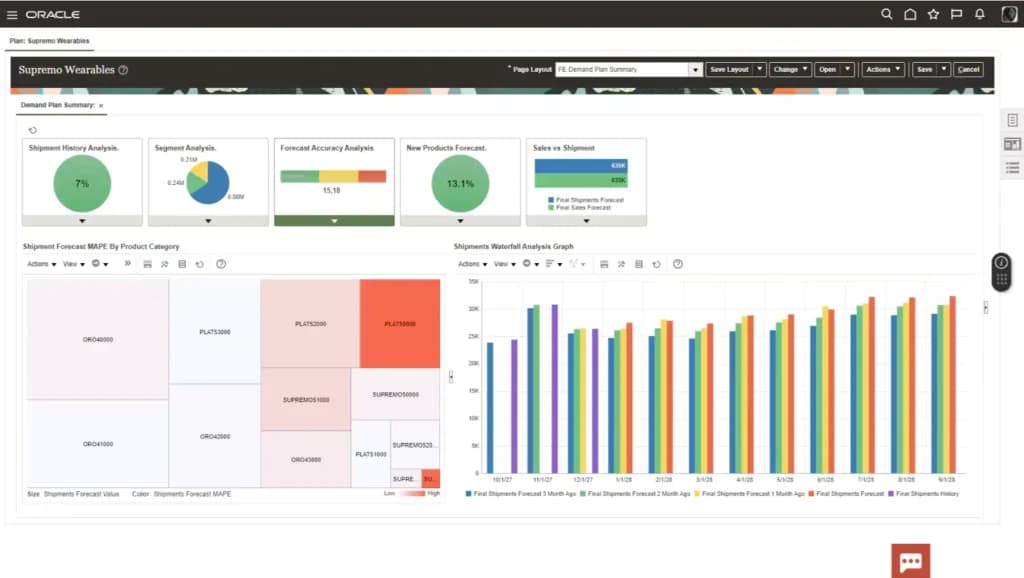
7. Demand Forecasting
What it does: This feature uses historical sales data, market trends, and predictive analytics to estimate future demand for products or services.
Business value: Accurate demand forecasting minimizes waste, optimizes production planning, and aligns procurement strategies with anticipated market needs. It helps businesses stay ahead of customer demands while reducing surplus stock.
8. Integration with Accounting Tools
What it does: This feature automates financial processes by connecting SCM software with accounting tools, enabling real-time updates of costs, sales, and inventory valuation.
Business value: Businesses gain clearer insights into their financial health, ensuring compliance and reducing manual bookkeeping errors. It supports better budgeting and cost management.
9. Customizable Dashboards
What it does: Customizable dashboards allow users to view KPIs, generate reports, and monitor operational metrics tailored to their needs.
Business value: Access to actionable insights helps businesses identify inefficiencies, track progress, and make data-driven decisions. This feature empowers teams with the visibility they need to meet goals.
10. Collaboration Tools
What it does: Enables teams and external partners to share data, communicate effectively, and work collaboratively on supply chain tasks.
Business value: Improved collaboration reduces errors, enhances problem-solving, and ensures that all stakeholders are aligned. This feature is critical for managing complex supply chain networks.
Advanced Features of Supply Chain Management Software
Advanced supply chain management features offer cutting-edge capabilities that go beyond the basics to reduce risks with predictive scenarios, process automations, data protection, and more.
Here are the top 16 advanced features:
- End-to-end visibility platforms: Platforms like Magaya provide comprehensive visibility across all supply chain nodes, enabling better coordination and quicker response to disruptions.
- Artificial intelligence and machine learning: Enables predictive analytics, automated decision-making, and intelligent demand forecasting to enhance efficiency and accuracy.
- IoT-enabled monitoring: IoT devices are used to track environmental conditions like temperature, humidity, and location, ensuring quality control for sensitive goods.
- Dynamic routing optimization: Adapts shipping routes in real-time based on traffic, weather, and delivery priorities to reduce transportation costs and improve delivery times.
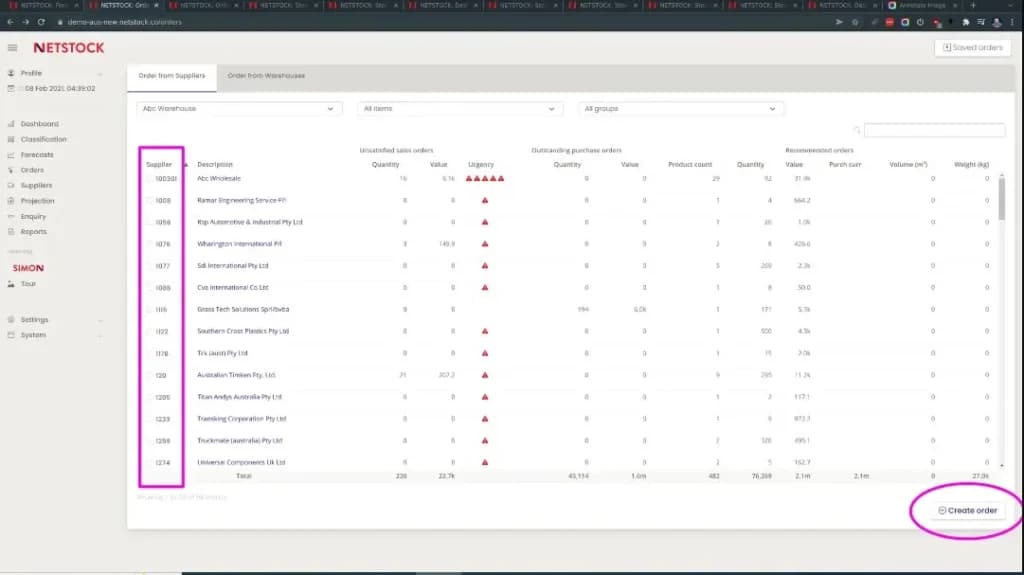
- Predictive demand planning: Tools like Netstock’s demand forecasting enable accurate predictions of future needs, reducing stockouts and excess inventory while improving resource allocation and sales potential.
- Advanced analytics dashboards: Customizable dashboards and KPIs provided by brands like Unleashed deliver deep and actionable insights and anomaly detection, enabling data-driven strategic planning.
- Robotics and automation: Integrates automated systems like robotic pickers and conveyors in warehouses to improve speed and accuracy.
- Supplier risk management: Evaluates and mitigates risks associated with suppliers, including geopolitical and financial stability, to ensure reliable sourcing.
- Digital twin technology: Simulates supply chain scenarios using real-time data to optimize processes and test strategies before implementation.
- Blockchain integration: Provides secure and transparent tracking of goods throughout the supply chain, reducing fraud and ensuring compliance.
- Custom workflow automation: Allows businesses to design and implement tailored automation workflows for repetitive tasks, reducing manual effort and errors.
- Inventory optimization: Software from brands like Magaya and Unleashed automates stock adjustments based on demand trends, helping businesses maintain balanced inventory levels and unlock tied-up capital.
- ERP integration: Brands like Netstock excel in integrating with ERP systems, enhancing existing data for smarter decision-making and seamless operations.
- Warehouse automation: Warehouse management systems in solutions like Magaya streamline storage, retrieval, and shipping workflows with robotics and automated tools.
- Sustainability management: Platforms increasingly incorporate features for tracking carbon footprints and managing eco-friendly practices in sourcing and logistics.
- Supplier performance monitoring: Tools in Netstock and similar platforms assess supplier reliability and identify risks, ensuring consistent sourcing and minimizing disruptions.
How to Choose the Right Supply Chain Management Software for You
Selecting the right SCM software is a critical decision that directly impacts your operations, profitability, and competitive advantage. To ensure a strategic fit, follow these focused steps tailored to your business needs:
1. Define Your Business Objectives
What to do: Identify the specific challenges you need to address, such as reducing inventory costs, improving delivery timelines, or enhancing supplier collaboration.
Why it matters: A clear understanding of your goals helps you prioritize features like real-time tracking, inventory optimization, or supplier performance monitoring, ensuring the software meets your needs.
2. Evaluate Compatibility with Existing Systems
What to do: Assess how well the software integrates with your current ERP software, accounting, or CRM systems. Platforms like Netstock and Magaya are known for seamless ERP integrations.
Why it matters: Lack of compatibility can lead to data silos and inefficiencies. Integration ensures a unified system for streamlined operations and better data visibility.
3. Focus on Scalability and Flexibility
What to do: Choose a platform that can scale with your business growth and adapt to changes in your supply chain, such as expanding product lines or entering new markets.
Why it matters: A scalable solution like SAP or Unleashed saves you from switching software as you grow, reducing long-term costs and disruption.
4. Assess Advanced Features for Competitive Edge
What to do: Look for advanced features like predictive demand planning, AI-driven analytics, or blockchain technology offered by brands like E2open and Coupa.
Why it matters: These tools go beyond basic functionality, providing strategic insights and automation to give your business a competitive advantage.
5. Consider Industry-Specific Solutions
What to do: Research whether the software caters to your industry, such as retail, manufacturing, or logistics. Magaya excels in freight forwarding and warehouse operations, while Precoro focuses on procurement.
Why it matters: Industry-specific solutions address unique challenges and compliance requirements, making them more effective than generic platforms.
6. Evaluate Vendor Support and Training
What to do: Investigate the level of support, onboarding, and training provided by the vendor. Brands like Unleashed offer hands-on support to ensure smooth implementation.
Why it matters: Comprehensive support reduces downtime, accelerates adoption, and ensures your team uses the software effectively.
7. Understand Total Cost of Ownership (TCO)
What to do: Factor in all costs, including licensing, implementation, training, and maintenance. Avoid focusing solely on upfront pricing.
Why it matters: Transparent TCO analysis prevents budget overruns and ensures you invest in a solution that delivers long-term value.
8. Leverage Demos and Trials
What to do: Use free trials or demos offered by vendors like Magaya and Unleashed to test usability and feature relevance.
Why it matters: Hands-on experience helps you evaluate whether the software aligns with your workflow and user requirements.
9. Prioritize Data Security and Compliance
What to do: Verify the software’s compliance with industry standards and its ability to secure sensitive supply chain data.
Why it matters: Ensuring data privacy and regulatory compliance protects your business from potential legal and reputational risks.
10. Check Customer References and Case Studies
What to do: Read customer reviews and case studies, or leverage comparison tools to learn how similar businesses have benefited from the software.
Why it matters: Real-world feedback helps validate the vendor’s claims and ensures the solution has a proven track record.
Tips for Successful Implementation of SCM Software Into Your Business
Implementing supply chain management software can transform your operations, but careful planning is key to achieving success. Here are strategic tips for a smooth and effective implementation:
1. Define Clear Objectives and Metrics
Identify specific goals, such as reducing delivery times, optimizing inventory, or improving supplier collaboration. Establish key performance indicators (KPIs) to track progress and measure success.
2. Assemble a Cross-Functional Team
Involve representatives from procurement, logistics, finance, IT, and other relevant departments. Collaboration ensures that all areas of your supply chain are addressed and aligned.
3. Conduct a Thorough Needs Assessment
Evaluate your current workflows to identify bottlenecks and inefficiencies. Based on your specific requirements, choose SCM features such as real-time tracking, demand forecasting, or warehouse management.
4. Invest in Employee Training
Provide thorough training to ensure all staff understand the software’s functionality and benefits. Proper training enhances adoption and reduces operational disruptions.
5. Start with a Pilot Program
Roll out the software in a small department or region to test its impact and troubleshoot potential issues. Use the feedback to fine-tune the system before scaling up.
6. Prioritize Data Migration
Ensure data from legacy systems is accurately and completely transferred. Cleanse and organize data to prevent errors and improve the software’s functionality.
7. Leverage Vendor Support
Take full advantage of training sessions, technical assistance, and onboarding services offered by the SCM software vendor. Engage with the vendor’s expertise to address challenges effectively.
8. Ensure System Integration
Integrate the SCM software with existing tools like ERP, CRM, and accounting software. Seamless integration prevents data silos and improves efficiency.
9. Monitor and Optimize Post-Implementation
Regularly review the system’s performance against your KPIs. Use analytics and reporting tools to identify and implement further optimizations.
10. Foster a Change Management Culture
Communicate the benefits of SCM software adoption across the organization. Highlight how it simplifies tasks and improves results to reduce resistance and encourage enthusiasm.
How Do Different Industries Use SCM Software?
Supply chain management software can be tailored to meet the unique needs and processes of different industries. Here’s how different sectors leverage the tools to optimize operations and drive efficiency:
- Retail industry: Manages inventory across multiple locations, optimizes stock levels, and ensures real-time tracking of goods for seamless customer fulfillment.
- Manufacturing industry: Facilitates demand forecasting, streamlines procurement of raw materials, and integrates with production planning systems for efficient operations.
- Healthcare industry: Ensures compliance with regulatory standards, tracks sensitive items like pharmaceuticals, and monitors inventory to prevent shortages or overstocking.
- Food and beverage industry: Tracks perishable inventory using IoT-enabled monitoring for temperature control and expiration dates, ensuring quality and reducing waste.
- Logistics and transportation: Optimizes shipping routes, coordinates warehouse operations, and provides real-time visibility into cargo status to reduce delays and improve delivery accuracy.
- E-commerce industry: Automates order management, integrates with warehouse and shipping systems, and offers predictive analytics to meet dynamic customer demands.
- Automotive industry: Manages complex supply chains for parts procurement, monitors supplier performance, and tracks production schedules to ensure timely assembly.
- Energy and utilities: Supports procurement of critical materials, monitors supplier contracts, and ensures a steady flow of resources for uninterrupted operations.
- Construction industry: Coordinates supplier deliveries, tracks equipment availability, and monitors materials to avoid project delays and cost overruns.
- Technology sector: Manages the procurement of high-value components, reduces risks in supplier dependency, and ensures on-time delivery for global operations.
These examples showcase how SCM software adapts to the diverse needs of industries, enabling businesses to streamline their supply chains and achieve operational excellence.
Related Products That Integrate With Supply Chain Management Software
Effective supply chain management often requires seamless integration with other tools to maximize efficiency and create a unified ecosystem.
Here are the key related products that integrate with SCM software:
1. Enterprise Resource Planning (ERP) Systems
ERP platforms like Acumatica and Oracle NetSuite enhance SCM software by providing centralized financial, operational, and resource data for improved decision-making.
2. Customer Relationship Management (CRM) Tools
CRM solutions like Salesforce and HubSpot align customer demand with supply chain operations, ensuring efficient order fulfillment and improved customer satisfaction.
3. Accounting Software
Accounting products like QuickBooks, Zoho Books, and FreshBooks synchronize financial data, automate invoicing, and provide real-time tracking of supply chain costs.
4. Warehouse Management Systems (WMS)
WMS tools such as Blue Yonder improve storage efficiency, streamline inventory handling, and support real-time stock visibility.
5. Transportation Management Systems (TMS)
TMS platforms like Magaya and Blue Yonder optimize shipping routes, track deliveries, and enhance logistics planning within the supply chain.
6. Inventory Management Software
Inventory management systems like Zoho and Epicor ensure optimal stock levels, prevent overstocking or understocking, and provide demand forecasting.
7. E-commerce Platforms
Integrations with Shopify and WooCommerce enhance order processing, inventory synchronization, and delivery tracking for online retailers.
8. Procurement Tools
Applications like Coupa and Precoro streamline supplier management, automate purchasing workflows, and monitor contract compliance.
9. Data Analytics and Business Intelligence Tools
Platforms like Tableau and Power BI provide advanced analytics, enabling supply chain optimization through actionable insights and trend analysis.
10. IoT and Sensor Systems
IoT-enabled tools like temperature trackers and RFID systems monitor the condition of goods in transit or storage, ensuring quality control for perishable or sensitive items.
Integrating these products with your SCM software creates a cohesive and efficient system that drives better visibility, reduces manual work, and supports data-driven decision-making.
Final Thoughts
Supply chain management software is a catalyst for growth, efficiency, and resilience in your business. Whether you’re managing inventory, improving delivery timelines, or navigating complex logistics, the right SCM platform empowers you to take control of your operations and focus on what matters most — delivering value to your customers.
By streamlining processes, reducing costs, and enhancing visibility, these supply chain tools transform challenges into opportunities. They equip you with the insights and agility needed to stay competitive in a fast-moving market.
Invest in solutions that align with your vision, and watch as your business scales new heights. Your supply chain can be your strongest asset — make it work for you!